Operations | Monitoring | ITSM | DevOps | Cloud

Reduce IT costs without increasing incidents and escalations

As technology in business continues to evolve, IT costs can quickly add up. Companies may be looking for ways to reduce IT costs while maintaining a high customer service level. This article will discuss the potential benefits of lowering IT costs without increasing incidents and escalations. We will explore strategies to reduce IT costs, improve customer service, and increase employee productivity.

How to Use Knowledge Management to Enhance IT Support

Knowledge Management for IT Support Do your IT support initiatives use up a ton of your business’ resources? You are not alone. In fact, HDI found that a single tech support instance can cost your company anywhere from $2.93 to a whopping $49.69. Worse yet, escalated support tickets can cause this cost to triple. Of course, you cannot exactly go without a dedicated IT department and tech support staff.

InfluxDB SQL Queries with Python

Recently InfluxData announced SQL support in InfluxDB Cloud, powered by IOx. Users can now use familiar SQL queries to explore and analyze their time series data. The SQL support was introduced along with the usage of Apache Arrow. Apache Arrow is an open source project used as the foundation of InfluxDB’s SQL support. Arrow provides the data representation, storage format, query processing, and network transport layers. Apache Flight SQL provides a method for interacting with Arrow via SQL.

Get the Top 15 Microsoft Teams Alerts to Track Call Quality

To say that IT professionals have a lot on their plates is an understatement and when managing Microsoft Teams, many feel inundated by Microsoft Teams alerts. Since Microsoft Teams is the ubiquitous platform for communication and collaboration in modern workplaces, optimal Teams performance is critical. Microsoft Teams can experience performance issues that can have a significant impact on productivity.

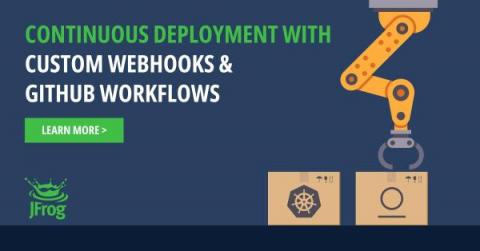
Automate Your Deployments on Kubernetes Using GitHub Workflows and JFrog Artifactory Custom Webhooks

Full automation makes your Continuous Deployment (CD) faster, seamless and less error prone. For example, triggering the deployment of your Helm Chart when a Docker image is pushed to production. The latest JFrog Artifactory release makes this easy! With a new Custom Webhook feature that enables a direct integration with a variety of services such as Gitlab Pipelines, Jenkins and GitHub Actions.

Best Practices for Our Custom Dashboards

Custom dashboards are essential tools in the data-driven world for businesses, organizations, and individuals. They provide an interactive and comprehensive representation of data, making it easier to identify trends, patterns, and outliers. Custom dashboards are highly customizable, allowing users to select the most relevant data sources, visualizations, and metrics to meet their specific needs.

Elektrobit and Canonical announce EB corbos Linux - built on Ubuntu

ERLANGEN, Germany, and DOUGLAS, Isle of Man, February 21, 2023 – Elektrobit and Canonical today announced EB corbos Linux – built on Ubuntu, an industry first bringing the largest open-source Linux community to automotive software. Available immediately from Elektrobit, the new solution provides OEMs and Tier 1 suppliers with the benefits and flexibility of an open-source operating system for developing electronic control units (ECUs) in software-defined vehicles.

Platform Engineering vs. DevOps: Yes, There's a Difference - Here's Why It Matters

If there’s a difference between platform engineering vs. DevOps, it’s not immediately obvious. The terms have been thrown around in conversation for long enough that it’s tempting to think of them as either the same thing or as competing concepts. So what is the difference between platform engineering vs. DevOps? Are you “doing DevOps” when you create a developer platform?

How We Manage Incident Response at Honeycomb

When I joined Honeycomb two years ago, we were entering a phase of growth where we could no longer expect to have the time to prevent or fix all issues before things got bad. All the early parts of the system needed to scale, but we would not have the bandwidth to tackle some of them graciously. We’d have to choose some fires to fight, and some to let burn.