Operations | Monitoring | ITSM | DevOps | Cloud

Latest posts

6 Key Factors to Consider When Choosing a Website Platform

Choosing the right website platform is an important decision for anyone looking to establish a solid online presence. In fact, choosing the wrong website platform has exposed brands to issues like security breaches, poor mobile responsiveness, and terrible load speeds. To buttress the last point, Google research showed that 32% of users would leave your website if it experiences poor load speed. In other words, they want a good user experience.

What is NetFlow Analyzer?

In today’s interconnected world, network administrators face the daunting task of managing and securing complex networks. To effectively monitor network traffic and optimize performance, they require comprehensive insights into the data flows within their infrastructure. NetFlow Analyzer is an analytics tool that monitors network traffic flow. It leverages the ability of flow technologies to offer visibility in real time.

Monitoring AWS End User Computing (EUC) Technologies with eG Enterprise

We are delighted to share that eG Innovations has become one of a very small number of partners to have achieved AWS’s “Digital Workplace Competency” award following a lengthy and rigorous technical audit process. This designation differentiates eG Innovations from other AWS EUC monitoring vendors as having a solution that meets AWS’s own standards for enterprise software.

Generative AI in financial services: The role of the Elasticsearch Relevance Engine

Generative artificial intelligence (GAI) is undoubtedly one of the biggest trends across industries in 2023. In a recent survey, almost two-thirds of executives believe generative AI will have a high or extremely high impact on their organization in the next three to five years. Executives anticipate spending the next 6–12 months focused on increasing their understanding of how generative AI works, evaluating internal capabilities, and investing in generative AI tools.

ServiceNow joins the prestigious Fortune 500 list

On behalf of ServiceNow Chairman and CEO Bill McDermott, and our executive leadership team, I’m honored to share that ServiceNow has been named to the prestigious Fortune 500® list for the first time in company history, joining an elite group of the largest companies in the United States. Since placement on this list is based on fiscal year revenues, ServiceNow’s inaugural appearance is evidence of our continued growth trajectory.

What Is Root Cause Analysis?

Root Cause Analysis (RCA) is a systematic process designed to uncover the fundamental, underlying issues that lead to IT incidents. These 'root causes' are often masked by surface-level symptoms, making them challenging to identify without a systematic approach. Root Cause Analysis serves as a metaphorical excavation, drilling past the initial problems to discover deeper, hidden issues.


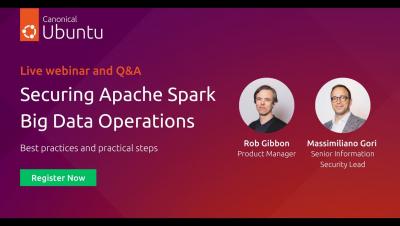
A holistic approach to securing Spark-based data engineering

Apache Spark is an open-source toolkit that helps users develop parallel, distributed data engineering and machine learning applications and run them at scale. In this webinar, Rob Gibbon – product manager, and Massimiliano Gori – senior information security lead, will survey the state of big data security best practices and outline both high level architectures and pragmatic steps that you can take to secure your Spark applications – wherever they may be running.

ITIL Service Strategy Definition, Processes, and Implementation

The ITIL Service strategy is the first stage in the service lifecycle. It paves the way for the following four. This stage contains the guidelines for organizations to set out a solid strategy for their IT services, position them in the appropriate place in the service portfolio, and ensure they add value from a financial and experience perspective. This article will define service strategy, its purpose, and examine in detail the five processes that comprise it.

Understanding the network edge and edge networking

Generally speaking, a network ‘edge’ is the boundary between two separate networks - where one network ends and another begins. Edges are important, primarily from a security standpoint as they define the jurisdictions owned by different parties, and ‘the edge’ has become a more popular topic of conversation recently through trends which see network resources moved from centralised locations to network edges to make them closer to the end user.