Operations | Monitoring | ITSM | DevOps | Cloud

The latest News and Information on Monitoring for Websites, Applications, APIs, Infrastructure, and other technologies.

Why Staying Current Makes Modernization Easier

Most organizations don’t experience modernization as a single initiative. It unfolds over months and years, through a series of decisions made as technology shifts, business needs change, and operational demands grow. Teams adopt new capabilities, automate manual work, sharpen visibility, and strengthen security. These efforts look independent, but they share one requirement: a platform foundation that can keep up with continuous change.
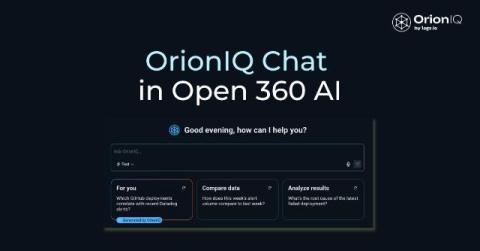
Open 360 AI's chat is now powered by OrionIQ

OrionIQ’s agentic investigation is now built into Logz.io Open 360 AI. Ask a question and OrionIQ investigates across your telemetry, shows its work as it goes, links every finding back to the exact query behind it, and tells you how much to trust the answer. Today we’re bringing OrionIQ Chat into Open 360 AI. This is the first OrionIQ product to ship inside the Logz.io platform, and it’s the same agent that powers the standalone OrionIQ app, now available right where you already work.

Keyword Monitoring: Check Content, Not Just Uptime

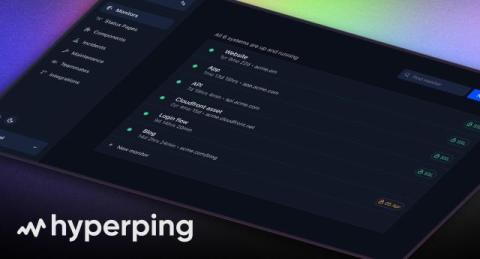
Updated August 05, 2026 Keyword monitoring checks that a specific string is still present in a page or API response on every run, instead of trusting the HTTP status code. It catches the failures that uptime checks sleep through: a deploy that renders an empty template, a CMS entry someone unpublished, a checkout page serving "Something went wrong" with a perfectly healthy 200. In Hyperping, the simple version is a text body assertion on an HTTP monitor and takes about ten seconds to set up.

Integrating Icinga and Prometheus

Guest post by Markus Opolka, Senior Consultant at NETWAYS. Originally published on the NETWAYS blog as “Icinga und Prometheus integrieren” and “Alertmanager-Icinga-Bridge – Ein Signalilo Fork”, combined and adapted for the Icinga blog with permission. Icinga and Prometheus are both great monitoring solutions, however, their focus is different. In this article, we look at how to integrate both monitoring systems and utilize the strengths of both tools.

This Month in Datadog - July 2026

In July’s episode of This Month in Datadog, Ruxanda Lueck joins Jeremy for a conversation about how you can confidently evaluate and release features that contain AI-generated code. She also discusses her career trajectory from containers to AI, how agentic workflows impact trust during feature development, and the challenges of testing nondeterministic agent behavior.

From Claude Code to Production: A Monitoring Checklist for Python Developers

Python is the native language of AI-assisted development. Models are really good at writing it, and a lot of people are now shipping it without ever having written much Python themselves. The whole thing is really simple. You prompt an app, Claude Code or Cursor produces a working Flask or FastAPI backend, and you’re live in a few hours. However, there’s still a big difference between “it works on my machine” and “it works in production”.

Enterprise AI isn't broken; your data is broken

A friend who runs data engineering at a mid-sized logistics company once showed me something that made me laugh, and then made me a little sad. Her team spent four months building a chatbot that was supposed to answer simple questions like "how many shipments are delayed in the Chennai warehouse right now." The bot worked beautifully in the demo. Then someone asked it a real question, and it confidently returned a number that was off by almost a factor of ten. Not because the model was dumb.
Sponsored Post

Building a Modern Cloud Outage Response Workflow in Slack and Microsoft Teams

On May 7 and 8, 2026, a thermal event in a single AWS data center hall knocked out power to EC2 instances and EBS volumes in a single Availability Zone in us-east-1. Within hours, more than 150 cloud services went down, including Coinbase, Reddit, HubSpot, and Atlassian's suite of tools, Jira, Confluence, and Trello among them. For teams without a structured cloud outage response workflow, the next several hours looked familiar: Slack DMs asking "is it down for you too?", tab-switching between status pages, and incident commanders repeating the same update in three different channels.