Operations | Monitoring | ITSM | DevOps | Cloud

The latest News and Information on Monitoring for Websites, Applications, APIs, Infrastructure, and other technologies.

Beyond Traditional Observability: Turning Technical Insight into Operational Intelligence

Observability has become a central part of modern IT operations and for good reason. Metrics, logs and traces give technical teams detailed evidence about how applications, infrastructure and services are behaving. Such evidence helps them investigate performance degradation, identify abnormal behavior and understand what changed around the time an issue occurred.

Unreal MCP now speaks Sentry

Setting up crash reporting is rarely the most exciting part of shipping a game. Paste a DSN, flip a few checkboxes in Project Settings, turn on symbol upload, package a build, crash it on purpose and check that the event shows up in Sentry… It’s not hard to do (and important), but it’s the kind of work you’d happily hand off to someone else. With Unreal Engine 5.8, that someone else can be your coding agent.

How ScienceLogic Helps Federal Skylar One Customers Move to FIPS 140-3 Without Disrupting Operations

ScienceLogic provides federal Skylar One customers with a supported Oracle Linux 9 direction, deployment-specific migration workflows, validation gates, and clear ownership before Oracle Linux 8 is retired.

Why Automotive Manufacturers Are Augmenting Data Historians, Not Replacing Them

Summary Automotive manufacturers face rising costs and scaling limits with per-tag-priced data historians as sensor counts and sampling rates grow. Instead of rip-and-replace, manufacturers are augmenting traditional data historians by routing new telemetry to InfluxDB (via Telegraf or Litmus or consolidating siloed historians, while the historian continues handling SCADA and regulatory data. Table of Contents.

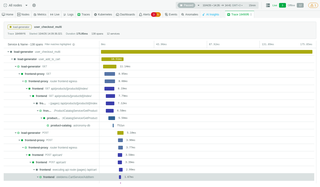
Distributed Tracing In Netdata: OpenTelemetry Traces

Back in 2020, when we laid out where Netdata was going, the plan listed anomaly detection, log collection and “application traces collection”. The first two shipped years ago. Traces took longer, because we wanted them to work the way the rest of Netdata works: collected and stored on your own nodes, with no separate backend to stand up. Distributed tracing is now available in Netdata.

The Year-2 Price Cliff: What Your Observability Stack Really Costs Over 3 Years

I’m not the one whose phone lights up at 3 a.m. when production breaks. But I’ve spent years working alongside the engineers who are, and I’ve noticed that observability migrations happen for two reasons. Either engineering needed one, or, far more often, a quote landed that looked too good to refuse. The engineers rarely regret the first kind. The second kind they tell me about in year two, usually with a renewal notice in hand.