ManageEngine Integrates with Sectigo® to Automate Certificate Lifecycle Management
Key Manager Plus Now Streamlines the Management of SSL/TLS Certificates Issued by the Certificate Authority.


The latest News and Information on Monitoring for Websites, Applications, APIs, Infrastructure, and other technologies.
In 2018 we launched the Sentry Unity SDK, but at the time, we couldn’t crack how to display stack trace line numbers for C# exceptions with IL2CPP scripting backend. And until a recent release of Unity, we thought it wasn’t possible. But here at Sentry we often do the impossible… or at least the improbable. Like adding features to our JavaScript SDK while making it smaller at the same time.
Dealing with an intermittent Internet connection is very frustrating. Does your Internet connection keep disconnecting and reconnecting when you’re watching your favourite Netflix show or chatting with your colleagues on Zoom? In this article, we’re teaching you how to troubleshoot intermittent Internet issues with Network Monitoring.
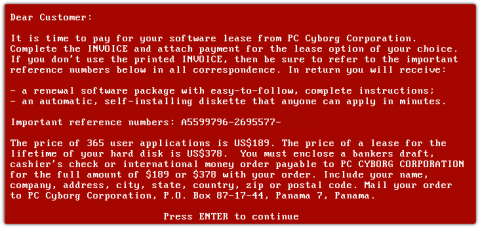
Ransomware is the gift that keeps on giving. Old as it is (33 years) ransomware is constantly morphing into new exploits. The reason is simple. Ransomware works and too often cybercriminals walk away with bags of money (or piles of Bitcoin, anyway). “Following the World Health Organization's AIDS conference in 1989, Joseph L. Popp, a Harvard-educated biologist, mailed 20,000 floppy disks to event attendees.
While many people know us from our semiconductor and infrastructure software solutions, few have visibility into what goes on behind the scenes to support Broadcom’s global business. Within the Broadcom Software division, the Broadcom Global Technology Organization (GTO) is responsible for managing an extensive IT infrastructure, one that spans 18 data centers, 100 sites, and 400 R&D labs.
Successful IT operations management (ITOM) of today’s complex enterprise infrastructure requires collecting a lot of data and making informed, automated decisions based on the insights contained in that data.
The combination of SNS to SQS to Lambda is a common sight in serverless applications on AWS. Perhaps triggered by messages from an API function. This architecture is great for improving UX by offloading slow, asynchronous tasks so the API can stay responsive. It presents an interesting challenge for observability, however. Because observability tools are not able to trace invocations through this combination end-to-end. In X-Ray, for example, the trace would stop at SNS.
The scenario: you want to see distributed traces, maybe for your web app. You’ve set up an OpenTelemetry collector to receive OTLP traces in JSON over HTTP, and send those to Honeycomb (how to do that is another post, and we’ll link it here when it’s up).