TT 05 | How Tietoevry Speeds Up AIOps Adoption With OpsRamp
Also, follow us on social media channels to learn about product highlights, news, announcements, events, conferences and more.


The latest News and Information on Monitoring for Websites, Applications, APIs, Infrastructure, and other technologies.
Not too long ago, our CTO, David Cramer, wrote a blog post about how we had deviated from our mission of making it easier for developers to monitor and solve issues in their code, soliciting community feedback to understand developers’ most pressing workflow issues and to bring us back on track.
If you’ve ever had a website or service go down as you were using it, then you’ll understand the irritation of a generic error message and a plea to “Be patient!” (if you’re lucky). It’s almost like they know they’re not telling you the full story. The companies that are on top of their outage game will have a prepared link or redirect to their Status Page (or at least, have one prominently displayed on their pages and social media) for times like these.
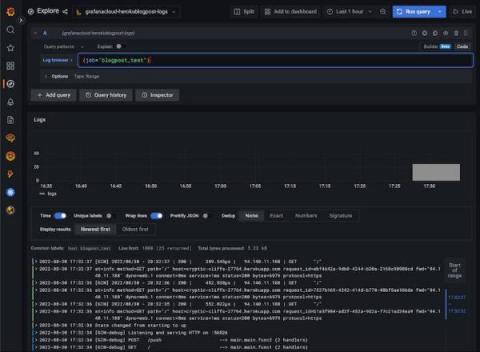
Heroku is a cloud provider well known for its simplicity and its support out of the box for multiple programming languages. When thinking about consuming logs from applications hosted in Heroku, Grafana Loki is a great choice. But in the past, shipping logs from Heroku to any Loki instance required ad-hoc scripts to fiddle with Heroku’s logs format and send them. This can be a time-consuming experience.
One of the core features of Cribl Stream is our Replay capability. We pride ourselves on giving customers choice and control over their data. The ability to archive data in cheap object storage, and then providing the ability to reach into the same object storage is one example of this. It’s safe to say that S3 and AWS have become synonymous with the term object storage. It’s like a modern day Kleenex, or Band-Aid.
We believe that one of the most powerful capabilities added to the Logz.io Observability Platform in recent months is our new Service Performance Monitoring (SPM) feature set. As you may have seen earlier this year, Logz.io was named a Visionary in the 2022 Gartner® Magic Quadrant(™) for Application Performance Monitoring and Observability. To that end, SPM is a cornerstone for our related solutions.
All the various systems in IT, from cloud infrastructures and servers to applications and wireless networks, are hubs for activity and traffic. One way administrators are able to keep an eye on the activity, current and past of their systems, is by keeping logs and analyzing them both in real-time and regularly.