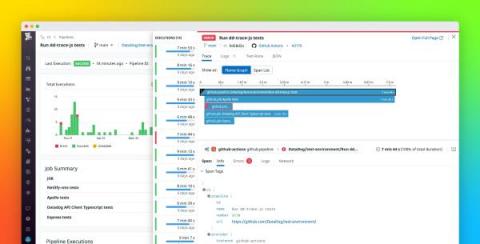
GitHub Actions provides tooling to automate and manage custom CI/CD workflows straight from your repositories, so you can build, test, and deliver application code at high velocity. Using Actions, any webhook can serve as an event trigger, allowing you, for example, to automatically build and test code for each pull request. Datadog CI Visibility now provides end-to-end visibility into your GitHub Actions pipelines, helping you maintain their health and performance.
Improvements in the performance and accessibility of technology have changed our expectations for how applications should work and, by extension, the way we work. For example, three years ago only 6% of workers were remote. According to the 2021 Upwork "Future Workforce Report," that number is now 22%, and remote workers are expected to reach 28% of the workforce by 2025. As more and more people are let loose from their office tethers, they bring with them a belief that their organization's services and applications should work as they did before. What's more, expectations extend from the workplace to the marketplace.
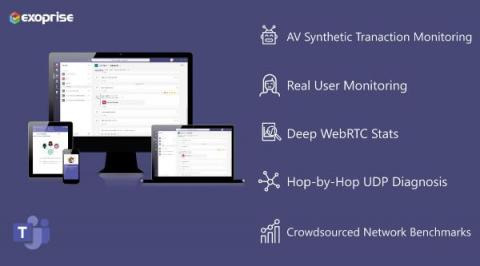
When end-users constantly complain about bad network quality or poor audio video conference experience, you know it's time to shop for a Team's monitoring tool. And your Teams monitoring solution needs to be proactive, provide insight into hybrid work environments, and support real-time diagnosis of network issues for your end-users no matter where they work from. Business leaders rely more than ever on technology teams to deliver a successful company ROI. But problems with complex Teams deployment and unsatisfied workers can lead to increased costs and lower productivity.
Artificial intelligence is already solving problems in all aspects of our lives, from animation filmmaking and tackling space exploration, to fast food recommendation systems that improve ordering efficiency. These real-world AI systems examples are just the beginning of what is possible in an AI Everywhere future and they are already testing the limits of compute power.
Required fields have been a hot topic at FireHydrant. Choose too many (or the wrong ones), and you unnecessarily annoy your team during an incident or encourage sloppy data entry that someone has to come back and clean up manually. Don't use them at all and risk insufficient data to efficiently propel an incident toward resolution.
The debate of cloud vs data center looms large for businesses when determining how to best store data. In past years, the trend has leaned more toward the growth of remote solutions using the cloud. Yet, data centers are still relevant. Gartner states that spending on data center infrastructure is expected to grow 6% by the end of 2021. Cloud storage and data centers both possess unique features that allow you to achieve your organization’s data goals.
The amount of data volume and complexity within tech stacks is continuing to increase with no sign of slowing down. As a result, many organizations are facing significant challenges related to tool sprawl and the overwhelming amount of data that needs to be exchanged between all the different systems. The result is this new rapid pace of data which brings a need for faster flow and exchange of information.
Now, more than ever, the employee experience (CX) and customer experience (EX) are intertwined. Improving CX has a positive impact on EX, and vice versa. “Companies that excel at experience delivery don’t think of the two as separate,” notes Dave Wright, chief innovation officer at ServiceNow, in the Summer 2022 issue of Workflow Quarterly. “Instead, they align EX and CX to multiply the effects of each.