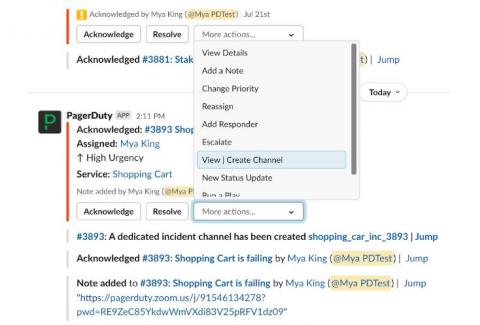
Today, we are excited to open Early Access for our improved Dedicated Incident Slack Channel. These improvements include: In order to take advantage of this feature you need to upgrade to Slack on WebHooks V3 and request Early Access from PagerDuty support. Once you are on the right version and have early access, there are two ways to create a dedicated incident channel.
The Splunk Operator for Kubernetes team is extremely pleased to announce the release of version 2.0! This represents the culmination of many months of work by our team and continues to deliver on our commitment to provide a high-quality experience for our customers wishing to deploy Splunk on the Kubernetes platform.
The OpenTelemetry Collector is an application written in Go. The GitHub readme does a great job of describing it: So the OpenTelemetry collector is a Go binary that does exactly what its name implies: it collects data and sends it to a back-end. But there’s a lot of functionality that lies in between. What a neat service! A local destination for data that handles the final sending of Open Telemetry information to your back end.
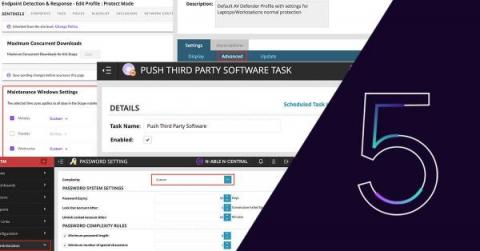
As the saying goes, “You don’t know what you don’t know”. So, in this blog, I’m going to look at five things in N-central that you might not know exactly how they work—or you might not know about them at all.
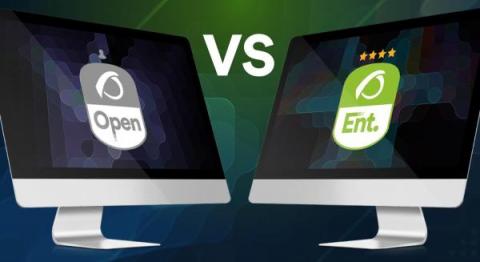
Pandora FMS Open Source is not a freemium software, it is not bloatware nor shareware (*Wink for those born before the 80s). Pandora FMS is licensed under GPL 2.0 and the first line of code was written in 2004 by Sancho Lerena, the company’s current CEO. At that time, free software was in full swing and MySQL was still an independent company, as was SUN Microsystems.
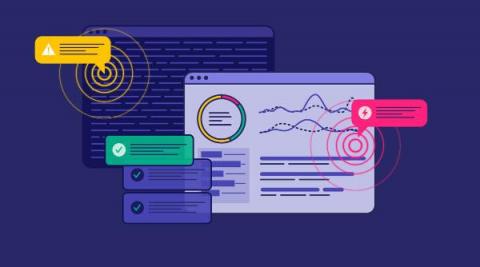
Observable and secure platforms use three connected data sets: logs, metrics, and traces. Platforms can link these data to alerting systems to notify system administrators when an event requires intervention. There are nuances to setting up these alerts so the system is kept healthy and the system administrators are not chasing false positive alerts.
Continuous Integration and Continuous Delivery (CI/CD) is perhaps best represented by the infinity symbol. It is something that is constantly ongoing, new integrations are rolled out while not interrupting the flow of information that is already running, as to stop systems in order to update them can be costly and inefficient. In order to ensure that you can successfully implement the latest builds into your system, it is important to know how well they will run alongside the components that are already installed and where there may be bottlenecks.