Operations | Monitoring | ITSM | DevOps | Cloud

Employing DEX in the Public Sector to Attract and Retain Top Talent

A recent news report shows the federal government is struggling significantly more than the private sector when recruiting new employees. Axios reporter Emily Peck writes: “While the number of private-sector jobs surpassed its pre-pandemic level, there are 664,000 fewer people employed in the public sector, according to the government jobs report released .” Peck speculates this disparity can be attributed to the inflexibility of government work.


Key considerations before signing up for cyber insurance

With 2021 seeing 5.1 billion records breached and an annual increase in attacks at 11%, the risk of security incidents is only getting greater every year. And when an attack hits, the cost to recover, which includes fines, penalties, legal fees, and much more, are also great. To help minimize the scope of financial damage, many organizations turn to cyber insurance. Albeit a relatively new branch of insurance, demand is already huge and ever increasing.

Persistent, Distributed Kubernetes Storage with Longhorn

Kubernetes is an open source container orchestration system that enables applications to run on a cluster of hosts. It’s a critical part of cloud native architecture because it can work on public or private clouds and on-premises environments. With an orchestration layer on top of traditional infrastructure, Kubernetes allows the automated deployment, scaling, and management of containerized applications.

What Is Helm in Kubernetes?

Helm is a deployment tool that simplifies installing, configuring, and managing Kubernetes clusters. Anyone familiar with writing Kubernetes manifests knows how tedious it is to create multiple manifest files using YAML. Even the most basic application has at least 3 manifest files. As the cluster grows, the more unwieldy the configuration becomes. Helm is one of the most useful tools in a developer’s tool belt for managing Kubernetes clusters.

Announcing the General Availability of Synthetic Monitoring Within Splunk Observability

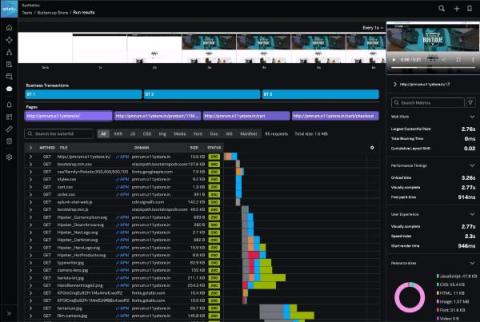
Today we’re proud to announce the general availability of best-in-class Synthetic Monitoring capabilities within Splunk Observability Cloud. Now, IT and engineering teams can proactively measure, monitor and troubleshoot their critical user flows, APIs and services, connected across Splunk Observability.

Postcard From .conf22: Customers Inspire Our Latest Release

They say, “What happens in Vegas, stays in Vegas,” but I wanted to highlight the role our customers played at last month’s.conf22, our annual users’ event at the MGM Grand. It was awesome meeting customers in person again, and connecting virtually with thousands more. We had a terrific turnout with 8,200+ customers and partners representing 113 countries and more than 6,500 organizations.

Prometheus Query Tutorial with examples

Monitoring tools are only as good as the range and visibility they offer admins into applications’ performance. Prometheus is a metrics monitoring tool that provides a pull-based system to collect and monitor time-series samples. Once the data is collected and stored, you can use Prometheus Queries to interact with the data: select and aggregate across the provided dimensions. This article takes the reader from concept to content state about the Prometheus Query language.

Get better visibility into DevOps performance in one place with Atlassian integrations

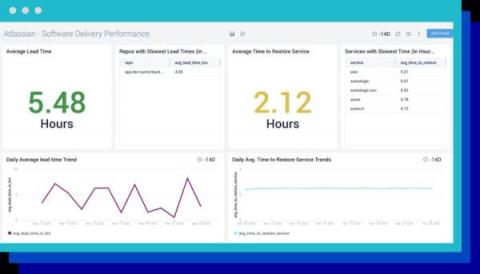
Every company is a software company and every company wants to get better at it. That’s why Sumo Logic built a set of integrations with Atlassian DevOps solutions. Leveraging data from Atlassian, Sumo Logic now enables you to visualize the key, actionable insights behind the DevOps Research Assessment (DORA) metrics to continuously improve your software delivery performance. Sumo Logic’s observability platform presenting Atlassian data brings the following benefits, to name a few.

The Secret Ingredient for Faster Deployment: Use On-demand Environments

If you are part of a DevOps or Cloud engineering team struggling to set up and maintain proper environments, then this article is for you. We will discuss “On-demand” environments in detail. We will go through its benefits, how development teams can take advantage of it, and how Qovery’s on-demand environments give you a competitive advantage in the business.

MongoDB Monitoring | Beginner's Guide to MongoDB performance monitoring

In this guide, we will discuss the different aspects of MongoDB performance monitoring. MongoDB provides a set of tools and command-line utilities to monitor MongoDB instances. But first, you need to know what metrics should be monitored. Once you understand the performance metrics, you can create workflows and processes to keep a check on your MongoDB cluster’s health and performance.