Operations | Monitoring | ITSM | DevOps | Cloud

Sponsored Post

Exploring PagerDuty Alternatives for Incident Response

Incident response refers to effectively responding to infrastructure issues and resolving them in the shortest time frame possible. Due to several loss-inducing high-profile outages over the last few years, organizations have sought to create rigorous processes with specialized tools to resolve incidents quickly and learn from their failures. As one of the first platforms to enter the incident response space, PagerDuty is a dominant player, but over the years, competing platforms have begun carving out their own niche in the incident response space.


7 advantages of business intelligence in the retail industry

Retailers are operating in a highly competitive and fast-paced environment, which means they are always looking for an edge over their competitors. Retail business intelligence can provide just the edge they are looking for. In this article, we'll look at the many advantages of business intelligence in the retail industry.

Five worthy reads: Internet of Behavior-Snooping through the digital debris

Five worthy reads is a regular column on five noteworthy items we’ve discovered while researching trending and timeless topics. This week we are exploring Internet of Behavior, which can help organizations make the best decisions in providing a customized experience to customers. Design credits – Akshaya Understanding human behavior to provide the best customer experience has been a long-standing goal for marketers and organizations.

What Is An Application Programming Interface (API) And How Does It Work?

Whether you know it or not, APIs (application programming interfaces) significantly impact our relationship with technology, allowing applications to share and exchange data seamlessly so we can access multiple pieces of information from a single source. Without API technology, we'd likely get lost far more often (APIs are fundamental to navigation apps like Google Maps), and booking a vacation would be much more complicated (travel booking sites rely heavily on API tech, too).

Asset Lifecycle Management (ALM) Overview & Steps

All businesses and organizations have assets that are essential for their success, so it makes sense that the demand for asset lifecycle management services rises every year. A SkyQuest report on the asset management market claims, “The global asset management market was valued at $250.12 billion in 2021, and it is expected to reach a value of $1113.53 billion by 2028.” Discover how asset lifecycle management works and benefits businesses around the globe.

Fundamentals: Application Acceleration and the Benefits for your Service Delivery

Application acceleration is all about improving the responsiveness of a digital service. When clients access web applications, they are expecting near-immediate feedback from servers. Maintaining that level of performance requires ensuring the right resources are available to process requests, shortening the information retrieval process, and maintaining system uptime by warding off threats.

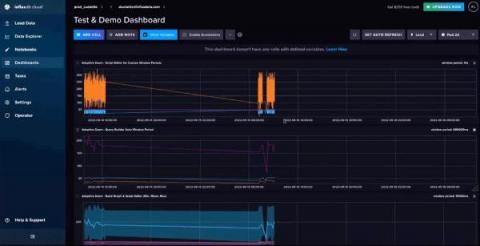
Product Update - Adaptive Zoom now live

We love to write and ship code to help developers bring their ideas and projects to life. That’s why we’re constantly working on improving our product to meet developers where they are, to ensure their happiness, and accelerate Time to Awesome. This week, we are covering a product release that helps all InfluxDB Cloud UI users get more from their graphs.

How a telecom company elevated integrated risk management and security

Managing risk and compliance in telecommunications is no easy feat. When a telecom company operates in underserved remote and rural communities—including hurricane-prone island markets and mountainous regions in the southwestern US—it can be even trickier. That’s where communications services company ATN International, based in Massachusetts, found itself. The company wanted a platform to elevate its integrated risk management (IRM) program.

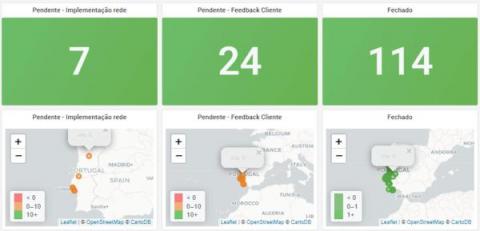
Troubleshoot in less than 60 seconds with Grafana: Inside NOS's observability stack

It may seem like ancient history, but there was a time when telecommunications companies only had to worry about connecting customers over landlines. Today, their businesses depend on vast cellular networks to not only provide strong wireless phone coverage in countless locations, but also handle the demands of tablets, computers, and machine-to-machine communications.