Operations | Monitoring | ITSM | DevOps | Cloud

An Open Source Observability Platform | SigNoz

Cloud computing and containerization have brought many benefits to IT systems, like speed to market and on-demand scaling. But it has also increased operational complexity. Applications built on dynamic and distributed infrastructure are challenging to operate and maintain. A robust observability framework can help application owners stay on top of their software systems. In this article, we will introduce SigNoz - an open source observability platform.

The Complete Kubectl Cheat Sheet [PDF download]

Kubernetes is one of the most well-known open-source systems for automating and scaling containerized applications. Usually, you declare the state of the desired environment, and the system will work to keep that state stable. To make changes “on the fly,” you must engage with the Kubernetes API.

How to get complete CI/CD pipeline observability

It's not like it used to be back in the day! Before CI/CD, we were building on-premises, service-oriented products following system style architecture and we were able to map out the build system and end-to-end process in a PowerPoint or Visio document. Although time-consuming and inefficient, it was relatively straightforward and the build pipeline was unlikely to change drastically. But that's no longer the case.

Scorecards for Resources

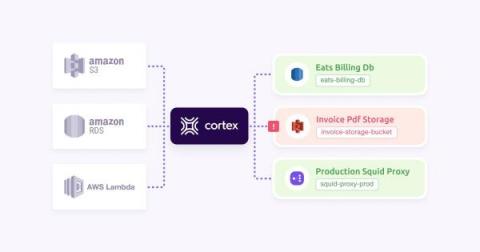
Cortex’s Resource Catalog allows engineers to track all of their infrastructure components — from databases to Kafta topics — in a single place. The Resource Catalog demystifies infrastructure, giving developers clear insights into exactly how their service architecture works. Using the Resource Catalog, it’s easy to find information about which infrastructure assets are running and how all the distinct components connect.

A Smart Home System That Does Not Rely On a Cloud

The cloud has been discussed extensively in recent years. Some people believe that it is the future of computing, while others think that it is inherently insecure and unreliable. Whatever your opinion may be, one thing is for sure: the cloud is not right for every application. In this blog post, we will discuss a smart home system that does not rely on a cloud server. Stay tuned to learn more!
Featured Post

The Economic Crunch is Here: Time to Get AIOps Right

Economic warning signs are flashing, and organisations of all sizes are balancing the need for fiscal discipline and efficiency while fighting to retain customers, when a single negative interaction can send them running to a competitor. Business digital operations are more complex than ever, compounding the problem is that companies are still adapting to remote work and pandemic-driven digitisation. Our recent report confirms that delivery teams are facing increased pressures, unreasonable business demands, and higher rates of burnout.

Internal Social Media Platforms and Risk Management

Whether you're in the IT, finance, or HR departments of any company, chances are high that your team is using some form of social media to collaborate on projects. While internal social media platforms may boost employee engagement, knowledge sharing, and day-to-day decision-making, they also pose a variety of hazards in compliance and litigation that are often neglected. The following are some potential dangers you should be aware of before implementing internal social media in your business, along with suggestions for coping with such dangers.

Nastel Recognized As Top 10 Banking Tech Solution

Banking is about financial transactions. These are executed by sending payments and instructions over middleware. If you control the middleware, then you control the business. If the middleware fails, then the company fails. If you can see and analyze the transactions going through the middleware, you can see the business itself. And if you have real-time analytics of that data and it’s automatically actioned, then you can innovate and accelerate the company’s development.

Open-source cloud for beginners with OpenStack

In the beginning, there was Amazon Web Services (AWS). And AWS set a standard for cloud computing. AWS was fast, flexible, convenient to use and geo-redundant. Definitely much better than legacy IT infrastructure or VMware. A lot of enterprises all over the world started migrating their business applications to AWS.