Operations | Monitoring | ITSM | DevOps | Cloud

OpenAPI testing with Schemathesis and Golang

When you maintain an internal or public-facing API, the API documentation is an important component of the overall user/developer experience. One of the industry standards for such documentation is the OpenAPI specification. With an OpenAPI specification, you define a contract that specifies how your API should behave, but nothing stops the parties involved from breaking such a contract (e.g., using a wrong implementation or invalid input).

The 2022 Guide to Managed Services Agreements for MSPs

Wouldn’t it be great if all business transactions could be conducted over lunch and executed with a handshake? It would sure cut down on the paperwork. Unfortunately, business is far too complicated for the kind of vagueness and misunderstanding that would arise from such a deal. Everything needs to be in writing. Love them or hate them, those piles of paperwork are your allies. This is especially true when evolving your business from a break/fix model to managed services.

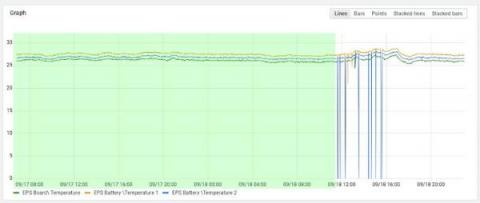
How to build machine learning models faster with Grafana

Armin Müller is the co-founder of ScopeSET. ScopeSET specializes in R&D work to build and integrate tools in the model-based systems engineering domain, with a track record of more than 15 years of delivering innovative solutions for ESA and the aerospace industry. Training machine learning models takes a lot of time, so we’re always looking for ways to accelerate the process at ScopeSET. We use open source components to build research and development tools for technical companies.

5 Reasons Why Your Cloud Costs Are High

Bill shock stemming from surprisingly high cloud bills remains a persistent concern for enterprises that have migrated to the cloud. Cloud service providers often market the cloud as a highly effective means to lower operational costs. By moving their applications and processes to cloud-hosted infrastructures, organizations are saving money that would have gone to datacenters, hardware, and personnel.

Automate deployment of a Vue.js application to Firebase

A quick search of the internet will reveal many services available for freely hosting single page applications or static sites. Firebase is one of these services. Firebase is a development platform developed by Google that provides file storage, hosting, database, authentication, and analytics. It is free, provides an SSL certificate by default, and offers impressive speed across multiple regions. I have chosen Firebase for hosting our demo application in this tutorial.

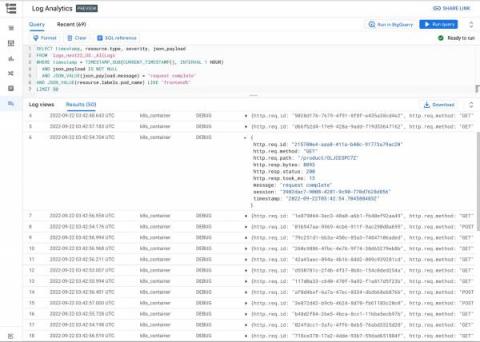
Introducing Cloud Logging - Log Analytics, powered by BigQuery

Logging is a critical part of the software development lifecycle allowing developers to debug their apps, DevOps/SRE teams to troubleshoot issues, and security admins to analyze access. Cloud Logging provides a powerful pipeline to reliably ingest logs at scale and quickly find your logs. Today, we’re pleased to announce Log Analytics, a new set of features in Cloud Logging available in Preview, powered by BigQuery that allows you to gain even more insights and value from your logs.

How to Scale Your Alerts Beyond PromQL with Coralogix Flow Alerts

When building alerts, engineers aim to create accurate, timely, and actionable alerts. In pursuit of this goal, many engineers will leverage PromQL throughout their careers. PromQL is the query language used by Prometheus and Alert Manager to query metrics and define alerting rules. While PromQL works very well for simple use cases, as infrastructure scales, architectural patterns grow more complex, engineering practices accelerate, and alerting use cases become more multivariate.

Deploy your Next.js application on Vercel using Sentry and GitHub Actions

Thanks to the power of open source tooling and cloud services, shipping an application to production has never been that easy, In this blog post, we are going to go from bootstrapping a Next.js application to deploying it on Vercel. We will use Github Action to handle the Continuous Integration and Sentry to monitor the application once it is deployed to be warned of any problems as soon as it arrives.

Why You Need Synthetic Monitoring

Synthetic monitoring can be one of the most powerful tools in your DevOps team’s toolkit, especially for the SRE, yet is one that is often overlooked by people building out a reliability mindset. Synthetic monitoring permits you to simulate any transaction or interaction users can have in your website or app, from places around the world, as often as you’d like.