Operations | Monitoring | ITSM | DevOps | Cloud

Introducing Cloud Logging - Log Analytics, powered by BigQuery

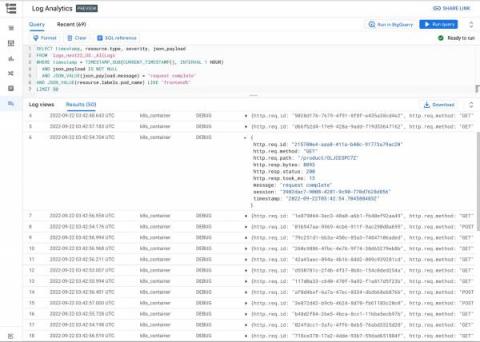
Logging is a critical part of the software development lifecycle allowing developers to debug their apps, DevOps/SRE teams to troubleshoot issues, and security admins to analyze access. Cloud Logging provides a powerful pipeline to reliably ingest logs at scale and quickly find your logs. Today, we’re pleased to announce Log Analytics, a new set of features in Cloud Logging available in Preview, powered by BigQuery that allows you to gain even more insights and value from your logs.
How to Scale Your Alerts Beyond PromQL with Coralogix Flow Alerts

When building alerts, engineers aim to create accurate, timely, and actionable alerts. In pursuit of this goal, many engineers will leverage PromQL throughout their careers. PromQL is the query language used by Prometheus and Alert Manager to query metrics and define alerting rules. While PromQL works very well for simple use cases, as infrastructure scales, architectural patterns grow more complex, engineering practices accelerate, and alerting use cases become more multivariate.

Deploy your Next.js application on Vercel using Sentry and GitHub Actions

Thanks to the power of open source tooling and cloud services, shipping an application to production has never been that easy, In this blog post, we are going to go from bootstrapping a Next.js application to deploying it on Vercel. We will use Github Action to handle the Continuous Integration and Sentry to monitor the application once it is deployed to be warned of any problems as soon as it arrives.

Why You Need Synthetic Monitoring

Synthetic monitoring can be one of the most powerful tools in your DevOps team’s toolkit, especially for the SRE, yet is one that is often overlooked by people building out a reliability mindset. Synthetic monitoring permits you to simulate any transaction or interaction users can have in your website or app, from places around the world, as often as you’d like.

An Open Source Observability Platform | SigNoz

Cloud computing and containerization have brought many benefits to IT systems, like speed to market and on-demand scaling. But it has also increased operational complexity. Applications built on dynamic and distributed infrastructure are challenging to operate and maintain. A robust observability framework can help application owners stay on top of their software systems. In this article, we will introduce SigNoz - an open source observability platform.

The Complete Kubectl Cheat Sheet [PDF download]

Kubernetes is one of the most well-known open-source systems for automating and scaling containerized applications. Usually, you declare the state of the desired environment, and the system will work to keep that state stable. To make changes “on the fly,” you must engage with the Kubernetes API.

How to get complete CI/CD pipeline observability

It's not like it used to be back in the day! Before CI/CD, we were building on-premises, service-oriented products following system style architecture and we were able to map out the build system and end-to-end process in a PowerPoint or Visio document. Although time-consuming and inefficient, it was relatively straightforward and the build pipeline was unlikely to change drastically. But that's no longer the case.

Scorecards for Resources

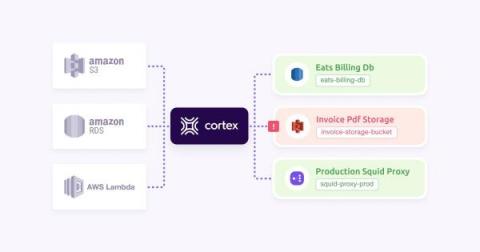
Cortex’s Resource Catalog allows engineers to track all of their infrastructure components — from databases to Kafta topics — in a single place. The Resource Catalog demystifies infrastructure, giving developers clear insights into exactly how their service architecture works. Using the Resource Catalog, it’s easy to find information about which infrastructure assets are running and how all the distinct components connect.

A Smart Home System That Does Not Rely On a Cloud

The cloud has been discussed extensively in recent years. Some people believe that it is the future of computing, while others think that it is inherently insecure and unreliable. Whatever your opinion may be, one thing is for sure: the cloud is not right for every application. In this blog post, we will discuss a smart home system that does not rely on a cloud server. Stay tuned to learn more!