Operations | Monitoring | ITSM | DevOps | Cloud

Getting started with the NGINX ingress controller

When moving production workloads to a new containerized environment, application traffic management (ATM) can become complex. This is especially true for organizations that are transitioning workloads to Kubernetes, as managing traffic requires load balancing and configuring other Kubernetes networking components, such as ingress and ingress controllers.


Security holiday calendar - Part 1

As it was well received last year, we decided to do another security-focused holiday calendar this year. The concept was roughly the same, but instead of only adding security hardening modules, we’ve also added in some other security advice and blog posts to improve the variety. Now that we’re halfway through to 24 (or 25), let’s recap the first half of the calendar.

Understanding InfluxDB IOx and the Commitment to Open Source

If you’ve been following InfluxDB, you’ve probably heard of InfluxDB IOx, the next evolution of the storage engine powering InfluxDB Cloud. However, I wanted to learn more about how the open source components of the new engine help achieve the requirements for the new InfluxDB engine and why they were chosen. This post covers that precise topic. We’ll also learn why InfluxDB chose to contribute to these open source projects and what our commitment to open source looks like today.

5 Approaches to Deep Learning Clustering You Really Need to Know

Data has become the most valuable thing in the modern world. According to earthweb, more than 2.5 quintillion bytes of data will be created every day in 2022. These large quantities of data should be appropriately organized to identify meaningful patterns for decision-making. Techniques like clustering are widely used to efficiently collect data into groups based on their similarities and differences and improve the observability of your data.

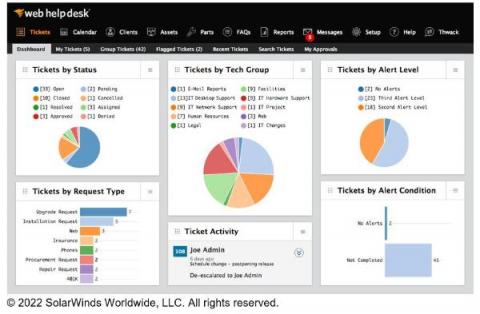
Guide to Proactive IT support and problem solving with dedicated tools

As organizations increasingly adopt more devices, applications, and other technologies, IT teams addressing problems before they arise is a vital part of avoiding downtime, maintaining productivity, and ultimately growing revenue. While a reactive approach has traditionally been good enough, the most successful organizations are increasingly taking proactive measures to ensure employees always have access to what they need with little or no downtime.

2023 ITAM Trends: 12 Key Things to Keep in Mind for Next Year

IT asset management (ITAM) is a critical corporate capability for keeping your organization and its assets safe. The global pandemic, in particular, put the need for effective ITAM capabilities front and center for many organizations, with investments in the are growing. But where is ITAM heading in 2023 and beyond? To help understand its evolution, we asked six ITAM and ITSM industry authorities for their opinions on the ITAM trends to keep in mind for 2023.

Rancher Wrap: Another Year of Innovation and Growth

2022 was another year of innovation and growth for SUSE’s Enterprise Container Management business. We introduced significant upgrades to our Rancher and NeuVector products, launched new open source projects and matured others. Exiting 2022, Rancher remains the industry’s most widely adopted container management platform and SUSE remains the preferred vendor for enabling enterprise cloud native transformation. Here’s a quick look at a few key themes from 2022.

NS1 Implements Honeycomb to Democratize Their Code and Spark Customer Joy

The line from observability to customer joy is straighter than you think. We recently learned this from NS1, a managed DNS provider and Honeycomb customer, in a panel discussion with Nate Daly, Head of Architecture at NS1 and Chris Bertinato, Software Architect at NS1.

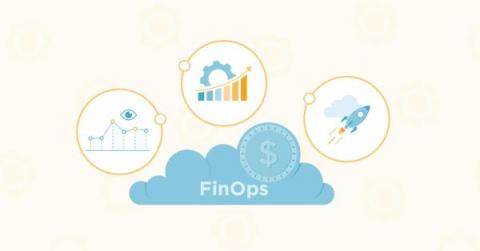
FinOps Vs. The Old Way: How Cloud Cost Optimization Is Evolving

In the early days of SaaS companies, most engineering and cloud operations teams weren’t tasked with monitoring or optimizing cloud costs. In fact, it would have been unlikely for these teams to care about cloud cost optimization at all, let alone take measures to fix issues and look for opportunities. Today, SaaS companies that want to secure a competitive foothold and ensure long-term success have to care about cloud costs.