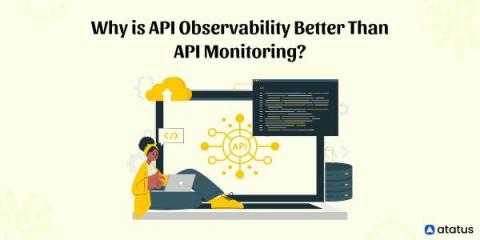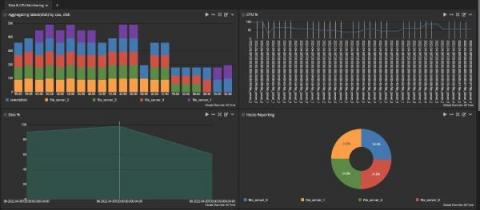
In recent years, there has been a rapid expansion in the API market. Today, every piece of software is either an API or uses one. They are now a crucial component of the modern digital economy. As a result, it is becoming increasingly important to grasp how to examine them carefully. In this article, we'll discuss the definitions of API observability and API monitoring as well as how API observability is better than API monitoring.
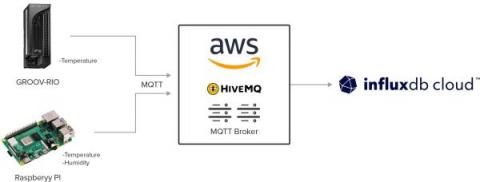
To a great extent, the value of the Internet of Things (IoT) is realized through the insights (data) generated from sensor data integrated in storage and analytics systems. Consequently, how the data integration is conducted directly impacts the success of IoT projects. For this reason, InfluxData introduced Native Collectors to bypass multiple data hops and enable one-step integration of data from data brokers such as HiveMQ MQTT broker into its InfluxDB Cloud time series database.
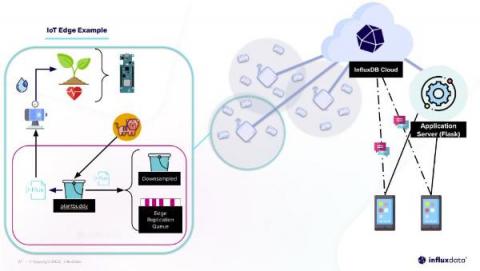
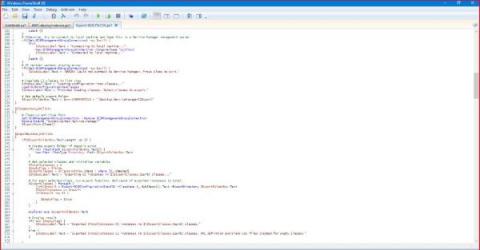
If you’re new to InfluxDB you might wonder, “Why does InfluxDB have its own query and scripting language (aka Flux)?” You might also be thinking, “InfluxDB has client libraries. Why and when should I use the Python client library and when should I use Flux?” In this post we’ll discuss when developers should use Flux and when they should use Python for developing their IoT applications.
Everyday when you come into work, you’re bombarded with a constant stream of problems. From service desk calls to network performance monitoring, you’re busy from the moment you login until the moment you click the “shut down” option on your device. Even more frustrating, your IT environment consists of an ever-expanding set of network segments, applications, devices, users, and databases across on-premises and cloud locations.
You’ve made the decision to implement a centralized log management solution because you know that it’s going to save you time and money in the long term. However, to get the most bang for your log management buck, you need to understand how the different parts of your log management deployment work. Once you understand each resource, you can implement a more efficient log management architecture.
Most automation approaches start in the same place; coding. For years, IT professionals have relied on scripts or series of scripts to perform tasks and then link them to provide an ‘automation. No-code or low-code reduces complexity and resource overhead, allowing both non-technical and technical users to automate processes through graphical user interfaces (GUI). In most cases, this involves drag-and-drop boxes that imitate a user’s interactions in a process.
In this podcast, the three incident.io co-founders Stephen, Chris and Pete take a trip down memory lane, revisiting the story of how they came to found incident.io and the major milestones of the first 12 months in business.
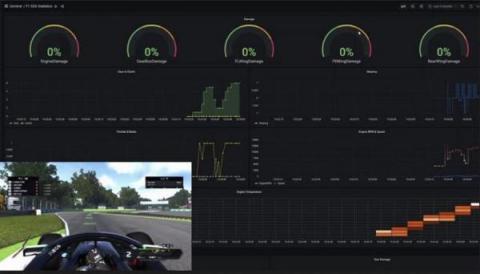
For Formula 1, speed is about more than just how fast you go around the track. It’s also about having data at your fingertips in real time to make critical improvements before, during, and after the race. “Formula 1 is one of the most fascinating data-driven sports,” said Anshul Sharma, Senior Product Manager at Microsoft. “It’s so competitive that even one tenth-second advantage can change the outcome of the race.”