Operations | Monitoring | ITSM | DevOps | Cloud

The Ultimate Guide to Containers and Why You Need Them

Containers have long been used in the transportation industry. Cranes pick up containers and shift them onto trucks and ships for transportation. Container technology is handled in a similar vein in the software world. A container is a new and efficient way of deploying applications. A container is a lightweight unit of software that includes application code and all its dependencies such as binary code, libraries, and configuration files for easy deployment across different computing environments.


Collect GitHub audit logs and scanning alerts with Datadog

For most organizations, GitHub is mission critical. Your GitHub repositories likely also contain some of your organization’s most sensitive data. GitHub provides tools to help you protect and govern this data, with tools such as audit logs, code scanning alerts, and secret scanning alerts. However, analyzing these logs and alerts through GitHub’s UI can be challenging. For example, looking for trends in your code scanning alerts over time through GitHub’s UI is just not possible.

Exoprise Extends the Service Watch Platform to Optimize the Digital Employee Experience

The secret to enterprise success is about driving digital business acceleration. With a new unified communication as a service (UCaaS) experience-based solution, Exoprise is at the forefront of improving workplace productivity and increasing employee retention.

Apache Kafka in the Airline, Aviation and Travel Industry

Apache Kafka is the de facto standard for event streaming use cases across industries. Many use cases can be applied to the aviation industry, too. Concepts like payment, customer experience, and manufacturing differ in detail. But in the end, it is about integrating systems and processing data in real-time at scale. For instance, omnichannel retail with Apache Kafka applies to airline, airports, global distribution systems (GDS), and other aviation industry sectors.

SOAP vs REST vs JSON - a 2023 comparison

SOAP vs REST vs JSON are comparisons that are frequently made in discussions about web services. While SOAP and REST are both leading approaches to transferring data over a network using API calls, JSON is a compact data format that RESTful web services can use. Deciding whether you should create a SOAP vs REST API is an essential question if you are planning to provide a web service. Each architectural style has its own use cases, benefits, and limitations.

How to monitor HTTP endpoints

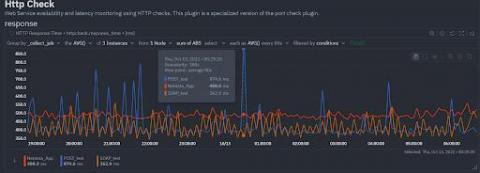
The HTTP protocol has become the de facto standard application layer protocol of the internet. From publicly available web sites and APIs to “inter-process” communications in REST based microservice architectures or large Service Oriented Architectures based on SOAP, you find HTTP being used again and again, due to its simplicity and our familiarity with it. How many protocols can you name that have memes for their status codes?

Where Are You In Your Observability Journey?

Observability is the ability to see and understand the internal state of a system from its external outputs. Logs, Metrics, and Traces, collectively called observability data, are three external outputs widely considered to be three pillars of observability. Now more than ever, organizations of all sizes must employ the necessary processes and technologies to harness the power of their data and make it more actionable.

Autoscaling Checkly Agents with KEDA in Kubernetes

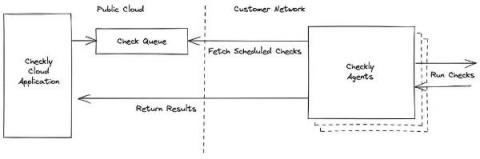
Checkly private locations enable you to run browser and API checks from within your own infrastructure. This requires one or more Checkly agents installed in your environment where they can reach your applications and our Checkly management API. You need to ensure you have enough agents installed in order to run the number of checks configured in the location. We have a guide to planning for redundancy and scaling in our documentation.

Grafana 9.2 release: Troubleshooting Grafana panels with a new support feature

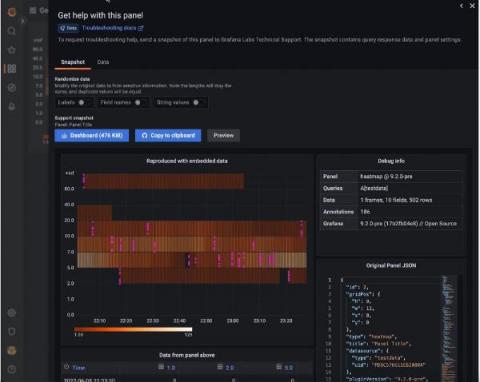
Ever run into issues building a panel in your Grafana dashboards? To help with those issues, the current support process for Grafana, Grafana Cloud, and Grafana Enterprise often requires many cycles where we request more information. This can be slow, frustrating for both our users and our support teams, and the process makes it difficult to reproduce issues without access to similar data.