Operations | Monitoring | ITSM | DevOps | Cloud

How you can use the Pandas Python collector to monitor weather data

Netdata just launched a Pandas collector. Pandas is a de-facto standard in reading and processing most types of structured data in Python so if you have some csv/json/xml data, either locally or via some HTTP endpoint, containing metrics you’d like to monitor, chances are you can now easily do this by leveraging the Pandas collector without having to develop your own custom collector as you might have in the past.

Your Business Requires a Resilient Internet

One of my initial surprises upon joining Catchpoint about five months ago was to do with how much confusion there is in the observability market. Every single vendor has almost the same message around ensuring a great digital experience for your customers or employees or both. Of course, these experiences are critical to get right, but for the most part many of these solutions, at best, help to ensure that sites are live and available, and that they are reachable by some users.

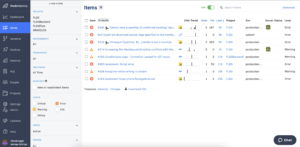
Untangling Account Management With User Permissions

Companies, like most things, rarely grow in a straight line. Plants will take root where they can, and send shoots where they can to get the most sunlight, even if there are obstacles in the way. But vines and branches aren’t known for their efficient pathing, which can make a tangled mess of the whole plant. So get a good sun hat and some pruning shears ready; you’ll need them today! The difference between organic and structured growth is one of purpose and planning.

The Open Source Observability Adoption and Migration Curve

Open source monitoring and observability tools can be found in production all over the world – whether they’re being used by startups or entire enterprise development teams. DevOps, ITOps, and other technical teams rely on tools like Prometheus, Grafana, OpenSearch, OpenTelemetry, Jaeger, Nagios, Zabbix, Graphite, InfluxDB, and others to monitor and troubleshoot their cloud environment.

How to create a data integration strategy for your organization

Developing a strategy for integrating data across your organization helps ensure that everyone has access to the most up-to-date data in a secure way. This article provides an example of a strategy you can use to develop your own. Despite the global digital acceleration of data use cases, many companies still struggle to be data-driven.

What is Istio Service Mesh, and Do I Need It?

Development teams build modern applications using microservice architectures. Individual services are built and maintained by separate teams, and then these services are combined using container-based orchestrators to comprise a complete product offering. Microservices are a standard development method because they allow teams to iterate releases, providing ongoing new customer-facing features and bug fixes without needing to redeploy an entire platform or app.

Announcing Rollbar Live In-App Chat Support

What’s better than great support? Live in-app support with a real person when you need it During the last two months we have been rolling out our live chat capability for all Rollbar users regardless of the plan you are on. That's right; you can now speak to a real person from our customer engineering team to help answer your product related question from within the Rollbar application. Our goal is to provide more support channels when you need it without having to wait for an answer.

How to monitor the impact of Puppet Runs using Hosted Graphite

In this article, we will look at what Puppet is and why it is important to monitor Puppet server metrics. We will also analyze the tools that help us monitor Puppet’s performance. Ultimately we will learn about the benefits of using Hosted Graphite by MetricFire to monitor Puppet server metrics. Sign up for MetricFire free trial today or book a demo with the MetricFire team to understand how you can take advantage of its monitoring solutions.