Operations | Monitoring | ITSM | DevOps | Cloud

Kernel-Level Visibility Without Instrumentation: What eBPF Changes for Container Security

Containers have changed how applications are built and deployed, but they have also made security visibility more difficult. Workloads are short-lived, services communicate constantly, and application behavior is distributed across containers, nodes, APIs, processes, and open-source dependencies. This is why many security teams are pairing eBPF with application-level runtime security. eBPF observes activity from the Linux kernel without requiring teams to modify every application, while runtime application security explains which code caused that activity.

How the Vulnerability Management Lifecycle Runs from Discovery to Verified Fix

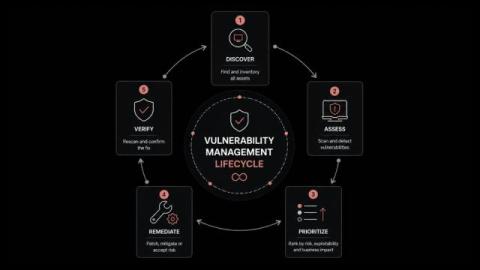
Who in your organization can say, without opening three separate systems, whether last month's critical findings are actually closed? A deployment record answers half of that. The other half needs a rescan, and the rescan often never happens. The vulnerability management lifecycle is that question written down as a repeatable process. It runs from knowing what you own through to proving a fix landed, and it restarts the moment it closes.

The New MCP Headers Are a Gift to Gateways

In short, buried in the transport section of the MCP 2026-07-28 release candidate are three changes that matter more to infrastructure teams than to anyone else: mandatory Mcp-Method and Mcp-Name headers, cache-control-style ttlMs and cacheScope fields, and standardized W3C Trace Context propagation. Together with the stateless core, they turn MCP from a protocol that gateways had to fight into one that meets them halfway.

Zero Day to Fix: Why Security Response Speed-Not Discovery-Is Your Real Bottleneck | Harness Blog

Here's the uncomfortable truth about the Mythos era: knowing about a vulnerability and being able to neutralize it are two entirely different problems. AI models like Mythos are finding vulnerabilities 10x faster than humans ever could. Project Glasswing participants discovered over 10,000 high and critical vulnerabilities in their applications. Firefox alone had 271 previously unknown zero-days exposed by Mythos. That's the good news.

Optimising IT Operations for Property Management Platforms

The property management industry has undergone a significant transformation, moving from paper-based ledgers and phone calls to sophisticated digital platforms. This shift places immense pressure on IT operations teams to ensure these platforms are reliable, secure and efficient. For modern property management to function effectively, the underlying technology must be reliable and consistently perform well.

What to Save Before Workplace Retaliation Erases Your Access

Picture a worker who reports unpaid wages or a safety concern to human resources. A few days pass, and suddenly the schedule shifts, the manager's tone turns cold, or the HR portal login mysteriously fails. As awareness around workplace retaliation rises in Los Angeles, employees are learning a hard truth about their digital evidence trail. Access to company platforms is only a temporary privilege, and employers control the master switch. Wait until a dispute escalates to save your records, and you may find the proof is already gone.
Sponsored Post

The key to secure transmission: TLS in the Raygun ecosystem

As our lives increasingly move online and data becomes the lifeblood of business, secure data transmission is imperative. From personal conversations to financial transactions, from healthcare records to sensitive business data, nearly everything we do online requires trust that our data is protected. And if you've ever made an HTTPS request, TLS is behind it, providing that trust.

Getting started with Ansible playbooks in CFEngine

Recently, I’ve been playing around with the ansible promise type by Fabio Tranchitella. It’s amazing how easy it is to leverage the benefits of agents with all the existing automation from the ansible community. Hence, I wanted to share it in a blog post, with an emphasis on easy. Let’s start off by creating a new cfbs project in a cfengine-ansible directory. Make sure to answer yes on the prompt to build on top of the default policy set.

VM Migration - What Happens to Your NSX Segments in Kubernetes?

Planning a migration off NSX usually starts with a networking conversation. Segments, VLANs, routing topology and BGP peering are not things that map cleanly to Kubernetes-native constructs the way the NSX distributed firewall maps to Calico’s tiered microsegmentation. NSX virtualizes the network layer in ways that Kubernetes doesn’t replicate by default. There is no native concept of a Layer 2 segment or VLAN, for instance.

What are the Key Features and Evaluation Criteria for Vulnerability Assessment Tools?

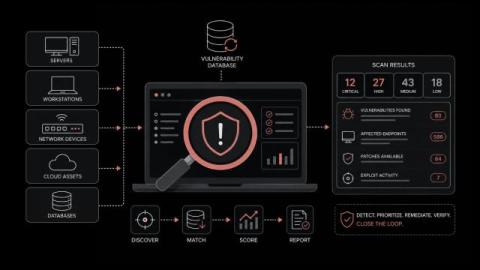
How many findings from your last vulnerability scan have been verified as fixed? For most IT functions, the scan report is easy to produce, and the proof of closure takes far longer to assemble. That difference tends to surface at the worst possible moment, usually an audit or a post-incident review. Vulnerability assessment tools are meant to end that uncertainty. They inspect systems, match what they find against public vulnerability databases, and rank each weakness by how dangerous it is.

What Is SOC 2 Compliance? Requirements, Controls, and Evidence

Your largest prospect has asked for your SOC 2 report. The deal sits still until you produce one. Most teams handle the first half of SOC 2 compliance fine. They control access. They run backups. They put changes through approval before anything ships. The second half is what stops them, and that half is proof. Your policy says access gets reviewed every quarter. The auditor wants the dated review, the signature on it, and the same record from eight months ago.

How to Secure Cisco AnyConnect, Fortinet, and Palo Alto VPNs with RADIUS MFA

VPN is the first thing attackers test when they're trying to get inside a network. Not because VPN is technically weak - it's not - but because it's the front door, it's usually internet-facing, and in most organizations it asks for exactly one thing: a username and a password.

Vulnerability Assessment and Penetration Testing: Differences, Cadence, and Cost

What do you say when an auditor asks for evidence that your security controls hold, and all you can produce is a scan report from last month? A scan lists weaknesses. It says nothing about whether an attacker could chain three of them together and reach the customer database. Vulnerability assessment and penetration testing answer two different questions about the same environment. The first asks what is exposed right now. The second asks what someone with intent and skill could do with that exposure.

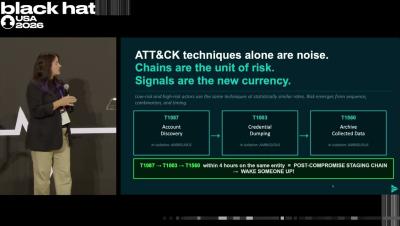
What Is the MITRE ATT&CK Framework? A Guide for IT Ops Teams

Most IT operations teams cannot say how much of the MITRE ATT&CK framework they already cover. The framework gets explained in the language of threat hunting and red teams. The parts that belong to infrastructure work are easy to miss. And then, coverage questions get answered with a guess. The mismatch costs time on both sides. Security asks for a coverage answer that ops has no clean way to produce. Yet the controls that stop a large share of those techniques already sit with your team.

Why QKD Is Gaining Attention in Critical Infrastructure Security

A power supply company has planned a renovation. Well, replacing the office furniture and appliances is not a hassle, but then changing the cryptography embedded in substations, control centers, field gateways, and decade-old operational technology requires different planning and execution. In most cases, these systems have been in service long after encryption protecting them has become questionable.

7 Business Messages That Need More Than a Send Confirmation

Some business messages carry legal or financial weight, and knowing that the email left your outbox tells you very little about whether that weight actually landed. Delivery receipts confirm that a server accepted the message, which falls a long way short of confirming that the right person received it, opened it, or got hold of it inside the window a contract or a statute allows. When a disagreement surfaces eighteen months later, nobody asks whether you meant to send something. They ask what you can show about when it went out and who took it in.

Why Responsible Technology Use Matters

Technology plays an integral role in our lives today. Technology is applied in communications, education, business, shopping, and various other tasks we undertake daily. The emergence of new forms of technology such as Artificial Intelligence, Cloud Computing, and IoT has made life more comfortable, but at the same time, they present challenges including privacy concerns, cyberattacks, and the spread of misinformation, among others.

What Is a Vulnerability Scan? How It Works and What the Results Mean

How many machines in your environment are running software with a publicly documented security flaw right now? That figure comes from an asset inventory, and asset records age quickly once they are written. The gap is rarely about tooling budgets. Software inventory across a few hundred endpoints shifts every week, while the published catalogue of flaws in that software grows every single day. Manual inspection loses that race inside the first month.

Ensuring Policies Are Read and Understood: The Power of True Policy Acknowledgment

Simply emailing a PDF or storing a document in a shared folder does not mean your team has actually read or understood it. True policy acknowledgment requires an active, trackable process that proves employees have received, reviewed, and agreed to critical corporate guidelines. Without measurable verification, organizations face significant compliance risks, audit failures, and operational gaps caused by unread policies. By implementing automated policy tracking in Microsoft 365, compliance managers and HR teams can replace manual follow-ups with automated workflows and real-time completion tracking.

Why Managed IT Solutions Are Critical for Protecting Sensitive Business Data

Every business, big or small, stores lots of sensitive information about their customers, finances, and day-to-day operations. Because businesses use an increasing number of digital tools to handle everything they do, there's a much higher chance that all this private info could be exposed, lost, or stolen.

How Entry Level Technology Skills Can Help You Build A Stronger Cybersecurity Career

Starting your cybersecurity career with some technology experience is a good move. The technology field is broad, but, overall, it refers to general technological concepts. Cybersecurity is about securing systems or networks, but, to a large extent, it is necessary to have some background information regarding technology in general. Entry level technology skills will provide the background needed to understand potential problems and the confidence needed to move forward in your career.

Top 8 Red Teaming Companies for 2026

Red teaming has become one of the most important ways for security leaders to validate whether their defenses can withstand realistic adversary behavior. Traditional vulnerability scans and annual penetr ation tests still matter, but they do not always show how attackers move across identity systems, cloud environments, endpoints, applications, networks, and people-driven processes. A strong red teaming company helps an organization answer a harder question: can our security program detect, contain, and respond to a realistic attack before real damage occurs?