As remote working culture becomes more prevalent, technology is now at the core of many business operations, and digital experience monitoring (DEM) has never been more important. In today's business, IT must help increase employee productivity and drive business growth rather than just solve problems at the support desk. Many companies have not yet fully implemented their digital experience strategy. As a result, many problems related to different devices, network conditions, and service providers are still plaguing the industry and ruining the employee experience.
Want to improve your outlook with a splash of RUM? In our pursuit of connecting users to the right data at the right time, we’ve come to see Real User Monitoring as an invaluable tool for understanding the total picture when it comes to your web properties, apps, and cloud footprint. Do you find yourself asking any of these questions?
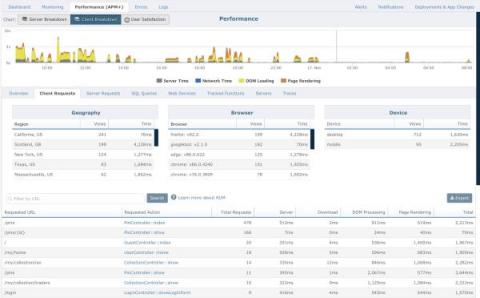
What is Real User Monitoring (RUM), and how does it help developers improve their applications? Real User Monitoring is a technology that analyzes the user experience on your web apps. Tracking how visitors interact with your pages, RUM tools capture how fast your pages load, your app’s responsiveness and its functionality. Compiled statistics help you gauge your users’ level of satisfaction with your web app.
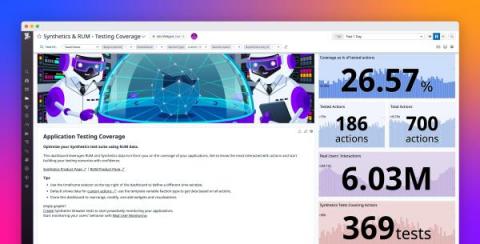
It’s important for both technical and business teams to understand the different web performance monitoring options that are available as well as their various use cases and the benefits of each. In this article, we’ll compare synthetic monitoring and real user monitoring (RUM).
As a software-based company, the most critical thing you can do is maintain control over your users' digital experiences and satisfaction levels. However, without a monitoring plan and technologies that allow you to see how customers interact with your application or website from their perspective is impossible. They provide you with the information you need to determine how well your webapp or website is operating and to avoid slow pages or screens that drive customers to your competitors.
Flutter is a popular open source framework that allows you to build, test, and deploy high-performance, multi-platform applications with a single codebase. Developed by Google, Flutter is backed by a robust developer community and is compatible with the latest native functionalities, including iOS Metal.