The latest News and Information on Monitoring for Websites, Applications, APIs, Infrastructure, and other technologies.
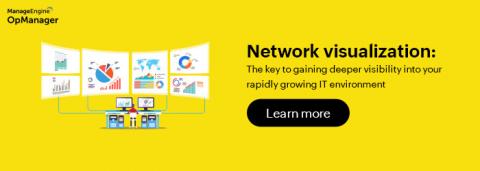
Businesses in today’s world use networks for almost all their operations. As businesses grow and expand with time, so do their needs. As a result, their networks can become increasingly complex and sophisticated. This can result in network administrators having a harder time monitoring devices and identifying faults. These bottlenecks can be circumvented with network visualization.
The year is over, and the word ‘Observability’ has been one of the buzzwords that kept everyone checking throughout the year for deserving reasons. The organizations do not want to leave any stone unturned to maintain performance and offer robust services from ‘monitoring’ practices to ‘observability’, ‘telemetry’, and visibility capacities. So let’s get into the meaning of each term and understand how they are vital for business growth.
Grafana Tempo 1.3 has been released! We are proud to add the capability to search the backend datastore. This feature will also appear soon in Grafana Cloud Traces. If you want to dig through the nitty-gritty details, you can always check out the v1.3 changelog. If that’s too much, this post will cover the big ticket items. You can also register for our upcoming webinar “Distributed tracing in Grafana: From Tempo OSS to Enterprise” on Jan.
With the ScienceLogic SL1 platform correlating and contextualizing data to generate actionable events that accurately reflect the issues that need attention, how do you make sure all your engineers and system admins are on the same page?
Included with Avantra Enterprise edition, Avantra Add ins are pre-packaged best practice scenarios that accelerate your business time to value using our expertise. One such Add in is SUSE hardening and is based on the hardening guide from the makers of SUSE Enterprise Linux. This Add in is a collection of eight custom checks that are designed to be extensible by you to match your organizational requirements.
All Cloud providers such as AWS, Azure, Google Cloud Platform, and Oracle Cloud offer Object Storage solutions to economically store large volumes of data and retrieve it on demand. It’s far cheaper to store one petabyte of data in object storage than in block storage. As AWS S3 has become the standard, many on-premise storage appliance vendors have incorporated S3 APIs to store and retrieve data. Oracle wisely continued that trend to OCI (Oracle Cloud Infrastructure).