The latest News and Information on Monitoring for Websites, Applications, APIs, Infrastructure, and other technologies.
SaaS is a new trend that is transforming how companies manage their software. Today, SaaS is one of the most popular ways to deliver your software. SaaS is cloud-based software deployed from a website and is used to provide software solutions at a cost lower than the price of traditional software licensing, including the ability to build and deploy a solution. It is gaining popularity because of its ease of use and flexibility to be updated frequently.
Examining Java logs is usually the quickest way to figure out why your application is experiencing trouble, so it's critical to have it in place. Best practices for Java logging can help you troubleshoot and address issues before they affect your users or business. In many circumstances, this entails utilizing a Java logging tool capable of automating your processes and delivering faster and more accurate results than manual logging.
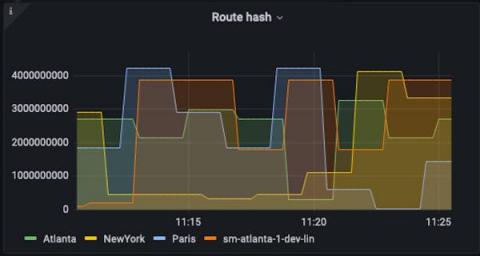
One of the powerful tools available in Grafana Cloud is Synthetic Monitoring, a black box monitoring solution that can provide insights that are hard to get in other ways. It provides a different view of your application by observing performance and uptime externally and from all over the world. As a result, you can build an understanding of what your end users are actually experiencing. However, as great as it is, synthetic monitoring does have limitations.
The last year has undoubtedly been a challenge for all of us. But humor us one final retrospective as we (happily) leave 2021 in the dust. Our mission remains to help you see what actually matters, solve quicker, and learn continuously about your applications. So here’s what we did this year to make that happen.
In this series of articles, we are reviewing in detail the PSTN routing for Microsoft Teams voice. In the previous article, we reviewed the challenges IT teams can face when mixing Microsoft Teams, PBXs and PSTNs. Now, let’s take a deeper look at the complexity and potential points of failure in the PSTN supply chain.
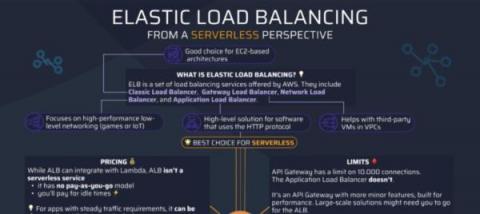
Load balancing is a significant part of every internet-facing software, and with Elastic Load Balancing (ELB), AWS offers a set of load balancers for every use case. Since our latest update, Dashbird also gives you insights into these ELB services; let’s look at them and see how they can be used in a serverless environment.
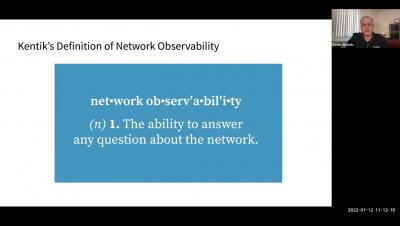
You know that observability plays a crucial role in helping to manage today’s distributed, cloud-native, microservices-based applications. But you may be surprised to learn that – despite its close association with modern applications – observability as a concept was born more than a half-century ago. Its origins stretch all the way back to the late 1950s, long before anyone was talking about microservices and the cloud.
Over 85% of global organizations will be running containerized applications in production by 2025 say Gartner, with 4 in 5 enterprises expected to move their workloads from on-premises infrastructure to the cloud. Migration to the cloud has IT admins and/or SREs managing an increasingly complex, hybrid IT environment, with an uphill battle of trying to monitor and troubleshoot their infrastructure components and services in real time.