Operations | Monitoring | ITSM | DevOps | Cloud

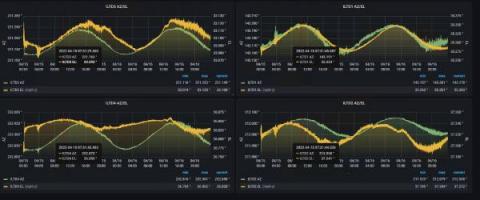
How to improve uptime with real-time monitoring, Grafana dashboards, and Grafana Loki: Inside Dish Network's observability stack

Dish Network is on a mission to connect people and things by changing the way the world communicates. With products ranging from Dish and Sling TV to retail wireless services and 5G networks, monitoring their satellite communications equipment is mission critical to maintaining extreme uptime for Dish’s 20 million customers across the United States.
Automate Your Boring Tasks with Ruby

If you aren’t already fed up with doing the same boring stuff over and over again, you will In the long run. Tasks which are repeated again and again in the same manner, such as System administration tasks, such as uploading your codebase, adjusting settings, repeatedly running commands, etc. tend to sap the enthusiasm you experience when working on your project.

7 Ways to Accelerate Cloud Native Development

Modern enterprises understand the need to move away from developing monolithic applications to ones that make best use of the cloud to enable business acceleration at scale and speed. That means transforming development to more resilient cloud native architectures that can be readily deployed to cloud, multi-cloud, and hybrid environments. What does it mean to be cloud native?

Status Pages: The Ultimate Guide

Status pages have become the end-users window into your team’s operations. Companies with status pages are doing the right thing for their users — building in some transparency while mitigating frustration and support contact. For the benefits of status pages to pay off, organizations need to treat them as something more than active wiki-pages run by support.

The Next Frontier for Observability: Data Ownership with OpenTelemetry

Observability is a mindset that lets you use data to answer questions about business processes. In short, collecting as much data as possible from the components of your business — including applications and key business metrics — then using an AI-powered tool to help consolidate and make sense of this huge volume of data gives you observability into your business. Having observability for your business and applications lets you make smarter decisions, faster.

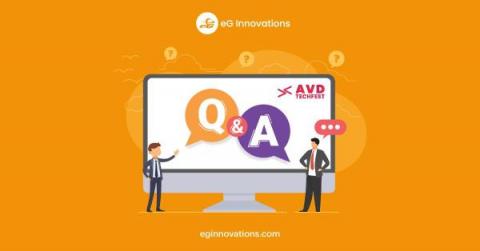
Azure Virtual Desktops: Questions & Answers

Recently, we hosted a great joint webinar with the team from AVD TechFest to present the results of a survey we conducted jointly to assess real-world Microsoft Azure Virtual Desktop (AVD) usage and industry and customer sentiments towards the AVD technologies. Alongside myself, Peter Claridge from eG Innovations and Simon Binder, digital workplace architect at Cygate and co-founder of the community-oriented AVD TechFest, were answering Azure Virtual Desktop questions.

Agent vs Agentless Monitoring: Which is Best?

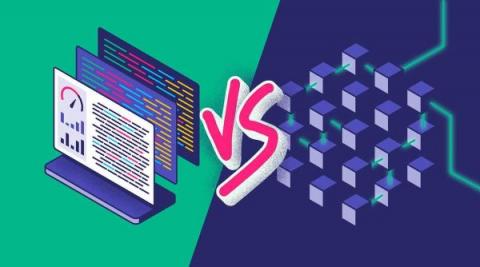
Agent-based and agentless monitoring are the two main approaches network monitoring tools use to capture and report data from network devices. As the names suggest, the difference between the two is pretty simple: someone has to install extra software(the agent) for agent-based monitoring to work. But, that doesn’t explain why an IT team or an MSP would choose agent-based or agentless monitoring.

Tracing vs. Logging: What You Need To Know

Log tracking, trace log, or logging traces… Although these three terms are easy to interchange (the wordplay certainly doesn’t help!), compare tracing vs. logging, and you’ll find they are quite distinct. Logs, traces, and metrics are the three pillars of observability, and they all work together to measure application performance effectively. Let’s first understand what logging is.