Infovista enables accurate Open RAN network planning with launch of Planet 7.7
Brings AI-powered, data-driven modeling to O-RAN to maximize operators' network ROI and subscriber experience.


U.S. enterprises investing in the Internet of Things (IoT) increasingly are starting out with long-term strategies instead of just discrete proofs of concept, according to a new research report published today by Information Services Group (ISG) (Nasdaq: III), a leading global technology research and advisory firm. The 2022 ISG Provider Lens™ Internet of Things — Services and Solutions report for the U.S. finds a growing number of U.S.
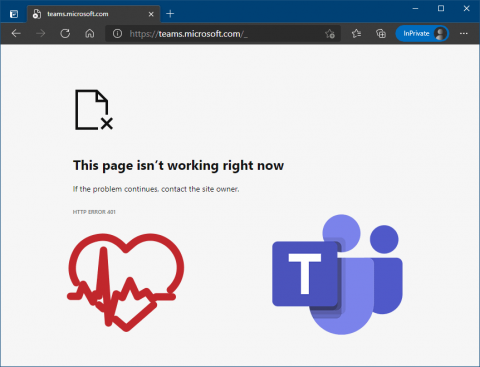
Microsoft’s unified communication and collaboration tool Teams suffered an hours-long outage on July 20, 2022 — affecting thousands of users globally. Exoprise sensors successfully detected Teams outage at least 30 mins before Microsoft officially confirmed the outage on its MSFT365status Twitter account. Below is what users saw when trying to access the Teams app or leverage any of its features.
An IP (Internet Protocol) address is a numerical label which is used for addressing he location and identification of the network interface for the devices connected to the computer network. The most used and popular IP version is IPv4 which uses 32-bit for IP addresses. Since the IPv4 became popular and the IPv4 addresses are getting depleted, Ipv6 is now used which uses 128-bit for the IP addresses.
Many Icinga users favour the Icinga Director to manage their Icinga configuration. Icinga Director comes with many features to enable you to create and modify Icinga configuration through the web interface. One outstanding feature of Icinga Director is the Activity and Deployment log. It tracks every configuration change and allows you to see who changed what at which time. You can roll back to older versions of your configuration at any time.
When you build modern cloud-based systems, you usually realize quickly that you need to manage the access to your deployed resources. This is especially true with serverless systems, where you often end up with dozens of resources, even for medium-sized architectures. AWS offers a few services you can use to set up a central entry point to your infrastructure. Elastic Load Balancer, API Gateway, and AWS AppSync. This article will discuss AppSync, AWS’s managed GraphQL service.
According to the 2021 Cost of Data Breach report, the average attack “dwell time”—the period between an attacker’s breach of an organization’s network and the point at which the organization finds out about it—is 287 days. During this time, the attacker can stealthily look to gather valuable information to steal or compromise data, incurring huge costs for affected companies.
For today’s IT operations teams, the stakes keep getting higher and demands only intensify. The services these teams are responsible for managing play an increasingly critical role in the prospects of the business, which means optimizing service levels is an absolute imperative. Meanwhile, the environments in play only seem to keep getting larger, more complex, and more dynamic. Given these factors, monitoring is a task that keeps getting more vital and more difficult.