With drift and other issues putting your desired state at risk every day, you may wonder: What is configuration management? And how does it work? Every organization needs to define the ideal configuration of its systems. That ideal configuration, or desired state, is the state in which systems and resources are aligned to support development, network performance, and efficiency. In short, you want your environment to keep running in a desired state. Configuration management helps you do that.
As a cloud administrator or developer, you may have accidentally deleted a storage account containing critical data. Losing important information can be a frustrating and costly experience. Fortunately, Azure provides several ways to recover a deleted storage account. In this article, we will discuss the steps involved in recovering a deleted storage account in Azure.
Consider the scenario – You are an SRE (Site Reliability Engineer) joining a team to take charge of their Java applications. It has been reported that a Java application is very flaky in terms of memory issues.
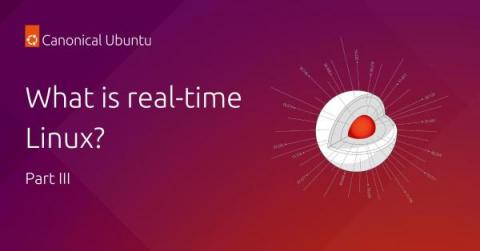
Welcome to the final post of this three-part series on real-time Linux. As market adoption of real-time computing continues to rise, real-time in the Linux kernel is emerging as a valuable solution on the software side. A real-time Linux kernel on its own, however, will not necessarily make a system real-time. We clarified this point in Part I and listed the common misconceptions and stack components.
Canonical is excited to announce it is now an official member of the Eclipse Software Defined Vehicle Working Group (SDV WG). Eclipse SDV focuses on software-defined vehicles (SDVs) and pushes innovations in automotive-grade solutions using open-source software. By offering an open technology platform, automotive companies can use and integrate open standards and powerful developer experience for their own software development.
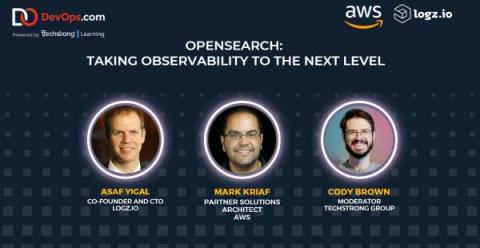
If you’re in the cloud engineering and DevOps space, you’ve probably seen the name OpenSearch a lot over the last couple of years. But, what is your current understanding of OpenSearch, and the components around it? Let’s take a closer look.
Because geofencing is a powerful tool, organizations that use the feature often rely exclusively on the technology for disciplinary action. For example, when an IT team receives an alert that a field worker has exited a geofence, they may immediately jump into corrective action, such as by issuing a written warning to the offender.