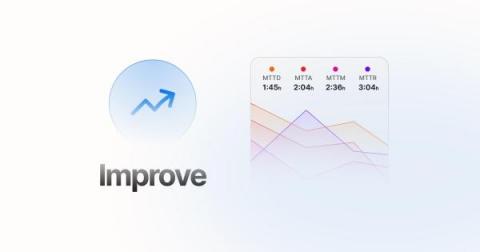
As the dependency on fast, easy-to-use technology continues to grow, it’s crucial for organizations to provide their employees with the best digital experiences possible. Workers are unable to successfully do their jobs if they frequently encounter disruptions and outages. Simply put, your IT infrastructure is critical to effective service operations. Technology optimization can help you make better use of the tools you already have and streamline the way your IT department functions.
Skipping the retro shouldn’t be an option. Ditch the one-size-fits-all process to ensure that this important step is held at the end of every incident. Here’s how to make it happen.
What is the difference with similar tools? Detect graftcp with Falco Conclusion A new network open source tool called graftcp (GitHub page) has been discovered in everyday attacks by the Sysdig Threat Research Team (TRT). Nowadays, threat actors try to improve their techniques by using new tools (as we mentioned in the PRoot article) to enhance the compatibility of their code to hit as many targets as possible and hide their traces properly.
In today’s digital age, managing data storage has become increasingly important, especially with the growth of cloud-based solutions. Azure Storage Accounts, a cloud-based storage solution provided by Microsoft, offer users a scalable and cost-effective way to store large amounts of data. However, as the amount of data stored in a storage account grows, it becomes crucial to manage the size of the account to optimize cost and performance.
Mission-focused teams that operate in contingency environments – think military branches, the intelligence community, NASA – increasingly depend on collaboration software. They need to share information quickly, nimbly, and securely. And they want to carry that out in contextual channels that enable them to see the right content at the right time to make informed, accurate decisions.
When we work at it, professionals are pretty good at analysis. We can break down a simple system, look at its parts and their relations, and master it. Given enough time and teammates, we can analyze a very complicated system and fix it when it breaks. But complex systems don’t yield to analysis. We have to add another skill: sense-making. Complex systems have parts that learn and change, with relations that vary with state and history. They respond to and influence their environment.
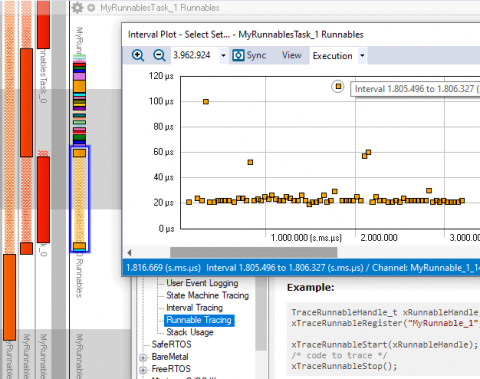
Tracealyzer® version 4.7 in now available for download and evaluation. This is a big feature update with several new capabilities and major improvements.