Operations | Monitoring | ITSM | DevOps | Cloud

4 Tools to Help Protect Against Online Identity Theft

Online identity theft has become a significant concern for everyone, especially as we rely more on the internet for various activities such as shopping, banking, and socializing. Identity theft occurs when someone steals personal information, such as name, address, social security number, or credit card details, to commit fraudulent activities. The consequences of identity theft can be severe: $15.1 billion in monetary loss in a given year alone!
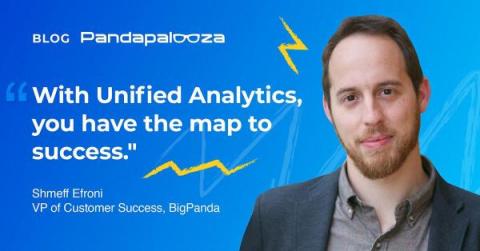
How to be successful with Unified Analytics

As an ITOps professional, it can be challenging to justify all of your actions to your organization. After talking with many of you, we saw first-hand the pains and gaps around showing the impact of your team and the constant struggle to measure how you’re improving. That’s where Unified Analytics comes into play.

Monitoring our monitoring

Last Saturday, our API went down. Not even a funny error message or slightly slower responses either, it just completely vanished off the internet for 18 minutes. I'm not normally one to point fingers at my hosting provider when things go wrong (since ultimately, I chose to use them, so it's my problem to fix), but when fly.io publicly posts on their forums about their reliability issues, I may as well link to them.

Data Modeling: Part 1 - Goals and Methodology

In different techniques, entities and relationships remain central. However, their nature and roles are reinterpreted according to the business goals. Data modeling is the process of defining and representing the data elements in a system in order to communicate connections between data points and structures. In his impactful book “Designing Data-Intensive Applications,” Martin Kleppmann describes data modeling as the most critical step in developing any information system.

Top 5 Reasons To Look for a New Patch Management Solution

As organizations grow, the number of tools needed for basic business operations grow with it. Unfortunately, as you add more tools to an organization, you increase the number of potential attack vectors. Within the National Vulnerability Database (NVD), there were 26,448 CVEs published last year, an increase of 20% over 2021. Each of these vulnerabilities serve as opportunities for bad actors to break their way into your network, leading to a loss of valuable data, money, and time.

Charmed Kubeflow 1.7 Beta is here. Try it now!

Canonical is happy to announce that Charmed Kubeflow 1.7 is now available in Beta. Kubeflow is a foundational part of the MLOps ecosystem that has been evolving over the years. With Charmed Kubeflow 1.7, users benefit from the ability to run serverless workloads and perform model inference regardless of the machine learning framework they use.

The Rise of the Cognitive NOC and the Role of IT Process Automation

Today’s Cognitive Network Operations Center (Cognitive NOC) is a significant advancement that employs artificial Intelligence (AI) and machine learning (ML) to dramatically modernize and improve network management and operations. Working together, the NOC and IT Process Automation (ITPA) propel superior efficiency and effectiveness of network operations, minimize downtime, lower operational costs, and overcome additional challenges in optimizing network performance.

Data & Traffic Are Key to Kubernetes Preview Environments

Preview environments are temporary environments where developers can test code changes before deploying them to production, also called ephemeral environments, they’re temporary and should be discarded after testing changes. Carrying out tests using accurate data is a major challenge when creating and destroying environments. Put differently, you need realistic data and traffic in the preview environment to reflect the performance of code changes in production.

Data Gravity in Cloud Networks: Distributed Gravity and Network Observability

So far in this series, I’ve outlined how a scaling enterprise’s accumulation of data (data gravity) struggles against three consistent forces: cost, performance, and reliability. This struggle changes an enterprise; this is “digital transformation,” affecting everything from how business domains are represented in IT to software architectures, development and deployment models, and even personnel structures.

Easily Monitor Google Cloud with Sysdig's Managed Prometheus

Google Cloud provides its own set of metrics for monitoring applications, services, and instances. There are a huge number of metrics – more than 1,500 different ones just for GCP monitoring! While this is great, dealing with such a number can also be overwhelming. Filtering, pulling, exploring, and storing the metrics that you really need can be an enormously time-consuming task, and a big challenge.