Operations | Monitoring | ITSM | DevOps | Cloud

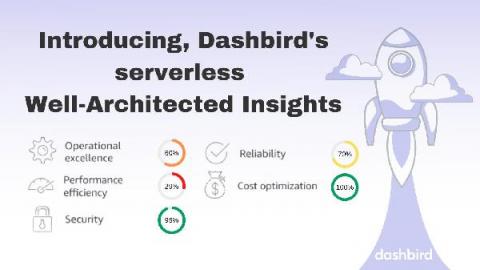
Introducing, Dashbird's serverless Well-Architected Insights

Dashbird now scans your serverless infrastructure for industry best practices. It’s the antidote for chaos. We’re excited to introduce the Dashbird Well-Architected Insights – a continuous insights scanner combined with Well-Architected reports. The new feature provides serverless developers with insights and recommendations to continually improve their applications and keep them secure, compliant, optimized, and efficient.

Sweetening Your Honey

Are you looking for a better way to troubleshoot, debug, and really see and understand what weird behavior is happening in production? Service-level objectives (SLOs) and observability can help you do all that—but they require collecting and storing the right data. If we’re naive with our telemetry strategy, we spend a lot of money on storing data without seeing adequate return on investment in the form of insights.

Only Autonomous Anomaly Detection Scales

Say you’re looking for a smart product to detect anomalies in your organization’s IT environment. A sales rep drops by and shows you all kinds of great artificial intelligence (AI) features with fancy-sounding algorithms. It sounds very impressive and seems like there is a lot of very valuable AI in the product. But, in fact, the opposite is true. This is a manual AI product wrapped in a deceiving jacket. Let me tell you more.

The Complete Guide to Java String Replace

One of the most commonly used functionalities for String objects in Java is String replace. With replace(), you can replace an occurrence of a Character or String literal with another Character or String literal. You might use the String.replace() method in situations like: In Java, keep in mind that String objects are immutable, which means the object cannot be changed once it’s created.

How to embed Grafana visualization in SquaredUp

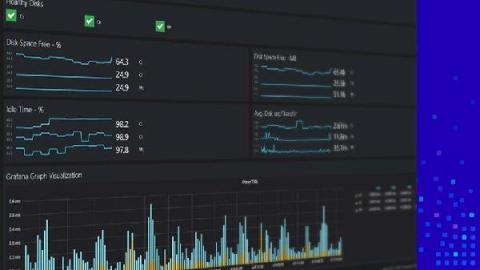
In our previous post on Grafana and SquaredUp, we compared the two tools across various benchmarks like ease of deployment, time to value, dashboard creation, dashboard sharing, and more. Both tools have their specific advantages over the other, but since the ultimate goal is to give you a single place to look – why not leverage Grafana for the visualizations and data sources it offers, but give them meaning by embedding them in SquaredUp?

Frequently Asked Questions | Vol 2

In an industry where technological evolution is commonplace, it’s easy to get lost in a sea of terminology and acronyms. It’s important to establish a solid foundation of understanding. In the second installment of our ‘Frequently Asked Questions’ series, we tackle issues related to effective monitoring, speed, and performance related to Microsoft 365 services.

Guest Blog: Airbrake & LogicMonitor = Awesome News

“On Tuesday, we announced some big news: LogicMonitor has acquired Airbrake — a developer-centric application error and performance monitoring platform. This acquisition represents the latest step in our company’s journey towards becoming an end-to-end infrastructure monitoring and observability platform. As part of the acquisition, I am thrilled to welcome the Airbrake team into the fold!

Troubleshoot problems using GitLab activity data with the new plugin for Grafana

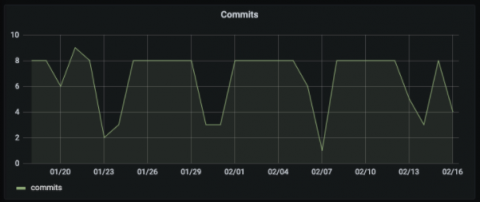
GitLab is one of the most popular web-based DevOps life-cycle tools in the world, used by millions as a Git-repository manager and for issue tracking, continuous integration, and deployment purposes. Today, we’re pleased to announce the first beta release of the GitLab data source plugin, which is intended to help users find interesting insights from their GitLab activity data.