Operations | Monitoring | ITSM | DevOps | Cloud

The State of EdTech 2021: Education Software Usage Analyzed

Today we will share our list of the most popular software tools used by education institutions. Why is this important? If you are managing technology in education you need to make the best choice from among many available tools. Discovering the most popular tools used by other education professionals can help you make an informed choice. After reading the report you’ll know which tools are relied upon by primary and secondary schools, colleges, and universities in the United States.
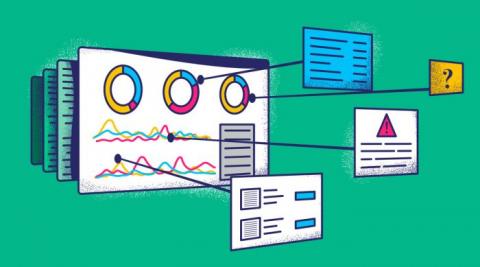
Key Differences Between Observability and Monitoring - And Why You Need Both

Observability and Monitoring are viewed by many as interchangeable terms. This is not the case. While they are interlinked, they are not interchangeable. There are actually very clear and defined differences between them. Monitoring is asking your system questions about its current state. Usually these are performance related, and there are many open source monitoring tools available. Many of those available are also specialized.

Four ways to send SCOM alerts to ServiceNow

If you work with Microsoft System Center Operations Manager (SCOM) and ServiceNow then you will be familiar with the fear of missing a critical infrastructure alert! But fear no more, we have just the ticket! Imagine if you could get these two tools working together, to fully synchronize your alerts and incidents for the lifetime of an issue – you’d be living the ITSM dream, right! So, here are our top four methods for making this dream a reality.

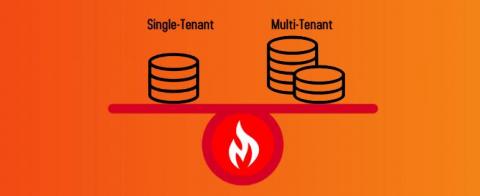
Single-Tenant Cloud vs Multi-Tenant Cloud

In this article, we shall talk about the advantages and disadvantages of single-tenant cloud and multi-tenant cloud. So let us get started! In the past decade adoption of cloud computing has been off the charts. For a long time most companies (primarily enterprises) managed their own IT infrastructure and they could reap the benefits of isolation, privacy and greater management control. This is what is known as a single tenant cloud architecture i.e.

How to Find Memory Leaks in Websites and Web Applications

Knowing how your users interact with your web application and how they experience it is crucial to provide the best possible experience. So what do you need to know? Start with metrics such as page load times, HTTP request times, and core Web Vitals – time to the first byte, first contentful paint. If you use Sematext Experience you’ll see a number of other useful metrics for your web applications and websites there. However, metrics themselves are only a part of the whole picture.

Windows network monitoring made easy with OpManager

Network administrators are responsible for the day-to-day operation of computer networks at organizations of any size and scale. Their primary duty is to manage, monitor, and keep a close watch on the network infrastructure to prevent and minimize downtime. Managing a network includes monitoring all the network components, including Windows devices. In any Windows network, the desktops, servers, virtual servers, and virtual machines (VMs), like Hyper-V, run on the Windows operating system.

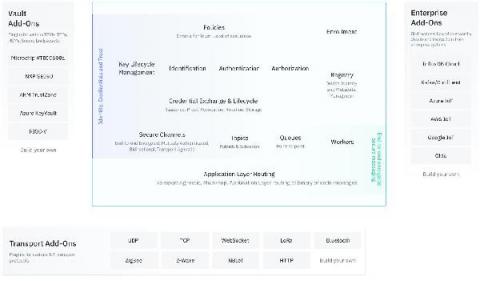
A Partnership Between InfluxData and Ockam Brings Trust to Time Series Data

This article is a re-post of the article written by Matthew Gregory and published on the Ockam blog. Let’s investigate how to build applications with trusted time series data in a zero trust environment! To trust an application we need to trust the data that feeds into it. Increasingly, applications rely on time series data from outside the datacenter, at the edge, or in IoT. This means we need to think of trust and data in new ways.

Splunking AWS ECS Part 2: Sending ECS Logs To Splunk

Welcome to part 2 of our blog series, where we go through how to forward container logs from Amazon ECS and Fargate to Splunk. In part 1, "Splunking AWS ECS Part 1: Setting Up AWS And Splunk," we focused on understanding what ECS and Fargate are, along with how to get AWS and Splunk ready for log routing to Splunk’s Data-to-Everything platform.

Show Your Query You Love It By Naming It

Honeycomb is all about collaboration: We believe that observability is a team sport, and we want to give you as many tools to help your team get the ball down the field (i.e., untangle knotty problems) as we can. We want you to be able to share the current state of your work so that others can follow and figure out what’s up, and we want you to leave breadcrumbs so the next time you’re stuck here, you can find your way back.

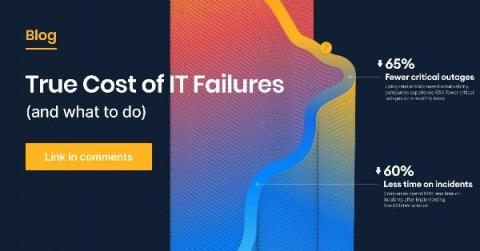
The True Cost of IT Failures (and What to Do Instead)

In this age of digital transformation, any issues with your IT infrastructure can cause major disruptions to your business. On top of this, IT environments that support critical business applications continue to get more complex and dynamic. As failures, outages, and incidents increase in volume and cost, the risk of an outage within your company becomes a very expensive one.