The latest News and Information on Monitoring for Websites, Applications, APIs, Infrastructure, and other technologies.
Ansible is a configuration management tool that helps you automatically deploy, manage, and configure software on your hosts. By turning manual workflows into automated processes, you can quicken your deployment lifecycle and ensure that all hosts are equipped with the proper configurations and tools. The Datadog collection is now available in both Ansible Galaxy and Ansible Automation Hub.
Terraform, a powerful Infrastructure as Code (IAC) tool, has long been the backbone of choice for DevOps professionals and developers seeking to manage their cloud infrastructure efficiently. However, recent shifts in its licensing have sent ripples of concern throughout the tech community. HashiCorp, the company behind Terraform, made a pivotal decision last month to move away from its longstanding open-source licensing, opting instead for the Business Source License (BSL) 1.1.
At BugSplat, we're always looking for ways to seamlessly integrate critical crash data into the support workflow. Another step in that quest has just been launched - the ability to automatically create defects from BugSplat databases in attached third-party trackers like Jira, Github Issues, Azure DevOps and more. This isn't just a new feature - it's a game-changer. Here's why.
Six months ago I attempted to get OpenTelemetry (OTEL) metrics working in JavaScript, and after a couple of days of getting absolutely no-where, I gave up. But here I am, back for more punishment... but this time I found success! In this article I demonstrate how to instrument a Node.js application for traces using OpenTelemetry and to export the resulting spans to Jaeger. For simplicity, I'm going to export directly to Jaeger (not via the OpenTelemetry Collector).
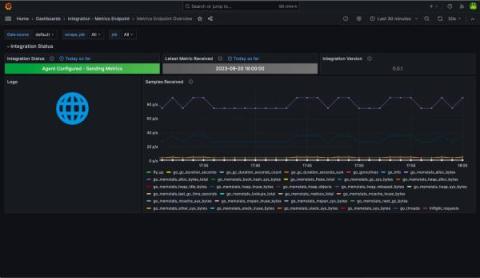
We’re excited to announce the Metrics Endpoint integration, our agentless solution for bringing your Prometheus metrics into Grafana Cloud from any compatible endpoint on the internet. Grafana Cloud solutions provide a seamless observability experience for your infrastructure. Engineers get out-of-the-box dashboards, rules, and alerts they can use to visualize what is important and get notified when things need attention.
The commercial version of InfluxDB 3.0 is a distributed, scalable time series database built for real-time analytic workloads. It supports infinite cardinality, SQL and InfluxQL as native query languages, and manages data efficiently in object storage as Apache Parquet files. It delivers significant gains in ingest efficiency, scalability, data compression, storage costs, and query performance on higher cardinality data.
Businesses are rapidly transitioning to the cloud, making effective cloud cost management vital. This article discusses best practices that you can use to help reduce cloud costs.