Cloud first was gospel for a decade. But the calculus has changed, and organisations are asking harder questions about where their workloads actually belong. In this clip, Civo Product Director Russ Smith breaks down the four forces that have converged to shift the default: spiralling bills that are no longer defensible at scale, the Broadcom acquisition that detonated VMware pricing overnight, sovereignty becoming a boardroom procurement requirement, and AI making new hardware brutally expensive.
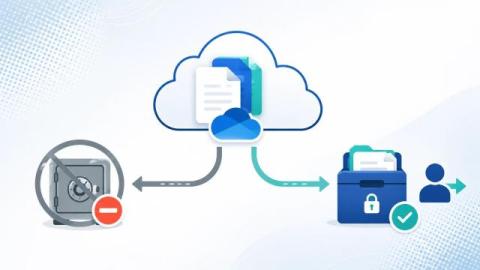
An employee's notice period is the highest-risk window for data theft. How to detect and stop SharePoint and Microsoft 365 data exfiltration by departing staff in 2026.
Over the past five years, one of the most consistently tracked figures in the UK business technology sector has been the flight from public cloud. Barclays' 2021 CIO survey revealed that 43% of enterprises plan to shift workloads away from public cloud. By 2024, that had grown to 83%.
After more than a decade of "cloud-first" strategies, a major counter-trend is reshaping enterprise IT: the systematic repatriation of workloads, data, and infrastructure back to on-premises and private data centers.
A deployment strategy is the method an engineering team uses to release new software to production. The six core deployment strategies are recreate (big bang), rolling update, blue-green, canary, A/B testing, and shadow deployment. Each trades off between downtime risk, rollback speed, infrastructure cost, and complexity. This guide covers all six along with what each strategy actually costs in cloud and AI infrastructure spend.
CloudZero now breaks out Snowflake Cortex spend on its own, so the AI usage buried in your Snowflake bill becomes a line item you can track and allocate before it ramps into a surprise.
Learn how to launch Ubuntu Pro versions that aren't available in the AWS EC2 quick launch menu. In this tutorial, Carlos Bravo from Canonical's Cloud team walks you through: Key Resources.
Most enterprises have observability tools. What they often lack is a shared view between application and infrastructure teams. When application performance degrades, finding the root cause can be slow because the data lives in separate silos. Virtana brings application observability and infrastructure intelligence together in a single platform, helping teams identify issues faster, collaborate more effectively, and shift from reactive troubleshooting to proactive operations.