If you’re a business or IT leader, you have got to be ready to face data loss incidents. Because here’s the deal — any data loss incident, whether caused by a cyberattack, human error or a natural disaster, has the potential to cripple your business. Not only could your company temporarily lose access to its mission-critical information leading to downtime, but it could also lose this data permanently.
Azure File Sync is a cloud-based service provided by Microsoft Azure that allows you to centralize your file shares while retaining the compatibility, performance, and flexibility of a traditional file server. It enables seamless synchronization and tiering of files between on-premises Windows Servers and Azure Files, making it easier for organizations to manage and access their data.

Managing IT infrastructure can be tough, especially when you’re dealing with scattered data, unexpected downtime, and slow problem-solving. The key to overcoming these hurdles is adopting a user-friendly, all-in-one Infrastructure Performance Monitoring (IPM) solution. In this blog, let’s explore how a top-notch IPM system can change the way you handle your IT infrastructure and show you how a cutting-edge IPM platform can address these common issues.
Are you ready to set sail on a journey to reliable connectivity with Microsoft Azure ExpressRoute monitoring? Just like navigating the seas, sailing in the cloud can be a bumpy ride if you don't have the right tools to keep your ship on course. But fear not, because we're here to help you chart a course to success with Azure ExpressRoute monitoring!
Azure Managed Disks are an essential component of the Azure cloud computing platform, offering a simple, scalable, and secure storage solution for Virtual Machines (VMs). This article provides a comprehensive analysis of Azure Managed Disks, including their types, benefits, and key factors to consider when making decisions about their usage.
SaaS Observability is a busy, competitive marketplace. Alas, it is also a very homogeneous industry. Vendors implement the features that have worked well for their competition, and genuine innovation is rare. At Coralogix, we have no shortage of innovation, so here are four features of Coralogix that nobody else in the observability world has.
I asked ChatGPT what a software development tool is and got the following response: Software development tools help developers create and deploy software. Examples include code editors, IDEs, and version control systems. They make coding easier, debugging faster, and collaboration smoother. While I agree with most, I’m missing the clear focus on software increments to improve software quality and achieve operational excellence.
Serverless services on AWS allow IT and DevSecOps teams to deploy code, store and manage data, or integrate applications in the cloud, without the need to manage underlying servers, operating systems, or software. Serverless computing on AWS eliminates infrastructure management tasks, helping IT teams stay agile and reducing their operational costs - but it also introduces the new challenge of serverless log management.
We are thrilled to share with you that Lumigo recently celebrated its 5th birthday! It’s been an incredible journey since our founding back in March of 2018, as we’ve made significant strides in providing developers a new way to troubleshoot their microservices in the cloud. From the beginning, our mission has been to help developers in organizations of any size to confidently take full advantage of all the promise of cloud architectures.
In today’s modern digital environment, many organizations are architecting their infrastructure and services around a mix of cloud and on-prem solutions. Both cloud and private servers offer unique benefits, and taking a hybrid approach to infrastructure can allow businesses to better meet user demand on a global scale while expanding capabilities, minimizing risk, and keeping services consistent.
Azure Blob Containers provide a scalable and cost-effective solution for managing unstructured data in the cloud. With a wide range of options and configurations, Azure Blob Storage offers flexibility and customization to cater to various data storage needs. This article provides a comprehensive analysis of key factors related to Azure Blob Containers and the importance of considering their impact when making decisions about Azure Blob Storage.
Do you ever feel like someone's watching you? Well, when it comes to your company's network, you should hope so! With so many people relying on Microsoft Teams, Office 365, and Azure to keep their businesses running smoothly, it's more important than ever to keep a watchful eye on your network. But who has the time to monitor everything 24/7?
Retention policies play a crucial role in managing the life cycle of data in cloud storage. This comprehensive guide will provide an in-depth analysis of key factors that impact costs, explore the challenges and tradeoffs associated with various approaches, and highlight the importance of considering the impact on Azure storage.
Microsoft Azure, a leading cloud service provider, offers a vast array of resources to its users. In this ever-growing ecosystem, managing and organizing these resources is crucial. Enter Azure Resource Groups, a vital component of Azure’s management framework. This article will provide a comprehensive analysis of Azure Resource Groups, delving into key factors and addressing common questions.
Azure Blob storage is a popular service provided by Microsoft, offering scalable, cost-effective, and secure cloud storage solutions for various types of unstructured data. This article aims to provide a comprehensive analysis of Azure Blob storage types, their pricing models, and the key factors that impact the cost of using these services.
To understand the cloud computing landscape today and what true digital transformation looks like, we should first understand how we got here.
Welcome to the cloud! As businesses and organizations continue to adopt cloud computing, the need for reliable and secure connectivity has become increasingly important. That's where AWS Direct Connect monitoring comes in, allowing you to establish a private, high-speed connection between your on-premises data center and your AWS cloud resources. But, as with any network connection, there are bound to be performance issues and configuration challenges along the way.
Azure Blob Storage is a scalable, cost-effective storage solution provided by Microsoft Azure. It is designed for storing massive amounts of unstructured data, including text, images, videos, and more. One of the key benefits of using Azure Blob Storage is its flexible pricing model, which allows users to pay for only the storage capacity and features they need.
Everyone knows that MicroK8s is an extremely lightweight, extensible, reliable, CNCF-compliant distribution of Kubernetes. What you didn’t know until now is that it is even easier to install and manage as part of your AWS marketplace experience. First, a quick reminder of why MicroK8s is great: What is new is that MicroK8s is now available on the AWS marketplace, combining all of MicroK8s advantages with the convenience of AWS.
Azure Data Lake Storage (ADLS) is a highly scalable and cost-effective storage solution provided by Microsoft Azure for big data analytics. ADLS can handle structured and unstructured data, making it a popular choice for businesses looking to optimize their cloud storage management. In this article, we will provide a comprehensive analysis of the key factors that impact costs in Azure Data Lake Storage.
As the amount of data generated by organizations grows exponentially, the need for efficient and cost-effective storage solutions becomes critical. Cloud storage providers like Microsoft Azure offer a range of storage options to meet these demands. One such option is Azure Cool Tier Storage, a part of Azure Blob Storage, which is designed for cost-effective storage of infrequently accessed data.
Migrating an on-prem database to a public cloud comes with a number of benefits, such as no longer needing to manage and maintain physical infrastructure, dynamic scaling, disaster recovery, and overall cost reduction. However, migrating to the cloud can often be a complex and daunting task. For instance, if an organization is a Microsoft shop with teams that rely on SQL Server databases, Azure is a natural fit for its needs.
What makes good team culture? Find out what the DORA Research says.
If you are like most organizations, your technology environment is a complex mixture of tools needed to run your business. In this environment, monitoring and observability are critical to making sure everything is running smoothly. You use monitoring tools to measure server resources, log-parsing tools for troubleshooting, application tools to observe application performance, and audit-request tools to comply with regulations. While these are all valid observability needs, there are risks to overdoing it by introducing too many tools. Here are some ways to avoid monitoring proliferation when developing your observability strategy.
Microsoft Azure Blob Storage is a scalable, cost-effective, and high-performance cloud storage solution that enables businesses to store massive amounts of unstructured data. With Azure Blob Storage, users can access and manipulate data from anywhere in the world through the Azure Storage REST API or the Storage Client Library. One of the key considerations when using Azure Blob Storage is the choice of storage tier, as it significantly affects cost and performance.
Azure Blob Storage is a cloud-based object storage service provided by Microsoft Azure. It allows users to store and manage large amounts of unstructured data, such as text, images, videos, and documents. With its high availability, durability, and global reach, Azure Blob Storage provides an ideal solution for businesses and individuals to store and access data securely.
The rapid advancement of cloud storage technology has revolutionized how businesses and individuals store and access data. With the proliferation of cloud storage services, understanding the cost implications has become increasingly important. This article provides a comprehensive analysis of the key factors that impact cloud storage costs, focusing on three major providers: Google Cloud Platform (GCP), Microsoft Azure, and Amazon Web Services (AWS).
Cloud repatriation is undoubtedly one of the hottest trends in the cloud infrastructure space as of 2023. It enables organisations to regain control of their cloud spend, workloads and data. According to a report on cloud repatriation by 451 Research group, 48% of IT decision makers confirmed that they had moved their applications away from hyperscalers to other venues in 2021.
Azure Blob Storage is a popular cloud storage solution that is both scalable and cost-effective. However, as organizations store more and more data, their storage costs can quickly get out of control. In this article, we will discuss five cost-effective tips for Azure Blob Storage, including how our software Cloud Storage Manager can help you manage your Azure Blob Storage more effectively.
In today’s fast-paced digital world, data is the lifeblood of businesses. As organizations generate more data than ever before, managing and storing that data has become a significant challenge. Cloud storage solutions such as Azure Storage have made it easier to manage and store large amounts of data, but with growth comes complexity. In this article, we will explore the challenges of Azure Storage growth and provide tips for effectively managing and optimizing your data.
Google Cloud Monitoring can now handle any kind of request bodies for POST requests, giving you better REST resource tracking.
In today’s digital world, software vulnerabilities have become a widespread concern. Cybercriminals are always looking for ways to exploit these vulnerabilities, resulting in devastating security breaches. That’s where patch management comes in. In this article, we’ll discuss what patch management is, its importance, and best practices to implement it.
If you’re using Azure Storage for your cloud infrastructure, it’s essential to control your storage costs to ensure that you’re operating efficiently and cost-effectively. In this article, we’ll explore the key strategies for controlling your Azure Storage costs, including using Azure Budgets, monitoring your budget, and optimizing your storage usage.
Amazon Web Services (AWS) recently announced the release of Amazon Linux 2023 (AL2023) as the next generation of Amazon Linux with enhancements to its already-proven reliability. Besides offering frequent updates and long-term support, AL2023 provides a predictable release cadence, flexibility, and control over new versions. It also eliminates the operational overhead that comes with creating custom policies to meet standard compliance requirements.
With the need for cloud computing and cloud-native technologies, many businesses are moving workloads to the cloud. Hence, there will be a need for a cloud service provider. This blog will cover the steps to choosing the perfect cloud provider and how a multi-cloud approach can reduce costs. In our meetup with Mark Boost, Dinesh Majrekar, and Saiyam Pathak, they discussed the current state of the cloud industry, why costs are so high, how to reduce your spending, and looking at how Civo can help.
Sysdig is pleased to announce that we’re now recognized as Amazon Linux 2023 Ready as part of the Amazon Web Services (AWS) Service Ready Program. Amazon Linux 2023 (AL2023) is the newest Linux operating system from AWS available to support your workloads running on Amazon EC2. The team at Sysdig validated AL2023 with Sysdig Secure and Sysdig Monitor to ensure full support for our container security and cloud-native monitoring capabilities with this latest OS.
Are you using Azure Storage services for your business or organization? Managing Azure Storage costs can be a challenging task for many businesses. Luckily, there are several tools available that can help you manage your Azure Storage costs efficiently. In this article, we will discuss the top 5 Azure Storage cost management tools you should know about.
As cloud storage becomes more popular, businesses are constantly looking for ways to improve their data storage solutions. One of the most popular cloud storage solutions is Azure Read-Access Geo-Redundant Storage, or RA-GRS. In this article, we will provide a comprehensive guide to Azure Read-Access Geo-Redundant Storage, including what it is, how it works, and its benefits.
When a tech community comes together, great things happen and Serverless Days ANZ 2023 was no exception. As soon as you checked-in, you could feel the community spirit, buzz and excitement that comes with an event like this. It’s been four years since the last Serverless Days ANZ was able to run IRL (In real life), and the local serverless community had been eagerly waiting for its return.
Over the past few months, I’ve written a couple of blogs analyzing significant Azure outages that affected multiple services. These articles covered detecting cloud outages long before Microsoft confirmed them and provided details of symptoms we saw. You can read these articles about a September 2022 outage and another in January 2023.
When it comes to storing data in the cloud, ensuring high availability and durability is of utmost importance. Azure Zone Redundant Storage (ZRS) is a feature offered by Microsoft Azure that provides local and geographic redundancy for your data, ensuring maximum data protection and minimal downtime. In this article, we will delve into the details of Azure ZRS, its benefits, and how to use it effectively.
Environment variables are the best way to store variables like API keys, secrets and databases URLs. Until today you had to create and update Env. Variable manually for each app even if they are inside the same project and share the same credentials. Today, we are launching Project-level Variables: Project-level Variables are environment variables created at the project-level. You can create and consume an unlimited number of environment variable directly from your project main page.
Designing SLOs is a key SRE competency which requires careful consideration and a consistent approach to implementation.
As more and more companies move their data to the cloud, the importance of data redundancy cannot be overstated. Losing data can be catastrophic, so having multiple copies of your data in different locations is essential to ensure data availability and business continuity. One way to achieve this is through Azure Locally Redundant Storage (LRS). In this article, we will cover everything you need to know about Azure LRS, including what it is, how it works, and its benefits.
Modern enterprise IT infrastructures are complex beasts. They grow and morph organically over time and have likely undergone one, if not more, significant point-in-time transformations.
As businesses grow, they need more storage space for their data. Azure Geo-Redundant Storage (GRS) is a powerful tool that helps organizations store their data in a secure and efficient way. In this article, we will explore the concept of Azure GRS, its benefits, and how it works.
Microsoft Azure is a cloud computing platform that offers a wide range of services to businesses of all sizes. One of the critical aspects of any cloud service is high availability and resiliency, which ensures that your applications and data are always accessible, even in the event of hardware failures or updates. Azure provides two critical features to achieve high availability and resiliency: Azure Fault and Update Domains.
Interoperability — it’s one of the main reasons I joined Grafana Labs. Our “big tent” philosophy helps Grafana work with a wide range of data sources and tools, and it’s why you can use Grafana to address endless use cases and problems. We are best known for the seamless way we correlate metrics, logs, and traces to understand what is happening in the environment, resolve the immediate issue, and address any underlying issues so that it does not happen again.
If you’re looking for a cost-effective way to store your rarely accessed data, Azure Storage Archive might be the perfect solution for you. This cloud-based storage service offered by Microsoft Azure provides an affordable and secure option for archiving data that is not frequently used, yet still requires retention for compliance reasons. In this article, we’ll dive deep into Azure Storage Archive, discussing its features, benefits, and how it compares to other Azure storage options.
A new navigation experience will be rolled out in Grafana Cloud this month, with improvements designed to make Grafana more seamless to use. Along with updates in Grafana’s search and navigation, there is a new enhanced command palette that helps streamline workflows and allows you to move through the platform without even taking your hands off the keyboard.
ManageEngine CloudSpend is a cloud cost management tool that helps you reduce overhead cloud costs using actionable insights. The CloudSpend mobile application enables users to perform actions on the go for their cloud services from their mobile devices. CloudSpend supports AWS and Microsoft Azure cloud services and is planning to launch GCP in the future.
One of the first cloud storage services around, the name Dropbox is synonymous with “uploading data to the cloud." Though Dropbox is a fine cloud service, its services tend to land on the expensive side. With features like enhanced collaboration features and a mature, clean layout, it's easy to see why so many people originally gravitated to Dropbox.
Azure Storage is a cloud-based storage solution that provides secure, scalable, and highly available storage for your data. It is a crucial component of Microsoft’s Azure cloud platform, providing various storage services, including Blob Storage, File Storage, Queue Storage, Table Storage, and Archive Storage. In this article, we’ll take a deep dive into Azure Storage and discuss 90 things you may not know about it.
Google Cloud provides its own set of metrics for monitoring applications, services, and instances. There are a huge number of metrics – more than 1,500 different ones just for GCP monitoring! While this is great, dealing with such a number can also be overwhelming. Filtering, pulling, exploring, and storing the metrics that you really need can be an enormously time-consuming task, and a big challenge.
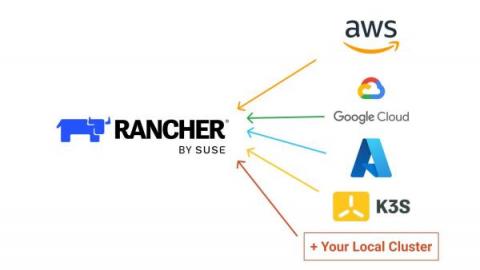
Rancher is a Kubernetes management platform that creates a consistent environment for multicloud container operation. It solves several of the challenges around multicloud Kubernetes deployments, such as poor visibility into where workloads are running and the lack of centralized authentication and access control. Multicloud improves resiliency by letting you distribute applications across providers.
We will focus on the audit logging of Google cloud itself, however, the input supports the below sources when it refers to Google Cloud Logs.
As a cloud administrator or developer, you may have accidentally deleted a storage account containing critical data. Losing important information can be a frustrating and costly experience. Fortunately, Azure provides several ways to recover a deleted storage account. In this article, we will discuss the steps involved in recovering a deleted storage account in Azure.
In today’s digital age, managing data storage has become increasingly important, especially with the growth of cloud-based solutions. Azure Storage Accounts, a cloud-based storage solution provided by Microsoft, offer users a scalable and cost-effective way to store large amounts of data. However, as the amount of data stored in a storage account grows, it becomes crucial to manage the size of the account to optimize cost and performance.
Azure File Storage is a cloud-based storage solution that allows users to create and manage file shares in the cloud. It is an excellent choice for businesses that require scalable and durable storage for their data. Azure File Storage Performance Tiers are one of the essential components of this solution, as they determine the level of performance and cost of your storage.
If you’re using Azure, you likely already know that it offers a wide range of storage options that can be used for various purposes. However, with so many storage options and regions available, it can be challenging to keep track of your usage in each Azure region. In this article, we’ll explore how to track your storage usage in each Azure region, and optimize your storage usage using Azure’s built-in monitoring and analytics tools, and Cloud Storage Manager.
Breaking down cloud management platforms and hybrid/multicloud management In our recent Whiskey and Wisdom session, we discussed how ITOps teams are coping with the evolution of cloud management. Whiskey and Wisdom is a monthly executive-only forum where IT operations leaders can network independently and discuss high-level AI operations and ITOps strategies with their industry peers.
Azure Blob Storage is a cloud-based storage solution that enables developers to store and manage large amounts of unstructured data. Blob storage can store any type of text or binary data, such as documents, images, audio, and video files. Blobs are divided into three types: block blobs, append blobs, and page blobs. Each type of blob has its unique characteristics and is used for different purposes.

With artificial intelligence and machine learning in the news of late, what might they mean for cloud computing? Michael Vitale explains how we’re positioning these technologies to benefit our customers.
A few months ago, I wrote an article about a serious outage of Azure and how eG Enterprise enabled us and our customers to understand the issue long before Microsoft had confirmed the issue and updated their service status pages.
In today’s world, data is king. Companies and organizations are generating vast amounts of data every day, and they need a way to store, manage, and organize that data. This is where cloud storage solutions like Azure Blob Storage come into play. Azure Blob Storage is a scalable, secure, and cost-effective cloud storage solution that allows you to store and retrieve large amounts of unstructured data. One of the key features of Azure Blob Storage is metadata.


Since the very first version, Epinio has made use of an internal S3 endpoint to store the user’s projects in the form of aggregated tarballs. Those objects are then downloaded and staged by the internal engine’s pipeline and, finally, they are deployed into the Kubernetes cluster as consumable applications. Epinio makes use of S3 as an internal private service. In this scenario, S3 can be thought of as an internal ephemeral cache with the purpose of storing temporary objects.