Operations | Monitoring | ITSM | DevOps | Cloud

New Beta feature: Google Cloud Private Status integration!

We are excited to announce that Google Cloud is the latest addition to our suite of Enterprise infrastructure integrations! While StatusGator has long monitored the public status of Google Cloud services, this new integration goes deeper. You can now monitor the personalized health of your specific Google Cloud projects directly within your StatusGator dashboard.

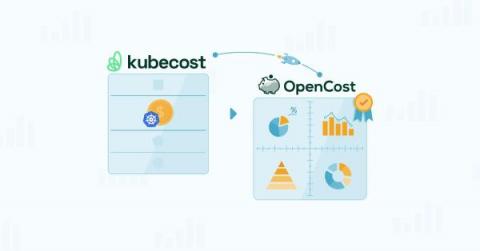
Kubecost Vs. OpenCost: What's The Difference? (Updated 2026)

Kubernetes (K8s) adoption has exploded over the past few years. But it hasn’t been easy to monitor, manage, and optimize K8s costs. To provide greater cost visibility into Kubernetes clusters and environments, Kubecost launched in 2019 and was acquired by IBM in 2024, while OpenCost debuted in 2022. OpenCost has several founding contributors. But Kubecost developed the cost allocation engine that the OpenCost implementation uses.

I Fixed a $30K/Year Anomaly in the Time It Takes to Make Coffee

If you work in FinOps, you know the feeling. You open your recommendations queue on a Monday morning. There are 47 items. You worked through 12 of them last week. You’re back up to 47 again. All represent real money leaving the building, but not all are “bad money” – of those 47, a significant share will be “this is ok, expected, we got value”. That’s what really kills FinOps enthusiasm (and is why the engineer is skeptical towards the FinOps person).

Developer guide for migrating to reproducible environments without rewriting

The primary obstacle to adopting reproducible environments is often the assumption that environment parity requires containerizing legacy monoliths from scratch or abandoning stable CI/CD pipelines. In reality, reproducibility is about capturing application intent through configuration rather than rebuilding the application itself. This guide outlines a non-disruptive, incremental path to migrating your workflow to production-identical environments without touching your core codebase.

Cloud Sovereignty: Location, Access, and Jurisdiction

Cloud residency has moved from a technical preference to a board-level control question, as organisations are being asked to evidence who can access data, under which jurisdictions, and what happens when something goes wrong across borders. A Gartner survey of CIOs and IT leaders in Western Europe found that 61% expect geopolitical factors to increase their reliance on local or regional cloud providers, while also predicting that by 2030, more than 75% of enterprises outside the US will have a digital sovereignty strategy.

The SaaS Paradox: Why Companies Must Spend More On AI To Survive

At SaaS Metrics Palooza 2025, CloudZero CEO Phil Pergola delivered a keynote on the software industry’s most pressing question: can SaaS survive the AI revolution, or will AI rewrite the SaaS playbook outright? Phil’s answer wasn’t doom and gloom, but he didn’t sugarcoat the challenges. “Churn rates are up,” he told moderator Ray Rike of Benchmarkit on Oct. 9, 2025. “The payback from a customer acquisition cost perspective is taking longer.

How to Harden Ubuntu SSH: From static keys to cloud identity

30 years after its introduction, Secure Shell (SSH) remains the ubiquitous gateway for administration, making it a primary target for brute force attacks and lateral movement within enterprise environments. For system administrators and security architects operating under the weight of regulatory frameworks like SOC2, HIPAA, and PCI-DSS, default SSH configurations are an “open door” that represents an unacceptable risk.

AZ-500 and DP-203 Certification Path for Microsoft Azure Security and Data Engineering Careers

Microsoft Azure has become one of the leading cloud platforms in the world, powering businesses of all sizes. As organizations continue to migrate to cloud infrastructure, the demand for certified Azure professionals is increasing rapidly. Among the most valuable certifications in this ecosystem are AZ-500 (Azure Security Engineer Associate) and DP-203 (Azure Data Engineer Associate).

Mastering Microsoft Azure Certification Preparation with Reliable Study Resources

The demand for cloud computing professionals has surged dramatically in recent years, and Microsoft Azure stands out as one of the leading cloud platforms globally. Whether you are a beginner stepping into the IT world or an experienced professional aiming to validate your skills, Azure certifications like AZ-900 and AZ-500 play a crucial role in enhancing your career prospects. Preparing for these exams requires not only dedication but also access to high-quality study materials and reliable practice resources. This is where platforms like Exam-Labs.com become valuable for candidates seeking structured and effective preparation strategies.

High-Performance Range Queries in PostgreSQL: Overcoming Bottlenecks in AWS Aurora

Short Summary: PostgreSQL can slow down when range queries and frequent data updates rely on the same indexes. This guide shows how to spot the problem and use Devart tools to reduce B-Tree index conflicts, improve query plans, and manage bi-weekly data updates in AWS Aurora.

How Much Does It Cost To Keep Up With The AI Joneses?

I’ve been an engineering leader for over a decade, and I’ve spent most of those years in private Slack groups with other engineering leaders, comparing strategies and kvetching about Kubernetes. Of the hundreds of threads I’ve taken part in, the one that got the most engagement the fastest was a recent one around AI adoption. “Where are you on this continuum?”, it read. “A. You don’t really care how people use AI; B. You push people to use AI; or C.

AI Cost Management: How To Track, Allocate And Optimize AI Spend

AI cost management is the practice of tracking, allocating, and optimizing the cloud infrastructure costs tied to building, running, and scaling AI workloads. It differs from traditional cloud cost optimization because AI infrastructure behaves differently at every layer of the stack. The biggest problem isn’t overspending. It’s that most organizations can’t see where their AI spending is going.

Edging closer: the tech trends shaping digital ambitions now

Ahead of his participation in techUK’s Digital Transformation from the Edge to the Cloud event, we sit down with Pulsant CTO Mike Hoy to ask him how distributed cloud and edge are reshaping the digital ambitions of UK businesses. Q: So Mike, what are the main issues firms face in designing/redesigning their digital infrastructure in 2026?

£10M Investment in UK AI Infrastructure | Pulsant CEO Talks to Data Centre Solutions

Join Pulsant CEO Rob Coupland in an exclusive interview with Phil Alsop, Editor at Data Centre Solutions (@datacentres), as they explore Pulsant’s £10 million investment in the Milton Keynes data centre. This upgrade delivers high-density, sovereign computing capacity, helping businesses accelerate AI and tech projects while keeping data secure and local. Rob also shares plans to expand this high-density model across the UK, supporting enterprise AI at scale and boosting local economies.

AWS VPC Peering Vs. Transit Gateway: Which To Choose And Why [2026]

VPC peering can be simple and cost-effective in smaller setups. For growing multi-account platforms, Transit Gateway can offer predictable structure and centralized governance. But that’s not all. AWS VPC peering connects two VPCs directly with no hourly fee — simple and cost-effective at small scale, but it creates an unmanageable mesh as your VPC count grows.

Jensen Huang's warning: lead the AI transition - or finance it

The wrong people got the most attention from Jensen Huang’s comments last week. Huang told the All-In Podcast that he’d be “deeply alarmed” if a $500,000 engineer consumed less than $250,000 in AI tokens annually. Within 48 hours, the discourse collapsed into a compensation debate.

CloudZero Brings Cloud Cost Intelligence to 13 AI Coding Tools - Cursor, Copilot, and More

Earlier this month, we announced the CloudZero Claude Code Plugin and the CloudZero AI Hub — the first step toward putting your cloud cost data directly inside the AI tools your team already uses. The feedback from customers was clear. They said engineers and FinOps teams wanted more tools and more ways to get answers from CloudZero without switching context. Today, we’re delivering more.

What Are AI Inference Costs? [And How To Manage Them]

If you’re building or running AI-powered features in production, you need a clear understanding of inference costs. Get it right, and you can turn your AI investments into profitable growth. As Larry Advey, Director of Cloud Platform and FinOps at CloudZero and a member of the FinOps Foundation Technical Advisory Council, puts it: “AI investments will only continue to grow.

Application Portfolio Assessment vs AWS Transform

Organizations starting AWS Migration Acceleration Program (MAP) Phase 1 face a tooling choice. Which assessment platform should they use? Most start with AWS Transform. It is built by AWS. It produces migration cost estimates, instance recommendations, and agentic execution for VMware, .NET, mainframe, and other workloads. This is half the picture.

How to Automate Your Entire Cloud Deployment Lifecycle with IaC

In today's digital world, businesses depend on cloud infrastructure to run applications, manage data, and deliver services smoothly. However, managing cloud environments manually can quickly become complex and time-consuming. Teams often deal with repeated tasks, inconsistent setups, and unexpected errors.

10 Best Snowflake Monitoring Tools (Updated 2026)

Snowflake is a cloud data platform designed for large-scale analytics, data warehousing, and data processing. It allows teams across an organization to run multiple data workloads on a single platform without managing infrastructure. Snowflake’s architecture is also unique. Compute and storage are completely independent and highly elastic. However, Snowflake’s per-second pricing and elastic compute model make costs highly sensitive to usage.

Bank cloud migration without a feature freeze

How financial institutions can escape the "Big Bang" migration trap and keep shipping features the entire time. Every bank executive knows the math. Legacy core systems cost more each year, slow product launches, and widen the gap between what customers expect and what the institution can deliver. Over 50% of banking executives say their current systems can't support long-term digital strategy. The case for modernization is airtight. So why do most hesitate?

DORA exit strategy for financial services: portable cloud architecture with Upsun

Financial institutions are required to prove they can operate safely in the cloud without becoming dependent on a single technology provider. What happens if your cloud provider fails, or you are required to move? The question used to be theoretical. However, since January 2025, it has become a compliance requirement.

Why Fintechs are moving to automated compliance

Manual compliance work is a hidden drag on delivery speed for fintechs and regulated institutions. There is a faster path. Companies handling payment data know the cycle: every new feature requires security audits, evidence collection, and control verification before release. The traditional approach to building a compliant stack means taking on every layer yourself.

How to Protect Website Monitoring from Cloud Disruptions

The cloud is often spoken of as a separate realm where data exists safely away from the messy realities of the physical world. But as the events of March 2026 have reminded us, the cloud has a physical home, and that home is susceptible to the same disruptions as any other infrastructure. Here’s how diversified monitoring across independent data centers can keep visibility intact when cloud services go down.

The Complete Guide to Kubernetes Cost Optimization

Kubernetes has revolutionized modern computing infrastructure, offering organizations near-infinite scalability, unparalleled agility in deploying new applications, and enhanced security. However, as enterprise cloud adoption continues to accelerate, that agility often comes with an unintended and costly side effect: skyrocketing cloud bills.

NVIDIA's Jensen Huang just described your next big cost problem

On March 18, Jensen Huang took the stage at NVIDIA’s GTC conference in San Jose for a keynote that ran well over two hours — covering everything from CUDA’s 20-year history to humanoid robots that may one day wander Disneyland. But buried inside the spectacle was a remarkably clear-eyed articulation of the economic forces now bearing down on every enterprise that builds on cloud infrastructure.

What is Virtana Application Observability and how is it different?

Application Observability, Built for Hybrid Reality Modern applications don’t live in one place. A single transaction might span: Traditional APM shows you the trace. But hybrid reality doesn’t stop at the service layer. True application observability ties transactions to the infrastructure that actually delivered them across cloud, on-prem, and everything in between. Because in hybrid environments, the root cause rarely lives in just one tier.

Drastic RAMifications: how UK businesses can weather the global memory shortage

Tech headlines are being dominated by the perfect storm that has led to a global shortage of Random Access Memory (RAM). As the short-term, temporary memory that handles data for processing and applications, RAM – and specifically Dynamic Random Access Memory (DRAM) – is a foundational business technology. The primary driver of this shortage is an industry-wide shift to High-Bandwidth Memory (HBM). This is the specialised memory required for artificial intelligence (AI).

How Vibe Coding A Self-Help App Made Me An AI Believer

For longer than I’m proud of, I was an AI skeptic. Then, over the holidays, I vibe coded an app whose sole purpose was to make me a better person. The app is a motivator. It’s programmed to send me timely reminders along certain themes, like reading every day, making healthy eating choices, and giving myself plenty of time to plan for anniversaries and birthdays.

Dropbox Storage Prices in 2026: Every Plan, Cost, and What You Actually Get

Dropbox has six storage plans in 2026. Personal plans start at $9.99/month for 2 TB. Business plans start at $15/user/month and require a minimum of three users. The free tier gives you 2 GB, which is not enough for most people What makes Dropbox storage prices confusing is mostly the plan structure. Dropbox renamed several tiers over the past two years without a lot of noise about it, so a lot of comparisons floating around online still use the old names and wrong prices.

Introducing MicroCloud Cluster Manager

Today, we’re excited to introduce the beta release of MicroCloud Cluster Manager, a new way to discover, organize, and operate your MicroCloud environments from a single, unified interface. MicroCloud is an open source cloud platform that makes it simple to create lightweight, resilient clusters anywhere. As teams scale from one cluster to many, visibility and coordination quickly become essential. Cluster Manager is built to solve exactly that.

Kubernetes Cost Optimization Install | How to Quickly Download Pepperdata Software on Your Own

Installing kubernetes cost optimization software is typically time consuming and a drain on engineering teams. Pepperdata’s self-service install can get you started optimizing with just a few steps – completely on your own.

FinOps Leaders Who Will Win The AI Era Are Already Experimenting

Engineering teams are shipping faster than ever. AI coding tools like Claude Code and OpenAI’s Codex have quietly removed some of the biggest friction points in the development cycle — and the result is that FinOps teams are being asked to keep up with a pace most practitioners haven’t fully reckoned with yet. That acceleration has a cost consequence. More shipping means more services, more experiments, more infrastructure spun up without review cycles.

What's New in Turbo360 - AI agents for Azure cost optimization, Azure cost pulse summary report...

Turbo360 brings a suite of enhancements added to elevate your Azure management experience. Hit play to hear what's in store for this month. 00:00:00 - Intro 00:00:13 - Cost Pulse Summary Report 00:00:49 - Configuring Cost Pulse Summary 00:01:17 - New AI Agents (4 New Agents) 00:01:54 - Accessing AI Agents 00:02:18 - Related Resources Feature 00:02:40 - Budget Planner 00:02:59 - Setting Up Budget Planner Permissions 00:03:11 - Multi-Subscription Onboarding 00:03:43 - AI Agents Role-Based Access 00:04:10 - New RA-GRS Optimization Recommendation 00:04:30 - Summary & Call to Action.

Agentic AI at Scale: Building the Kubex Agentic AI Platform

In the modern cloud infrastructure landscape, we don’t have a data problem; we have an actionable interpretation gap. Engineering teams are often drowning in metrics that describe a crisis without providing a clear path to remediation. Traditional FinOps, SRE, and DevOps work has become a reactive loop of dashboard-watching and manual firefighting.

FinOps In Action Playbook For Engineering Personas

In 2025, many teams built strong FinOps foundations: These practices created visibility and control. Now it’s time to elevate. FinOps in Action is a three-part series focused on applying that foundation in real engineering scenarios. Each post highlights a different persona and shows how to move from visibility to operational discipline. Today, we focus on Engineering. Engineering teams influence cost through architecture decisions, scaling policies, and workload design.

Amazon Lex Pricing in 2026 Explained (And Practical Cost Saving Tips to Use Immediately)

If your SaaS product handles 1 million chatbot interactions per month, Amazon Lex alone could cost between $4,000 and $7,500. That range assumes current Amazon Lex V2 pricing of about $0.00075 per text request and $0.004 per speech request. Multiply the requests by the rate, and you’re done. Or are you? Conversational AI services rarely behave that neatly in production — and that includes AWS Lex. Amazon Lex is AWS’s conversational AI service for building chatbots.

Webinar Recap: Building The Finance Function For The Future

Women leaders from CloudZero, Campfire, and Preql AI sat down to talk about what it actually takes to modernize finance in 2026 — AI spend, smarter tooling, and the skills that matter now for finance practitioners and executives looking to manage cloud and AI spend in a rapidly changing and unpredictable financial environment. On March 19, 2026, CloudZero and Campfire co-hosted a virtual panel in honor of International Women’s Month, called Building the Finance Function for the Future.

The Future of UK Digital Infrastructure | Pulsant CEO Rob Coupland Interview

In the latest Platform Insight interview, Pulsant CEO Rob Coupland discusses Pulsant’s evolution into the only truly UK‑wide, interconnected data centre platform. The conversation with Nicola Hayes of @PlatformMarketsGroup explores the growing momentum behind edge and sovereign infrastructure, and why real‑world enterprise demand is shaping the next phase of AI. If you want to understand where the UK digital infrastructure landscape is heading – and why regional platforms matter more than ever – this is a must‑watch.

How Your Office Printer Scanner Can Become a Workflow Automation Hub

Modern business operations often move at the speed of software, yet physical documents remain a constant presence in the daily grind. Most teams view their hardware as a simple tool for reproduction or digital conversion. However, the true potential of these devices lies in their ability to act as a bridge between tangible paperwork and automated digital systems. When configured correctly, a standard piece of office equipment can trigger complex sequences that save hours of manual data entry.

The Great Cloud Repatriation: Why UK Businesses Are Bringing Data Home

More UK organisations are treating cloud location as a governance risk decision, because incidents and audits expose questions around jurisdiction, access and evidence. Recent research found that 87% of respondents plan to partially or fully move workloads away from the public cloud over the next two years, with 54% considering private cloud, 38% exploring greater reliance on their own data centres, and 36% assessing colocation.

Best Cloud Storage for Photos in 2026: Internxt vs Google Photos vs iCloud vs OneDrive vs Amazon Photos

Most people end up with a photo storage service the same way they end up with a dentist: whatever was closest and easiest. Google Photos is already on Android. iCloud is already on iPhone. OneDrive comes with Microsoft 365. Amazon bundles unlimited photo storage into Prime. None of them are bad, but none of them made you read the fine print either. The fine print is access. Google, Apple, Microsoft, and Amazon all hold the encryption keys to your photos.

Cloud Migration Statistics for 2026

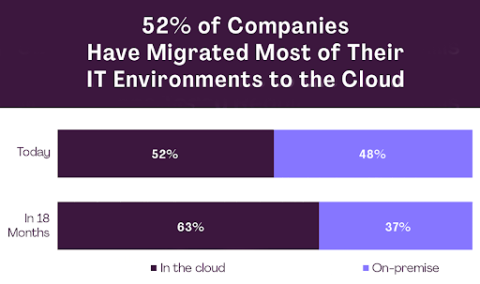
Cloud adoption has officially crossed a tipping point. In 2026, the conversation is shifting from whether companies are moving to the cloud to how complicated things are getting once they’ve moved. Hybrid architectures, multi-cloud strategies, AI workloads, and rising security pressure are turning “the cloud” into a web of interconnected environments. For IT and network teams, that creates huge opportunity—and plenty of room for chaos if visibility doesn’t keep pace.

The silent infrastructure tax: why AI agents will break your legacy cloud

For the first time in a decade, humans are the minority on the open web. In 2025, automated traffic officially crossed the Rubicon to account for 51% of all web activity, while generative AI-driven referrals to retail sites surged by a staggering 693% year-over-year. As we move through 2026, these are no longer just "bot" statistics to be handled by a WAF. They represent a fundamental shift in user behavior. The fastest-growing segment of your audience is now agentic.

How A Finance Director Found $30K/Month In AI Savings In 10 Minutes

A real workflow showing how Claude + CloudZero MCP turns plain-English questions into actionable cost intelligence — no dashboards, no tickets, no waiting As Director of Finance and Accounting at a software company, my job can be described simply: Understand what we’re spending, who’s responsible, and whether we can get more efficient. But as anyone who’s had to wrangle AI costs knows, doing so for AI is anything but simple.

Introducing FlexCore: Private cloud, zero complexity

Join us for a practical introduction to FlexCore, a fully managed private cloud appliance from Civo that delivers the simplicity and experience of public cloud, directly on your own premises. FlexCore brings managed Kubernetes, compute, storage, networking, databases, and GPU acceleration together in a single, self-contained platform, operated end-to-end by Civo. You provide the space and power; Civo handles everything else.

What Your EKS Flow Logs Aren't Telling You

If you’re running workloads on Amazon EKS, there’s a good chance you already have some form of network observability in place. VPC Flow Logs have been a staple of AWS networking for years, and AWS has since introduced Container Network Observability, a newer set of capabilities built on Amazon CloudWatch Network Flow Monitor, that adds pod-level visibility and a service map directly in the EKS console.

Let's Tune Our AWS Aurora PostgreSQL Database

In case you don't know the back story, in order for me to play with radios and label it "work," I've created a PostgreSQL database running on AWS Aurora. The db is fed from API calls to aprs.fi through Lambda functions on AWS. Some of the DDL & code is mine. Some is from Claude. Neither of us paid much attention to indexing when we were putting things together.

Code Optimization: The Cloud Always Collects Its $2,000 Tuition Fee

We hear a lot of war stories from the teams we work with. Horror stories about cloud bills, surprise overages, and the infrastructure decisions that seemed perfectly reasonable at the time. This one comes from Erik Dasque, CTO at Allure Security. It involves a junior developer, a Kubernetes CronJob, and a recurring bill that, if not caught, would have happened on a yearly basis.

5 AI And Cloud Cost Problems That Are Now Everyone's Problem

Not long ago, cloud cost was an engineering problem. FinOps teams owned it, finance leaned in occasionally, and everyone else stayed out of it. Now, that’s changed. AI changed who has skin in the game. CFOs get asked about it in board meetings. CEOs field questions on earnings calls. The audience for cloud cost management has exploded — and that means the conversation CloudZero is built to enable isn’t only a technical one, it’s a business one.

Cost Optimization in Action: How We Cut Amazon SQS Costs by 87%

JC, the Director of Software Engineering, Cloud at LogicMonitor, shares how Cost Optimization enabled his team to shift to Cost-Intelligent Observability and tackle an unexpected and growing cloud bill. As engineers, we live and breathe performance. We obsess over latency, reliability, and uptime, the hallmarks of a healthy system. But there’s another metric that’s becoming just as critical: cost.

AWS App Runner: How It Works, Pricing, And Best Practices For Cost Optimization Today

Back in May of 2021, containers had already won. Kubernetes adoption was surging. ECS and EKS were powerful. But for many teams, deploying a simple containerized web service still meant stitching together clusters, networking rules, scaling policies, load balancers, IAM roles, and CI/CD pipelines. It felt heavier than it should. Developers no longer wanted more orchestration power. They wanted less operational drag.

Becoming an Azure Expert MSP

Recently, Wortell achieved the Microsoft Azure Expert MSP designation, a milestone that places them among a select group of managed service providers recognized for their Azure expertise and operational maturity. In this webinar, Alex Tilgenkamp (Azure Cloud Architect at Wortell) shares insights into what it takes to achieve this designation and what it means for organizations building and scaling their Azure managed services practice.

Install Kubernetes Cost Optimization: How to Get Started with Pepperdata

To watch the full walkthrough video on the Pepperdata self-service install, click the link here. Many organizations struggle to efficiently manage their cloud costs, and that arises from difficulties in managing Kubernetes resources. Of the $419 billion spent on cloud infrastructure in 2025 (Synergy Research Group), Flexera estimates that 27% of all of cloud spend is wasted due to overprovisioned resources.

Cloud Observability Is Broken - Hybrid Operations Need a New Intelligence Model

Cloud adoption was supposed to simplify operations. Infrastructure would become programmable, scalability would become elastic, and distributed architectures would enable resilience at global scale. In practice, cloud has delivered extraordinary flexibility, but it has also introduced a level of operational complexity that traditional observability approaches were never designed to handle.

Why mid-market IT teams lose control as dev velocity increases

At a certain point, faster delivery stops feeling like progress and starts feeling like risk. When engineering teams scale from 10 to 50+ developers, the volume of infrastructure changes, database schemas, environment variables, and networking rules, no longer grows linearly. It scales exponentially. This is the scaling inflection point where manual governance breaks.

From signals to savings: Optimizing cloud costs with Grafana Assistant and MCP servers

In today's cloud-native environments, managing resource waste and optimizing costs can feel like a constant battle. Operators, along with their fearless FinOps teams, spend countless hours hunting down unused resources, deciphering complex telemetry data, and manually implementing code or configuration changes to try to reduce cloud costs. But what if you could automate the entire process, from identifying waste to implementing the fix, all based on actual production telemetry?

How CloudZero Measures Cost Per Customer (Step By Step)

Like most SaaS companies, CloudZero uses its own product. When we released cost per customer reporting, we tested it on ourselves first. And today, we use cost per customer reports regularly. Why? Because they help leadership answer board and renewal questions, including customer-level margins. Cost per customer is valuable and hard to get right. Multi-tenant systems and Kubernetes can hide the link between shared infrastructure (like EC2) and the customers using it.

The Best FP&A Software For 2026: 21 Tools To Know

Modern FP&A tools help SaaS businesses analyze financial performance in real time, forecast accurately, and align spend with business priorities — especially cloud spend, which can quickly spiral without visibility. Choosing the right FP&A tool for your business means understanding what you actually need it to do — whether that’s cloud cost visibility, more accurate forecasting, or tighter alignment between finance and engineering.

Becoming an Azure Expert MSP

Recently, Wortell achieved the Microsoft Azure Expert MSP designation, a milestone that places them among a select group of managed service providers recognized for their Azure expertise and operational maturity. In this webinar, Alex Tilgenkamp (Azure Cloud Architect at Wortell) shares insights into what it takes to achieve this designation and what it means for organizations building and scaling their Azure managed services practice.

GreenOps in Practice: What It Means and How to Get Ready for 2026

In this informational webinar, Freddie Booth, FinOps Consultant at Capgemini Invent, explains what GreenOps means in the context of modern cloud operations. You’ll learn why GreenOps is gaining attention across organizations using Azure, how it connects cost management with sustainability, and what steps teams can take today to start preparing for 2026. The session focuses on practical ways to improve cloud efficiency, reduce unnecessary Azure usage, and align FinOps practices with emerging sustainability goals.

Improved Azure status integration

Monitoring Azure health across large environments should not require complicated setup. Until recently, connecting Azure to StatusGator required configuring access at the subscription level, which could become difficult for organizations managing dozens or even hundreds of subscriptions. We redesigned the Azure integration to make it simpler, more scalable, and easier to manage.

The Analyst View on Data Sovereignty with TechMarketView

Perspectives from the Edge: Episode 2 Data sovereignty isn't a solo effort. It's a symphony. Data sovereignty is moving fast up the agenda. But who's orchestrating it? The second episode of Perspectives from the Edge explores the subject through an analyst’s laser lens, in conversation with Kate Hanaghan, Chief Research Officer at TechMarketView. Find out how AI and platform consolidation make data harder to control, how to bake sovereignty into your business from the start – and why the organisations getting it right treat ecosystems as a strategy, not just a procurement exercise.

Seven early warning signs you're heading toward a governance crisis

Governance failures rarely start with a major outage or a failed audit. They start with small, localized signals that teams treat as isolated annoyances. By the time a crisis becomes visible, the structural breakdown is already expensive to fix. If you are in IT leadership or platform engineering, you have likely seen these signs. The risk is ignoring them until they consolidate into a systemic failure.

How to choose a secure private cloud provider for your enterprise

Enterprise private cloud procurement tends to generate impressive security documentation. SOC 2 reports, penetration test summaries, ISO 27001 certificates, detailed descriptions of network segmentation and encryption standards. What it doesn't always generate is clarity on the question that actually matters: does this infrastructure make it possible to operate securely at the level your organization requires, given your specific workloads, your regulatory context, and your threat model?

Developer workflow fragmentation and what's really happening behind the scenes

In the current landscape of enterprise software delivery, a profound paradox has emerged: as the variety of specialized development tools and cloud services increases, the actual velocity of innovation frequently stagnates. For IT leaders, this phenomenon is known as developer workflow fragmentation. It’s a state where parallel, unstandardized processes create a pervasive "operational drag" that consumes the very agility these tools were intended to provide.

The governance playbook for mid-market IT teams

The contemporary IT landscape for mid-market organizations is defined by a paradoxical pressure: the mandate to accelerate digital transformation and AI integration while operating under the most stringent cost discipline observed in decades. For firms positioned between the nimble agility of startups and the vast resources of global enterprises, the "complexity of data lineage" and "legacy modernization paralysis" have emerged as primary barriers to progress.

The data context gap: an evaluation guide for agent-ready infrastructure

Why do AI agents that look brilliant in a sandbox fail the moment they hit production? For platform leaders, the answer is a lack of environmental parity: the ability to interact with the exact data state and service topology where the actual bugs live. When an agent attempts to modify a schema, optimize a query, or reproduce a bug without access to the real-world data state, it hits the Data Context Gap.

3 Simple EC2 Cost Optimization Strategies That Actually Work

Amazon Web Services (AWS) has been the leader in cloud computing for more than 10 years. Despite a decade of innovation, no AWS service encapsulates cloud computing principles better than Elastic Compute Cloud (EC2). Through EC2, AWS can offer flexible and scalable virtual infrastructure that can be ‘rented’ to run applications and workloads.

Migrate Your On-premises to the Cloud: A Step-by-Step Guide

Is it time to migrate your data center applications to the cloud? Get key considerations and a step-by-step migration path. Migrating your on-premises data center to the cloud can seem like a daunting task, from deciding on the right cloud deployment model to ensuring that your network connectivity is secure and scalable. For many companies, the question isn’t whether to migrate, but how to do it efficiently and with minimal disruption.

Your Cloud Is Transparent - Just Not to You

Many organizations that have moved to the cloud enjoy the flexibility and scalability it provides. But as cloud environments grow, a new challenge emerges: how to maintain real visibility and control over the environment that runs the business. In a new article published on People & Computers, we discuss one of the most common blind spots in modern cloud operations — situations where the same external provider both operates the environment and reports on its performance.

Webinar recap: FinOps In The AI Era - A Critical Recalibration

In March 2026, CloudZero’s Ben Austin, Director of Product Marketing, sat down with Ray Rike, Founder and CEO of Benchmarkit, to walk through findings from FinOps in the AI Era: A Critical Recalibration, a joint survey of nearly 500 organizational leaders on how they’re managing or, rather, struggling to manage AI costs.

GPU Fragmentation Is Killing AI Economics

By 2026, the GPU shortage isn’t a supply-chain hiccup anymore. It’s baked into the system. Even after pouring billions into CapEx, most enterprises still want 40% more GPU capacity than they actually have. And it’s not because they’re chasing moonshots. Technology companies are training foundation models while serving inference for millions of users on the same clusters. AI labs are juggling fine-tuning, evaluation, and real-time experimentation side by side.

Observability for Azure Virtual Desktop with SquaredUp

Managing Azure Virtual Desktop doesn’t have to mean jumping between portal blades, logs, and metrics trying to piece together what’s happening. In this webinar, you’ll learn how to design and implement a single, operational observability dashboard for Azure Virtual Desktop (AVD) using SquaredUp Cloud — transforming fragmented telemetry into clear, actionable insight. Whether you're responsible for performance, user experience, or operational stability, this session will give you a structured, repeatable framework for monitoring your AVD estate with confidence.

AI-ready sovereignty playbook 2026: how to run gen-AI workloads (ethically) in the EU

Sovereignty is a concept that can have shown nuances in the way it is currently used by states and industry to describe some services. The term “strategic autonomy” has also been used, as to describe the need for governments to ensure that they have a hand on the full value chain (or at least know the gaps and accept the risks) and can apply their rules while it seats in its jurisdiction (autonomy derives from the greek autos (self) nomos (rule).

Practice Vs. Performance: Two Reports On The State Of FinOps

This month, two FinOps research reports landed in close proximity. One from the FinOps Foundation — their 6th annual State of FinOps, drawing on a broad global practitioner community. One from CloudZero: FinOps in the AI Era: A Critical Recalibration, built on responses from 475 senior leaders at cloud-mature, AI-active organizations, with a focused lens on how AI is reshaping cloud cost management. Read each alone, and you get a useful snapshot for your business.

Beyond "Reactive" Accessibility: Meeting the 2026 ADA Title II Mandate in Higher Ed

For decades, digital accessibility in state-funded higher education has largely been a "reactive" game. If a student with a visual impairment reported an issue with a tuition portal, the university would scramble to provide an accommodation. As long as the institution could show "meaningful progress" toward compliance, it was generally shielded from significant legal repercussions. That era is officially ending. The U.S.

Use plain English to query your multi-cloud infrastructure in Resource Catalog

Modern cloud environments include thousands of resources across providers, teams, and accounts. Organizations need the ability to quickly locate the right resources so that they can manage resource compliance and troubleshoot issues. When engineers need to answer questions such as which databases are still on extended support or which storage buckets lack encryption, they often have to switch consoles, use provider-specific query languages, and know obscure version strings or configuration flags.

Inside Pandora's Box: How CloudZero AI Hub Cracks Cloud Cost Intelligence

Years in the FinOps trenches taught me one thing: The data has never been the problem. The data exists. It’s out there, scattered across provider invoices, buried in tagging gaps, locked behind dashboards that maybe three people in your org actually know how to navigate. The real problem? Nobody can get to it when they need it. Engineers ship features without understanding what they cost the business, let alone whether they improved margin.

Inference Economics: What It Is And Why It Matters Now

Somewhere between a model’s first demo and its first production workload, the cost conversation changes completely. Training is a big number, but it’s a finite one. Inference isn’t. Every user interaction, every query, every API call triggers compute behind the scenes — and unlike training, inference never stops billing. That shift from one-time expense to ongoing operational cost is where inference economics begins.

CloudZero Launches Claude Code Plugin To Bring Cost Intelligence Into Engineering Workflows

Today we’re announcing the CloudZero Claude Code Plugin, a new capability that puts CloudZero’s full cost intelligence model directly inside Claude Code, where engineers and technical FinOps practitioners already work. The plugin connects a Model Context Protocol (MCP) server and nine pre-packaged investigation skills to CloudZero’s cost data, covering cloud and AI spend across AWS, GCP, Azure, Snowflake, MongoDB, OpenAI, Anthropic, and more.

What does investigation look like when data lives in multiple tools?

War rooms don’t fix fragmentation. They expose it. Incident hits. App checks traces. Infra checks hosts. Cloud checks dashboards. Network checks packets. Everyone sees their layer. No one sees the system. So we guess. Rollback. Add capacity. Freeze change. The noise stops. The constraint doesn’t. Modern failures don’t live in tools. They live in dependencies. If your platform can’t follow a transaction across hybrid and AI infrastructure — to the exact constraint — you don’t have observability.

Beyond the horizon: How Ana Cidre turned a non-linear path into leadership

Welcome to Beyond the horizon, a monthly series celebrating the people who shape Upsun’s culture, innovation, and heart. In this month’s edition, we’re featuring Ana Cidre, Director of Developer Advocacy at Upsun and one of the key voices shaping how developers experience our platform today and in the future.

What Is Lift And Shift? Is It Right For You?

Cloud migration strategies range from quick rehosting to complete application refactoring. Lift and shift migration (also called rehosting) moves applications from on-premises to the cloud with minimal changes, promising speed and lower initial costs compared to other strategies. But does lift and shift actually deliver long-term savings? This guide examines when lift and shift makes sense, when it creates hidden costs, and what alternatives exist.

What Airport Executives Should Look for in an Airport Management Software Platform

Running an airport requires constant coordination between safety, compliance, finance, and daily operations. As regulatory requirements grow and operational complexity increases, many airport leaders are exploring modern airport management software to replace spreadsheets, disconnected systems, and manual workflows. But with so many options available, how do you choose the right airport management software platform? Here's what to look for.