Do you know what keeps Cloud Administrators up at night? Yes, you guessed it right. Cloud bills!!! These unpredictable cloud bills. With the recent allure of the “pay-per-use” model of the public cloud, organizations over-use and over-spend on cloud resources. Especially with this unrestrained freedom to create new instances on the go, mitigating cloud costs is a daunting task, even for the early and heavy adopters of public clouds.
Too often, when organizations migrate workloads to the cloud or build new cloud-native applications, they don’t really think about storage. The cloud provider takes care of all that, right? Well, yes and no. There are cost implications to cloud storage that many don’t adequately anticipate—until they get the bill, that is.
Azure Blob storage has several storage tiers that offer different performance and cost characteristics. The storage tiers available are: Customers can move data between these tiers based on their access patterns, which can help reduce costs while still meeting performance requirements.

A VMware snapshot is a point-in-time copy of the virtual machine’s disk files and memory state. These snapshots are used to capture the state of a virtual machine at a specific point in time and allow users to revert to a previous state if necessary. They are commonly used for testing, patching, recovery, or rollback, but can also be used for taking backups of virtual machines.
Many of us (indeed 1 billion plus users worldwide) rely on Microsoft for essential work activities and were impacted yesterday (Wednesday January 25, 2023) when the cloud service provider experienced a prolonged outage. Internet Resilience is a business priority because when critical workforce services like Microsoft go down, global teams are hugely disrupted.
Microsoft had its corporate earnings call yesterday and posted weaker guidance. But guess what? Several hours later, the tech giant was hit by a networking outage that took down Azure and other services like Teams and Outlook, affecting millions of users globally.
Azure storage accounts offer powerful, cost-effective options for managing your data and applications. With various services such as blobs, queues, files, and tables, you can use Azure Storage to store and access virtually limitless amounts of data effectively. This guide will walk you through all the basics of setting up and using an Azure Storage Account.
The public cloud can deliver significant business value across infrastructure cost savings, team productivity, service elasticity, and DevOps agility. Yet, up to 70% of organizations regularly overspend in the cloud, minimizing the gap between cloud costs and the revenue cloud investments can drive.
An API, or application programming interface, is a set of protocols and instructions that allows two software applications to communicate with one other. APIs can be implemented in a number of architectural styles. One of the most popular styles is REST (representational state transfer,) which allows server and client interaction in a stateless manner.
Moving to the cloud is hard. Moving to the cloud and keeping systems secure, data governed, compliances met, and cyberattacks at bay, makes everyone’s jobs significantly harder. The number one concern we hear from Cribl customers about the cloud is, you guessed it — security. If you’re in this boat — eager to adopt the cloud ASAP but also worried about the risks that come with having sensitive data in the cloud — don’t fret. We’re here to help.
Some of the highest priorities for engineers - from NOC Engineers, DevOps & Site Reliability Engineers - are the automation and optimization of their production environments. Many companies today face tough challenges with their Network Operations Centers (NOCs) or production environments. These challenges fall into the hands of engineering teams.

On-premises vs cloud MDM deployment With the rise of SaaS application management, mobile device management (MDM) services have gained popularity among IT professionals. Modern computing environments rely on the efficient use and provisioning of resources. But which one is right for your business: on-premise or cloud MDM deployment? While this may seem like a simple question, there are many factors that come into play when deciding which method to go with. This article discusses the differences between on-premises vs. cloud MDM deployment. It will also present examples, use cases, and pros and cons of these two deployment options.
Azure native services are cloud-based solutions that are developed, managed, and supported by Microsoft. These services are designed to help organizations build and deploy applications on the Azure cloud platform, and take advantage of the scalability, security, and reliability of the Azure infrastructure. In this blog post, we’ll take a look at some of the key Azure native services that are available, and how they can be used to build and run cloud-based applications.
Before we jump into cloud cost optimization, let us address the elephant in the room. Businesses are moving to the cloud but are struggling with unpredictable cloud bills. If you are a business owner who has moved to the cloud recently, you need to understand each cloud touchpoint and get a transparent view of your cloud services. When it comes to cloud cost optimization, there are many tools and techniques that organizations can adopt. Most of these can only take you so far.
The flexibility of public cloud infrastructure allows for little to no upfront expense, and is great when starting a venture or testing an idea. But once a dataset grows and becomes predictable, it can become a significant base cost, compounded further by additional costs depending on how you are consuming that data.
Cloud migration can be a powerful way for organizations to reduce costs and improve efficiency. However, simply moving to the cloud is not enough - there are a number of tactics that teams can adopt to maximize cost savings. In this article, I will first explore some common tactics that cloud migration teams use to reduce costs, then share advanced strategies that our most successful customers use to truly take advantage of the cloud for all of its far-reaching benefits.
Cloud Logging’s Log Analytics, with advanced search, as well as aggregation and transformation of all log data types, is now generally available.
Learn more about the connection between SRE, DevOps and reliability.
In November/December 2022 I attended AWS re:Invent in Las Vegas. It was certainly an experience for this small town kid from New Zealand, and one that I took a lot away from. While I was at the conference, I took the time to walk around and take notes. In this article I will share the trends that I observed which I think will have an impact on SRE work in 2023 and beyond, including: ...and others.
Azure Storage Authentication is the process of verifying the identity of a client that is requesting access to an Azure storage account. Azure Storage supports several authentication options that can be used to secure access to storage accounts, such as: Choosing the best authentication option depends on your requirements such as security, ease of use and ease of integration with existing systems or platforms.
Amazon DynamoDB is a fully managed NoSQL database service provided by AWS and is tailor-made for serverless applications. As a fully managed service, we don’t have to worry about operational tasks with DynamoDB, such as hardware provisioning, configuring instances, scaling, replications, software patching, etc.
Persistent storage is essential for any account-driven website. However, in Kubernetes, most resources are ephemeral and unsuitable for keeping data long-term. Regular storage is tied to the container and has a finite life span. Persistent storage has to be separately provisioned and managed. Making permanent storage work with temporary resources brings challenges that you need to solve if you want to get the most out of your Kubernetes deployments.
Observability has become increasingly important for IT professionals as the complexity of modern systems has grown. In the past, IT environments were typically composed of a few servers and applications that were all running on-site. However, with the rise of cloud computing, IT has become more distributed, with applications and services running on a wide variety of infrastructure and platforms.
Combining AWS Outposts Rack with Direct Connect optimizes performance for demanding enterprise workloads. Megaport’s Outposts Ready Direct Connect solution simplifies the networking side.
Prometheus is a widely utilized time-series database for monitoring the health and performance of AWS infrastructure. With its ecosystem of data collection, storage, alerting, and analysis capabilities, among others, the open source tool set offers a complete package of monitoring solutions. Prometheus is ideal for scraping metrics from cloud-native services, storing the data for analysis, and monitoring the data with alerts.

Cloud optimisation enables organisations to significantly lower their cloud spending while ensuring the desired performance and necessary compliance. It’s a process that every business should adopt when choosing cloud infrastructure as a foundation for their applications. It’s been proven that applying cloud optimisation best practices leads to a total cost of ownership (TCO) reduction of two-thirds under certain circumstances. But let’s step back for a second.


Looking back on the last 18 months, it is abundantly clear that one piece of technology found its moment more than any other: cloud. Essential to modern computing, cloud provides the capacity for businesses to run workloads with the flexibility and scale many firms would struggle to achieve with on-premise infrastructure. According to Flexera’s 2021 State of the Cloud Report, 90% of firms slightly or significantly increased their cloud usage due to the pandemic.
AWS services have faced many outages in the past and the impact of these outages is well known in the tech world. Multiple AWS services are affected during such scenarios, which drastically impact customers and businesses. When business-critical applications are hosted on AWS, it becomes necessary for businesses to adopt fool-proof methods to avoid outages. An outage can be a wake-up call for enterprises to create business continuity plans and implement a solution to monitor AWS health.
Azure SFTP (Secure File Transfer Protocol) is a service provided by Microsoft Azure that enables you to transfer files securely to and from Azure storage. The service is built on the SFTP protocol, which provides a secure way to transfer files over the internet by encrypting both the data in transit and the data at rest. Azure SFTP allows you to easily automate the transfer of large amounts of data such as backups and log files, to and from your Azure storage account.
Learn more about how culture is the true driver of DevOps success.
As we enter a new year, our team has made predictions for the coming year in the Cloud Native ecosystem.
As Microsoft Azure continues to be developed and more automation options become available; Azure Automation, Logic Apps, ARM (Azure Resource Manager) and Azure Function Apps to name a few. The question is quickly turning from ‘how do I automate with Azure?’ to ‘what automation type do I use in Azure?’. Across our next few blogs, we will seek to delve into the options available and look to define how they stack up against Azure Automation.
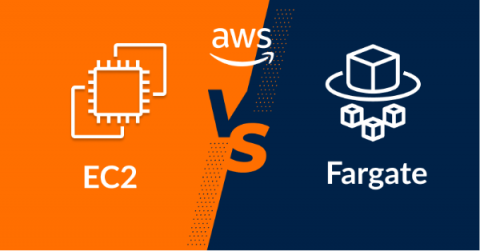
Amazon Elastic Container Service (ECS) is a fully managed container orchestration service that enables users to easily run, manage and scale containers on AWS. With ECS, you can deploy containers either on a cluster of Amazon EC2 instances or on AWS Fargate, a serverless computing engine for containers. In this article, we’ll look at how these two launch types compare and explore how to start using them.
Azure Blob Storage is a fully managed, scalable, and reliable object storage service provided by Microsoft Azure. One of the key features of Azure Blob Storage is the ability to create and organize data in containers called “folders.” In this blog post, we’ll take a closer look at how folders work in Azure Blob Storage and how you can use them to organize and manage your data.
Azure Files is a fully managed, cloud-based file storage service provided by Microsoft Azure that allows you to share files across multiple servers and platforms. One of the key features of Azure Files is the ability to create and organize files in folders, similar to how you would on a traditional file server. In this blog post, we’ll take a closer look at how folders work in Azure Files and how you can use them to share files with others.
The deployment of Ruby on Rails and Rack frameworks is embedded in Cloud 66’s DNA, but we are always interested to see other Ruby frameworks becoming popular, and happy to support developers who prefer to use them instead of Rails. In this post, we’re going to show you how easy it is to deploy a Hanami Ruby application on AWS cloud with Cloud 66. The recent Hanami v2.0 release brought a lot of incremental upgrades to the framework, which made it more mature.
Public cloud users continue to get stung by unexpected costs due to the challenges faced when working with or moving workloads into the cloud. When organizations see this surge in their costs, it typically requires the process of cloud cost optimization to tackle the problem. Cloud cost optimization is the task of minimizing cloud spending by enforcing best practices and appropriate cost-efficient resources.
In November 2021, we announced a strategic partnership with Microsoft to develop a Microsoft Azure managed service that lets customers run Grafana natively within their Azure cloud platform. Azure Managed Grafana, which became generally available in August 2022, makes it simple for Azure customers to deploy secure and scalable Grafana instances and connect to open source, cloud, and third-party data sources for visualization and analysis.
Cloud computing and the use of cloud native architectures enable unparalleled performance, flexibility, and velocity. The speed of innovation has driven significant advancements across industries, but as digitalization continues pushing applications and services to the cloud, bad actors’ intrusion techniques have also become more sophisticated.
Most sentences that include both on premises and cloud usually put the word “or” between them, or perhaps “vs.” But most enterprises operate in the world of “and.” In other words, they have workloads on premises and in the cloud—and that little three-letter word makes a world of difference.
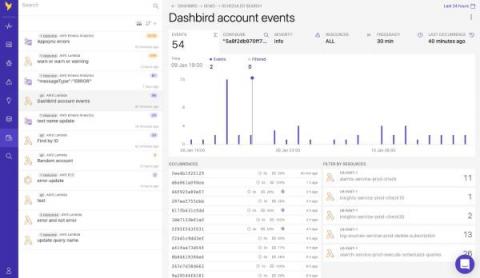
Today we are excited to announce scheduled searches – a new feature on Dashbird that allows you to track any log event across your stack, turn it into time-series metric and also configure alert notifications based on it. This has been one of the most requested features across our users and we are thrilled to make it available for all users starting today.
Bandwidth monitoring provides IT administrators with the assurance that the network has sufficient capacity to run business-critical applications. In addition, network ops team have end-to-end visibility to identify network hogs that cause the congestion. Typically, when a single component overloads in any network, it can bring the entire operation to its knees and impact the employee digital experience. For example, even if you may have a dedicated service plan from your ISP, employees will end up complaining about issues like large file transfer time and slower applications.
Public clouds enabled digital transformation at unprecedented speed. But their operational costs over time can be exacting as compute needs increase. Hybrid clouds emerged as an alternative to gain the benefits of both worlds: private infrastructure that allows for lower operational expenditures and tighter control, and public clouds that can scale with ease.