Operations | Monitoring | ITSM | DevOps | Cloud

Servers In The Sky: Dubai's Wild Race To Build The Next Cloud Empire

In Dubai, where grabbing your morning karak can take you past flying taxis, robot cops, and AI-driven traffic signs, it's no surprise that the race for the cloud is turning into a full-blown tech stampede. And if you're trying to keep up with this fast-moving scene, you'll quickly realize you need to rent a car Dubai just to survive the pace. The city isn't just building data centers - it's building an entire digital skyline, one hyperscale server at a time.

Stop Manual Checks: Automating DORA Compliance for Cloud Dependencies

Financial services organizations face increasing pressure to comply with the Digital Operational Resilience Act (DORA) while managing complex cloud infrastructures. Manual compliance checks for third-party dependencies are no longer sustainable. This guide explores how to automate DORA third-party risk management, ensuring continuous compliance without the overhead of manual processes.

How to Reduce Redundant Data to Save on Cloud Storage Costs

With more and more business organizations adopting cloud storage to handle their data, the problem of redundancy or duplication of files has become of great concern. Duplicated information does not only eat up the precious storage space but also increases expenditure and lowers productivity. The reason why companies end up paying to store files that they do not require is because duplication of files over time occurs particularly when more than one team or department is doing a common project. Learning to detect and remove duplicate data is a key to the cost control and ability to manage data in general.

New Feature Friday: Cortex & AWS

Most teams treat AWS like a black box. Cortex turns the lights on. We now automatically ingest all your AWS resources—from Lambda to RDS—and map them to the services and teams that actually own them. Daily. Automatically. No spreadsheets. No guesswork. Scorecards help you enforce real standards (think: runtime upgrades, tagging hygiene, EOL migrations). Workflows help your engineers self-serve AWS resources without needing to be AWS experts.

Amazon AppStream 2.0 Multi-session Service Monitoring

In late 2023, Amazon introduced the ability to deliver AppStream 2.0 using Microsoft Windows Server OS rather than the desktop of the OS. This feature enables IT admins to host multiple end-user sessions on a single AppStream 2.0 instance, helping to make better use of instance resources.

Smooth Operator: The Role Of Autonomous FinOps In Cloud Cost Management

(Almost) everyone is using generative AI, and just as many aren’t seeing any benefits. Research firm Gartner calls it the “gen AI paradox” — nearly 80% of companies say they’ve invested in generative solutions, and the same number report no benefits to their bottom line. What’s more, 90% of projects are stuck in pilot mode; ready to take off, but just can’t get up to speed.

Harness AWS: From Code to Cloud, Smarter and Faster

Harness makes software delivery in AWS faster, safer, and more delightful. Harness, the AI Platform for Everything After Code, offers CI/CD, infrastructure-as-code management, and cloud cost management capabilities tailored to the AWS environment. Harness has come a long way since its 2019 debut on the AWS Marketplace. Back then, over half of Harness customers were already running on AWS, and Harness focused on delivering Continuous Delivery as a Service for AWS applications.

How to Reduce Your Cloud Costs with Coroot

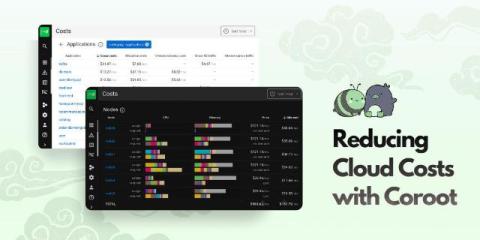
Cloud costs often grow quietly until they suddenly command everyone’s attention. Gartner estimates that companies overspend on cloud services by up to 70 percent, mostly because they lack clear visibility into where the money is actually being spent. Cloud invoices speak the language of infrastructure: nodes, instance types, regions, volumes, and egress. Engineering teams speak the language of services, deployments, and code.

How to Receive Cloud Outage Alerts in Microsoft Teams

Cloud outages like the recent ones at Cloudflare, Microsoft Azure, and AWS can have a significant impact on your business with downtime, lost revenue, and unhappy customers. They can also disrupt your team's ability to work effectively. To stay on top of such outages, your team needs to know about them in an easy and timely way. In this article, we will see how to integrate IncidentHub cloud outage alerts with Microsoft Teams.

Metrics That Matter In FinOps: Co-Create Value With Engineering And Finance Collaborations

FinOps thrives on clarity, and clarity is built on metrics. Metrics give engineering and finance a shared language to understand costs, evaluate trade-offs, and guide innovation. The most impactful metrics go beyond “how much are we spending?” and help us answer: When we measure these things, we stretch beyond tracking progress to fueling it.
Sponsored Post

Future-Proofing Your Business: Why RISE with SAP is More Than a Technical Upgrade

2025 and 2027 are well documented dates in SAP circles. Many SAP users have viewed the transition to S/4HANA and Cloud ERP as an opportunity for transformation, eliminating technical debt and enabling innovation. Just as many have recognized the complexity and size of the project, and opted for a technical upgrade, often called brownfield migration or a lift-and-shift, as the first step of a larger Cloud ERP journey. Driving the migration project urgency, commercial incentives and transition options from SAP may ease end of support dates for existing systems.
Sponsored Post

Early IT Outage Alerts in Action: 20+ Major Cloud Incidents of 2025

The IT cloud outages in 2025 are already shaping up to be a wake-up call for IT teams, MSPs, and developers worldwide. Even the most reliable services can experience disruptions, impacting workflows, customer experience, and business continuity. While major providers often take time to acknowledge incidents publicly, StatusGator's Early Warning Signals empower organizations to detect outages in real time, sometimes hours before official confirmation.

IA for AI: Rethinking How We Store, Surface, And Share Data In A Conversational World

Information architecture used to be about structure. We organized menus and pages into trees, built hierarchies, and created pathways for people to follow. For years, that worked. Navigation was the interface. But that world is changing. People aren’t clicking their way through information anymore. They’re asking for it. They’re refining questions, expecting context, and assuming that systems will not only understand what they mean, but act on it.

AI: Your (Not So) Secret Agent In Cloud Cost Control

Read a few articles on artificial intelligence and financial operations, and you’re bound to run across a sentence like this: AI enables FinOps teams to reduce TCO and boost ROI. Or one like this: The future of FinOps uses agentic AI-powered systems to detect and remediate cost issues automatically. Keep reading and you’ll find piece after piece that say a lot about AI and FinOps … without really saying anything.

Simplify multi-cloud monitoring with Site24x7 | One tool for any cloud

If you’re juggling multiple tools and dashboards, running workloads across AWS, Azure, Google Cloud, and Oracle Cloud can be chaotic. That’s where ManageEngine Site24x7 steps in. With one unified platform, you can monitor all your cloud environments in real time, and gain full-stack visibility across every resource. Whether it’s a VM, container, or serverless function, you can detect performance issues early.

Perspectives on turbulence part 1: Introducing new research from Pulsant

Since the publication of the inaugural AI Sector Study in 2022, the UK’s AI ecosystem has grown to include more than 5,800 companies – an 85% increase over the past two years. AI revenue is now £23.9 billion, and the sector employs more than 86,000 people. To put that in context, it’s bigger than the UK gambling sector – on both counts. Digital infrastructure is the foundation of this new economy.

Pepperdata Launches Global Partner Program to Optimize Efficiency and Spend for GPUs and Kubernetes Workloads Worldwide

Pepperdata announces launch of its Global Partner Program, a bold new initiative that brings together systems integrators, technology providers, and consultancies with Pepperdata's dynamic resource optimization platform for the cloud and on-premises environments.

How continuous profiling cut our cloud spend

At Coralogix, we’re constantly looking to evolve the measurements we take to better understand the efficiency of our infrastructure. We constantly assess and investigate sources of cost in our cloud infrastructure, to ensure we’re getting the best return on investment. This activity, often referred to as FinOps, is becoming a cornerstone of engineering teams.

How Much Did OpenAI's 30,000 CPU Core Optimization Save Them?

I admit I was a little skeptical going into KubeCon 2025. The last time I went, in 2022, it felt tactical. I heard lots of conversations around small solutions to small problems. Practical knowledge-sharing is of course beneficial, but I’m most inspired by the big picture — ideally, a picture bigger than you can see anywhere outside of your mind. I’m heartened to say that KubeCon 2025 was exactly that.

Cloud Efficiency Masterclass: 6 Data-Driven Ways To Reduce Costs And Scale

Discover the basics of cloud efficiency as well as six advanced data-driven strategies you can use to make your cloud environment more efficient. With incredibly complex cloud architecture — that may even include Kubernetes and multi-tenant infrastructure — organizations are finding it hard to measure and monitor the performance and cost of their cloud environments.

The Hidden Cost of Untagged Cloud Resources for SMBs

Cloud computing is a powerful enabler of growth and agility for small and medium businesses (SMBs). However, untagged cloud resources are one of the primary challenges most SMBs face in cloud environments. These untagged resources lead to a lack of visibility and accountability over cloud spending, which leads to wasted budgets and cost overruns.

Search Telemetry Without Limits in a Multi Cloud and AI World

Cribl Search gives you one lens across all your telemetry data no matter where it lives. Instead of forcing teams to move data into one system or jump between tools, you get a familiar pipe based query experience with dashboarding and alerting built in. Storage and query processing stay separate so you decide where your data lives while your users get fast, simple access in one place.

Cloud Status Check Overview

In this video, we provide an overview of Uptime.com's Cloud Status check feature, designed to monitor the status of common cloud services within your technology stack. We walk you through the step-by-step process to configure a Cloud Status check, including how to select third-party services, add contacts, and organize checks with tags. Learn how to view incident history and get detailed updates from third-party providers. For more information, visit our documentation or contact our support team.

Vendor lock-in: not even once

Vendor lock-in remains one of the most significant concerns when choosing a cloud platform. When your data becomes trapped in proprietary formats or services, migration costs skyrocket and your flexibility disappears. This challenge affects organizations of all sizes, from startups planning for growth to enterprises managing complex compliance requirements.

5 Kubernetes Cost Management Insights From CloudZero's Latest Webinar

Kubernetes has reshaped how teams build and scale infrastructure, but it’s also made cost visibility a lot harder. For platform engineers, SREs, and FinOps leads, breaking down shared cluster costs, understanding per-team usage, and driving efficient resource allocation is still a major challenge. That’s why one CloudZero webinar with Umesh Rao, Director, Tech Enablement and John Hashem, Senior Sales Engineer, stood out.

What is AWS Fargate for Amazon ECS?

As cloud applications moved from VMs to containers and then to microservices, the amount of background work needed to keep everything running grew just as quickly. You gain speed and flexibility, but you also end up managing clusters, scaling rules, and capacity choices that don’t really add to the product you’re building. AWS Fargate steps in right there. It lets you run your ECS tasks without looking after any servers at all.

How Datadog Feature Flags is resilient to cloud provider failures

As major incidents like AWS’s October 2025 outage illustrate, modern systems are immensely interconnected. A failure in one can lead to a cascade of downstream problems. In this case, issues with DNS resolution for DynamoDB led to widespread disruptions with other AWS services and, subsequently, thousands of applications and services that rely on that infrastructure.

Introducing Honeycomb Private Cloud

More and more enterprises are shifting toward private cloud and hybrid deployments for control, data residency, and security. At the same time, observability is no longer a “nice to have” tool. It's mission-critical for teams driving rapid change across cloud-native, multi-service architectures. Leaders are realizing they need deep visibility and rapid debugging everywhere their systems run.

How to Onboard AWS & Azure Hosts in SolarWinds Observability

Connecting your cloud infrastructure has never been easier. In this quick walkthrough, you’ll see how SolarWinds Observability natively integrates with AWS and Azure to onboard virtual machines and supported managed services—fast. Select your hyperscaler Click “Add Data” → Choose “Hosts” Follow simple steps to connect your cloud environment via API Whether you're running AWS EC2, Azure VMs, or other managed services, SolarWinds helps you get visibility in minutes.

AWS Cost Categories Explained (How To Allocate AWS Spend Accurately)

If you’ve ever tried to make sense of your AWS bill, you know how fast things get messy. Different accounts, hundreds of services, random tags, and suddenly, no one can say for sure who’s spending what or why the total looks so high. It’s not that teams don’t care about costs — it’s that AWS billing data isn’t always easy to interpret. Finance wants accountability. Engineering wants visibility. And somewhere between the two, ownership disappears.

Introducing The Enhanced CloudZero Academy: Learn, Grow, And Level Up Your FinOps Skills

If there’s one thing we’ve learned at CloudZero, it’s that success in FinOps isn’t just about having the right tools. It’s about knowing how to use them, and understanding the “why” behind every number, dimension, and dashboard.

ML inference in PHP by example: leverage ONNX and Transformers on Symfony

This blog is based on a presentation by Guillaume Moigneu at the Symfony 2024 conference. Machine learning and AI are no longer limited to Python and Node.js. PHP developers can now run AI models directly in their applications using modern tools and libraries. This guide shows you how to implement machine learning inference in PHP using ONNX and Transformers.

Modern Service Architecture for High-Velocity Operations

Modern service architecture supports organizations that target sustained velocity, predictable delivery cycles, and scalable global operations. Cloud-native platforms, microservices patterns, and distributed execution models now anchor these environments. Modern service architecture emphasizes modularity and flexibility, which contrasts with traditional monolithic approaches. The 2025 Gartner Magic Quadrant for Cloud-Native Application Platforms identifies AWS, Red Hat OpenShift, and Heroku as leaders because they strengthen developer experience, platform engineering, and security.

Cloud Security Best Practices Every Company Should Follow

As more businesses move their data, applications, and daily operations to the cloud, securing that environment has become a top priority. Cloud platforms offer flexibility, scalability, and cost savings, but they also introduce shared responsibility-meaning both the provider and the business must play a role in keeping systems safe. Understanding essential cloud security best practices helps organizations reduce risk, protect sensitive information, and maintain compliance in an increasingly digital world.

AWS And Azure Outages Will Recur - Here's How You Ensure Resilience

The cloud has long promised limitless scalability and near-perfect uptime. But if you tried to access your Microsoft 365 dashboard or recline your smart bed last week, and got nothing but a spinning icon, you weren’t alone. In the span of 10 days, both Amazon Web Services (AWS) and Microsoft’s Azure Cloud suffered widespread outages that rippled across industries.

KubeCon Atlanta Signals Key Shift: From Cloud Cost To Value Engineering

After three days of demos, sessions, and hallway conversations at KubeCon Atlanta, one thing became clear to CloudZero CTO Erik Peterson: the cloud-native world is shifting from cost control to value engineering. Teams aren’t just fighting bills anymore. They’re fighting complexity, GPU scarcity, Kubernetes sprawl, and pressure from the business to justify every dollar of technical investment. And this year’s KubeCon attendees? They were ready for those conversations.

Elasticsearch: The context engine for grounding and orchestration in Microsoft Azure AI Foundry Agent Service

The rise of large language models (LLMs) and agentic applications promises to transform enterprise workflows. Yet, the core challenge remains: How do we ensure these powerful agents generate accurate, relevant, and trustworthy responses based on proprietary enterprise data rather than relying solely on their generic training knowledge? The answer lies in grounding — connecting the LLM to verified, trusted, and up-to-date information.

Azure Monitor offers Grafana dashboards natively for immediate, real-time operational monitoring

Editor’s note: This blog originally published in May 2025 when Azure Monitor dashboards with Grafana became available in public preview. It was updated in November 2025 to reflect general availability. The Grafanaverse just got a little bit bigger.

AI API Aggregation: Managing Costs And Complexity Across Multiple LLMs

Running multiple LLMs without aggregation can feel like managing five different clouds with no dashboard. Sure, you can make it work, but you won’t like the bill. And most SaaS teams didn’t start with a multi-LLM strategy. It just happened. You added one model for reasoning, another for summarization, or maybe a fine-tuned version for customer support. Fast-forward six months, and your AI stack looks like a tangle of APIs. And each charges tokens on its own terms.

3 Signals From KubeCon Atlanta On Where Kubernetes Is Heading Next

KubeCon Atlanta 2025 felt different this year — and CloudZero had a full team on the ground to capture it. Engineers, product leaders, sales reps, and CTO Erik Peterson spent three days embedded across the show floor. Their vantage points were complementary: the outbound conversations, the inbound questions, the demos, the technical deep-dives, and the quieter moments between sessions. Five perspectives stood out.

Introducing the New Cloud Dedicated Admin UI

InfluxDB Cloud Dedicated provides hosted and managed InfluxDB Cloud clusters in a single-tenant environment and is optimized to handle high write and query loads. Today, InfluxData is releasing a visual overhaul and new features for its Admin UI. Among the recent updates are live observability for customer clusters, overhauled site navigation, and improved visibility into table schemas.

Leaner, greener business practices

Pulsant recently pledged to slash its carbon and other emissions as part of a thorough review of the entire business. Our goal is to halve all emissions by 2030 and achieve Net Zero by 2050 at the latest. This will require a continued and sustained effort. To be effective we will need to understand our connections to bring all our suppliers, vendors, clients, and of course our people, with us. Our ambition will be validated in accordance with the Science Based Targets Initiatives’ Net Zero Standard.

Pulsant Pledges to Reach Net Zero by 2050

“As the UK’s hybrid cloud specialist we are already helping clients reduce their environmental impact by ensuring the most efficient use of their technology infrastructure. I am really proud that this pledge to shift to Net Zero takes us, and our clients, to the next stage on this vital journey.” – Rob Coupland, CEO, Pulsant Pulsant is promising to achieve Net Zero by 2050, and earlier, if possible.

Shopware and Upsun expand strategic partnership to accelerate European eCommerce innovation and secure digital sovereignty

French and German leaders join forces in strategic partnership to bring flexibility and reliability to the European eCommerce market. After three years of successful collaboration, Shopware, the German-based European leader in open-source eCommerce, and Upsun, the French-based leading European Cloud Application Platform, are announcing a strategic partnership. Building on early success, with already 45 joint customers and growing, Shopware and Upsun are deepening their collaboration in 2026 and beyond.

Google Workspace outage on November 12: How StatusGator detected it first

On November 12, 2025, users around the world faced difficulty accessing Google Workspace products including Google Drive, Google Docs, Google Sheets, and Google Slides. While the outage did not impact every user, it was widespread and disruptive. StatusGator detected the incident early using real user data and issued an Early Warning Signal long before Google officially acknowledged the issue.

Azure Synapse Explained: Analytics And Business Value

Traditionally, companies had to use separate tools for ETL, data storage, and analytics. Often, this resulted in slow, complex, and expensive data workflows A good example is PwC’s Deals, Insights & Analytics (DIA) team, which faced similar challenges. According to Microsoft, bespoke solutions often took months to build and were difficult to merge, slowing projects and driving up costs. That changed when PwC adopted Azure Synapse Analytics. The result?

Need more juice? resources:set. Done.

Scaling your application shouldn’t feel like open-heart surgery. It should feel like flipping a switch. Watch your environment adapt in real time. Horizontal scaling. Vertical scaling. One command. Done. You do not want another war room. You want a clear way to add capacity when traffic increases, without editing and testing complex YAML files for hours or manually rolling out scripts across clusters.
Sponsored Post

Cascading Failures Aren't Inevitable: Lessons from the AWS DNS Outage

AWS outages grab headlines because they affect millions, but the root cause often comes down to something invisible: DNS failures and cascading service dependencies. The complexity of modern cloud systems, combined with the advanced technology powering platforms like AWS, makes these outages particularly challenging to diagnose and resolve. The recent AWS outage proves one thing: you can't prevent every DNS issue, but you can create resilient architectures and prevent a single failure from taking down your entire service if you test for it.

Your Cloud Economics Pulse For November 2025

Welcome to CloudZero’s inaugural Cloud Economics Pulse! This is our monthly snapshot of how cloud spend is evolving across providers, services, and emerging AI workloads. Each month, we’ll surface key trends, highlight where the money’s moving in cloud spend, and offer practical insight to help FinOps and cloud cost teams stay on top of things. October — and preceding months — shows a turbulent stretch for cloud economics.

Using Google Cloud Billing Tools For Cost Control

If you’ve ever opened your Google Cloud bill and felt confused, you’re not alone. Costs in GCP can spike up fast. One project here, a few APIs there, until the total looks nothing like what you expected. That’s because Google Cloud pricing is built for flexibility. You pay for what you use, across dozens of services, each with its own rules, discounts, and data charges. It’s robust, but also easy to lose sight of what’s driving your spend. The good news?

Protecting Sensitive Information in an Era of Digital Transformation

You might worry about keeping your personal or work data safe as more things move online. In 2023, over half of large companies reported some type of data breach. This blog will show simple ways to protect sensitive information using smart tools and habits. Start learning now to stay ahead of new digital threats!

Densify Announces Kubex AI to Simplify and Democratize Resource Optimization

Densify has announced Kubex AI, a major leap forward in how organizations optimize complex Kubernetes and AI environments. This new solution combines verticalized AI for resource optimization with a conversational interface, empowering anyone—regardless of technical background—to access expert-level analytics and automation through simple, natural-language interactions.

Value Engineering Vs. Cost Cutting: The Value Paradox

For every CFO who’s ever asked, “Can we reduce engineering costs by 15%?” there’s a CTO quietly thinking, “But at what cost?” That tug-of-war plays out inside most SaaS companies. Finance wants to tighten budgets to protect margins, while engineering and product teams push for the resources to build, test, and innovate faster. The truth is, the teams that spend most efficiently — not necessarily the least — drive the highest returns.

Dropbox vs iCloud: Which One to Choose in 2025

If you’re in the market for cloud storage, then Dropbox and iCloud may be high up on your list. If you’re an Apple user, you automatically get 5GB of free storage with your device. But the question is, should you upgrade your iCloud account, or go for another service like Dropbox? If you’re considering Dropbox vs iCloud, then this article is for you, as we will cover the following topics to help you make your decision.

How companies in India are using Civo to improve their cloud costs and data sovereignty

As the Indian cloud market continues to grow, businesses are increasingly looking for ways to manage their cloud costs effectively while ensuring data sovereignty. At Civo, we've seen firsthand how our cloud and AI platform can help companies achieve these goals. In this blog, we'll explore how three of our customers in India - KubeNine, BeezLabs, and OpsMx - have leveraged Civo to improve their cloud costs and data sovereignty.

When Cloud Providers Have an Outage, Your Feature Flags Shouldn't

Cloud outage? Your flags should keep running. Harness Feature Management ensures seamless feature delivery with instant SDK fallback, local decisioning, and a globally distributed streaming architecture—no redeploys required. Over the past few weeks, the software industry has experienced multiple cloud outages that have caused widespread disruptions across hundreds of applications and services. When systems went down, the difference between chaos and continuity came down to architecture.

Add Postgres with one YAML line. Deploy in under a minute.

Let’s break down why this matters, and how it can change the way you approach building and running applications. You want database power without getting bogged down in tooling and config. Most of your week should be building features, not hunting for connection strings or maintaining bespoke infra scripts. Developers tell us they just want to code and solve application problems, with minimal platform friction.

Open source vs commercial AI: choosing the right path for your business

This blog is based on a presentation by Guillaume, Field Chief Technology Officer at Upsun, and Robert from Ilwiin Technology during the AI Action Summit. The original French presentation has been translated and edited for clarity and accuracy. The AI field is advancing significantly, presenting organizations with the question: Should they choose open-source or commercial AI models? This choice impacts everything from costs and data privacy to long-term business strategy.

Pepperdata Launches Optimization for AI Infrastructure, Delivers up to 30% Savings on GPUs

ATLANTA - November 10, 2025 - Pepperdata, the leader in Kubernetes resource optimization in the cloud and on prem, today announced the general availability of pepperdata.ai, a groundbreaking, automated optimization solution to reduce the cost of running AI workloads on GPUs. Attendees are invited to visit Pepperdata's booth at KubeCon and CloudNativeCon North America 2025 on November 11-13 at the Georgia World Congress Center in Atlanta, GA, to discover how Pepperdata helps organizations-including members of the Fortune Five-automatically maximize the efficiency and cost-effectiveness of their AI infrastructure and workloads.

CloudZero: Making Kubernetes Costs Transparent And Actionable

Kubernetes is now the backbone of modern software infrastructure, helping teams deploy, scale, and manage applications efficiently across clouds. But when it comes to understanding costs, Kubernetes remains opaque. Teams often can’t answer basic questions like: How do you solve the gap between engineering usage and financial visibility? CloudZero’s new Kubernetes capabilities are built to address this challenge.

Detecting an AWS Outage and DR Lessons

A few weeks ago, on 20th October 2025, AWS suffered a widespread outage in its US-EAST-1 region that affected a large number of customers globally. More than 1,000 apps and websites were impacted including major banks and popular games, streaming and social platforms such as WhatsApp, Snapchat, Fortnite and Pokémon Go.

Cloud Credits: The Hidden Lock-In Strategy Hyperscalers Use

In this 5-minute clip from our recent webinar, Canopy's James Marks exposes the most dangerous side-effect of the cloud credit model: the migration loop. Instead of building their product, companies spend months hopping between vendors to chase new credits, falling into a cycle of constant, costly re-architecting. Simon Hansford provides clear advice for the best companies: build your architecture for portability on day one. Restrict proprietary features to maintain optionality and avoid the "entrenched phase.".

WordPress Vanilla vs Composer vs Bedrock - which wins?

WordPress powers over 40% of the web, but not all WordPress installations are created equal. Whether you're a solo developer, managing an agency, or overseeing hundreds of sites, the way you install and manage WordPress can make or break your workflow. In a recent live stream discussion, we dived deep into three popular WordPress installation methods: Vanilla, Composer-based, and Bedrock. Each approach has its merits, but which one should you choose? Let's break down the showdown.

Eliminate unnecessary costs in your Amazon S3 buckets with Datadog Storage Management

Cloud object storage powers a wide range of workloads, from AI training datasets to customer-facing media libraries. As your data grows into the petabyte scale, managing storage costs and ensuring reliability requires fine-grained visibility. You need answers to questions like: Which specific teams, services, workloads, or datasets are driving spend? Which data is cold and should be archived? What fixes will have the biggest impact on cost and performance?
Sponsored Post

Preparing for cloud failures: Monitoring strategies for distributed hybrid infrastructure

When AWS experienced its recent outage, the ripple effect was immediate. Critical workloads slowed, dashboards went blank, and many teams realized multi-cloud isn't automatically resilient. Cloud-level failures are inevitable due to the interdependent components and complex IT architecture. The recent AWS disruption reminded many teams that the cloud isn't a magic uptime guarantee. Even the most mature providers can-and do-experience large-scale service interruptions.

What Is BigQuery? A Guide To How It Works And Costs

Data has exploded — and so have the challenges that come with it. Every click, transaction, and sensor ping generates mountains of data that traditional databases can’t handle. That’s why more than 94% of organizations now rely on cloud platforms, according to CloudZero’s 2025 cloud report. The goal isn’t just to store data, but rather, to make sense of it fast. And this is exactly where tools such as Google BigQuery step in.

Reliability lessons from the 2025 AWS DynamoDB outage

On October 19th and 20th, 2025, the AWS region US-EAST-1 suffered a massive outage. What started with a 3-hour Amazon DynamoDB outage from a DNS issue led to an Amazon EC2 outage that lasted an additional 12 hours before normal service was restored. Over the course of the outage, there were over 17 million outage reports as companies like Snapchat, Roblox, Amazon, Reddit, Venmo, and more were impacted.

Dropbox vs OneDrive 2025 Comparison

As more and more people rely on cloud storage to store and share their files, it becomes important to choose the right cloud storage service that suits your needs. However, when choosing which cloud storage is right for you, you may be asking yourself the following questions: For this article, we will answer all these questions and more. Plus, if you’re considering other providers, we will also cover other alternatives that offer the same cloud storage features and more.

How to Optimize Azure Costs and Improve Cloud Efficiency with FinOps

In this episode of the FinOps on Azure podcast, Dustin Mullenix from KPMG talks about his role leading a FinOps team that handles Azure spend for KPMG's audit business. He shares how internal FinOps teams work with consulting groups, the challenges of Azure's service tiers like managed disks and SQL options, and the trade-offs between cost and performance. Dustin discusses how to handle cost changes, manage knowledge in a big company, this talk is useful for anyone dealing with cloud costs in a large setup.

Catch and remediate ECS issues faster with default monitors and the ECS Explorer

Organizations that run applications on Amazon Elastic Container Service (Amazon ECS) often juggle signals across container and task metrics, logs, and events while they hunt for the change or condition that broke a deployment. This work adds operational overhead and extends incident timelines as teams switch between tools and manually correlate symptoms.

The High Cost of Vendor Lock-In in Cloud Computing and How to Avoid it

Cloud vendor lock-in threatens agility and raises costs. Discover the high price of proprietary services, egress fees, and technical entrenchment, plus the strategic roadmap to escape. Learn how embracing open standards, Kubernetes, and an exit strategy from day one ensures long-term flexibility and control.

SharePoint Storage Limit Warning

When your Microsoft 365 tenant reaches the SharePoint storage limit, the impact is immediate. File uploads start failing, Teams sites stop provisioning, indexing slows down, and storage overage charges begin applying automatically. For organisations storing large volumes of documents, drawings, media files, or project data, hitting the SharePoint capacity threshold can become a recurring and expensive problem—especially when underlying retention policies prevent deletion.

The Ultimate Azure FinOps Guide: From Visibility to Optimization

In this episode of the FinOps on Azure podcast, host Michael chats with Anderson Oliveira, author of "FinOps Ultimate Guide for Azure." Anderson, a chemical engineer turned IT project manager, explains his journey into FinOps and breaks down his book, which focuses on organizing teams, measuring costs, tracking value, and building efficient practices on Azure. They discuss common challenges like stakeholder friction, the shift from CapEx to OpEx, and why focusing on value over just cutting costs is key for long-term success.

Azure VM utils now included in Ubuntu: boosting cloud workloads

Ubuntu images on Microsoft Azure have recently started shipping with the open source package azure-vm-utils included by default. Azure VM utils is a package that provides essential utilities and udev rules to optimize the Linux experience on Azure. This change results in more reliable disks, smoother networking on accelerated setups, and fewer tweaks to get things running. Here’s what you need to know.

Densify Releases New MCP Server to Bring AI-Driven Resource & GPU Optimization to Platform Teams

As excitement builds for KubeCon North America 2025 in Atlanta, Densify has released its latest innovation for Kubernetes and AI-driven infrastructure resource management: the Densify Model Context Protocol (MCP) Server. This new capability enables organizations to securely integrate Densify’s Kubex resource optimization intelligence directly into popular LLM-powered tools — including ChatGPT, Claude, Cursor, and Gemini CLI.

Is Cloud-Based Receipt Software the Smart Choice?

In the current digital space, businesses are constantly looking for solutions that can help them save time and money. One such solution is cloud-based receipt software. It provides a way for consumers to move away from paper receipts, but does it make sense for organizations wanting to modernize?

October 2025 Azure outage: How StatusGator detected it first

When Azure Front Door began to fail on October 29, 2025, hundreds of downstream services, including Microsoft 365, Teams, SharePoint, and Azure SQL, went dark. While Microsoft didn’t publicly acknowledge the issue until 12:35 PM ET, StatusGator dashboards were already lighting up nearly 50 minutes earlier. StatusGator notified its subscribers of an Azure outage 42 minutes prior to the official status page at 11:53 AM ET.

What Is AWS Step Functions? A Complete Guide

Imagine you are building an e-commerce app. Every time a customer places an order, a lot happens behind the scenes. For example, you need to charge their card, update inventory, create a shipping label, and send a confirmation email. You could try to write one giant program that does everything in the correct order, but that quickly becomes a tangled mess — especially if something fails halfway through (say, payment succeeds but inventory update fails).

Announcing CloudZero's Oracle Cloud Connector: Real Cost Intelligence For AI And High-Performance Workloads

For years, enterprises have turned to Oracle Cloud Infrastructure (OCI) for what it does best: powering mission-critical applications with unmatched performance, security, and predictable economics. OCI has historically staked its reputation on being the go-to platform for organizations running complex, data-intensive workloads, from core databases and ERP systems to large-scale compute clusters, while putting extra focus on security and predictable pricing.

MOCK AWS SES Locally! Stop Sending Test Emails & Cut Cloud Costs

In this quick guide, Speedscale's Matt LeRay shows you how to free your local development environment from direct AWS SES dependencies. When your application sends an email during local testing, it usually triggers a live AWS transaction, leading to slow tests, unnecessary cloud costs, and sometimes even spam filter issues.

How to Optimize GPU

The Problem: AI workloads are dynamic, unpredictable, and expensive. Data prep can choke your pipeline, training jobs hog GPUs without awareness, and inference, the most latency-sensitive phase, is notoriously hard to scale efficiently. Worse, traditional infrastructure tools treat GPU as a static commodity, ignoring model intent, workload shape, and sharing capabilities.

Box vs Dropbox: Which Cloud Service is Best for Your Company?

Almost all companies have some kind of online presence, and if yours doesn’t, it definitely should. In order to make a splash online, your business needs content, webpages, photos, documents, PDFs, videos, you name it. How do you keep track of all the various media? Where do you store it and back it up? What’s the most convenient and safe way to collaborate and share it with employees and freelancers? Enter all-in-one cloud storage services for businesses like Dropbox and Box.

Accelerate your Azure integration setup with guided onboarding

Getting started with monitoring for Microsoft Azure environments can be a lengthy and manual process. Many tools require users to create app registrations, assign permissions, and enable log forwarding or telemetry data collection across multiple portals and scripts. These fragmented steps slow down onboarding and introduce opportunities for misconfiguration, making it harder for teams to quickly achieve full visibility.

The Outage Anxiety Test: Can You Answer These 3 Questions In Under 10 Minutes?

On Oct. 20, the Internet woke up and seemingly chose violence. For more than 12 hours, Amazon Web Services (AWS) went down. From banking platforms to hospital communications to mobile ordering apps, digital services came to a screeching halt. The cause? Two programs are trying to write a DNS entry simultaneously, failing, and leaving the entry blank. Thus began the incredibly costly failure cascade.

AI And Sustainability: Measuring The Impact Of The Generative AI Boom

Before 2022, Alex Hanna worked on Google’s Ethical AI team. Today, she’s the director of research at the Distributed AI Research Institute, a transition sparked by Google’s handling of a paper exposing AI’s growing environmental footprint. So, how bad is it, really? That depends on who you ask. Take Jesse Dodge, a senior research analyst at the Allen Institute for AI. Jesse told NPR that a single ChatGPT query can use as much electricity as keeping a light bulb on for 20 minutes.

AWS & Splunk: Accelerating Innovation Through Partnership

Discover how AWS and Splunk are pushing the boundaries of innovation to empower your security, observability, and cloud transformation journey. This video highlights our joint commitment to driving digital resilience through unified visibility, faster threat detection, and seamless integration across AWS services.

40 Best Cloud Network Monitoring Tools of 2026 for All Platforms and Giants like AWS, Google, Azure, IBM, and Oracle

Cloud network monitoring software is a type of software designed to monitor and manage the performance, availability, and security of networks and network devices in cloud environments. These tools use various techniques to gather information about network traffic, bandwidth utilization, application performance, and other metrics related to network health and availability.

Enterprise data centre security solutions: scaling securely for growth and resilience

Securing a data centre requires multiple layers of protection. Physical access controls, surveillance, and network safeguards reinforce one another to prevent disruption. As estates expand and workloads increase, those measures have to scale. If they don’t, gaps appear in both resilience and compliance. A data centre security solution must therefore protect infrastructure day to day while adapting to future requirements. Pulsant delivers this through an integrated framework.