Operations | Monitoring | ITSM | DevOps | Cloud

On-Demand Vs. Spot Instances: What's The Difference?

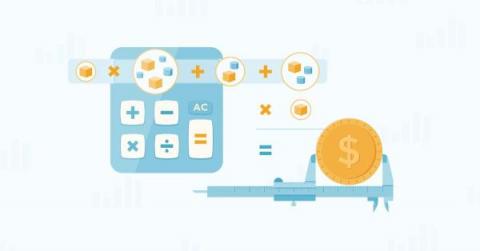
Whether you’re in finance or engineering, you know keeping your customers happy is the key to success. That means, your SaaS product or service needs to be available, reliable, and cost-effective virtually all the time. On that note, you can determine how stable and high-performing your service is depending on whether you use On-Demand or Spot Instances. Pricing, capacity, and flexibility will also vary depending on which of the two instances you choose.

How to Create an AI Chatbot for Your Website?

Chatbots are starting to look fairly promising for businesses of all kinds. Customers today are keen to get things resolved faster than ever. Every startup out there is tempted to take the deal. But before jumping onto the bandwagon, you need to do some thinking as to what type of chatbot you must invest in. The decisive question being, which model of conversational AI perfectly aligns with the needs of your organization.

The Definitive AWS Outage Report 2025: Reliability Analytics and Cascade Impact

Amazon Web Services remains one of the most popular cloud providers, with 200+ services in 39 regions across the world. Like all providers, they have their share of outages. In 2025, IncidentHub detected 38 AWS outages, of which the one on October 20th had the most widespread impact affecting hundreds of SaaS providers simultaneously. Payments were disrupted, students lost access to classrooms, developer tooling degraded, and some IT teams experienced alerting gaps.

Azure Tagging In 2026: A Complete Guide to Organizing Resources, Costs, and Governance

Azure tags are like sticky notes for your cloud resources. They help you label and organize infrastructure in ways that make sense to your organization. Tags enable you to assign categories to resources, making it easy to group, monitor, track, and filter them across any environment. So, how do tags and tagging work in Azure?

Inside the architecture: How Upsun delivers 99.99% uptime for AI

For a CTO, "four nines" represents a commitment to keeping production revenue live with less than 0.01% of total downtime per year. As AI workloads move from pilot projects into core production services, the reliability requirements for infrastructure have shifted. AI agents, RAG pipelines, and automated LLM workflows depend on a consistent platform state.

Powering Security Innovation: Executive Q&A on Splunk Joining AWS Security Hub Extended

To succeed in the AI era, customers need fast, easy access to security solutions that can harness the power of agentic AI and deliver business outcomes. They need seamless access to their data for faster threat detection, simpler incident response, and reduced risk. They need technology vendors to work together and not in silos.

Millions of Metrics. Zero Clarity.

Millions of metrics. Zero clarity. That’s the reality many IT teams are facing today. As environments grow more complex, telemetry explodes. Millions of records generated every hour. Dozens of specialized tools for network, storage, Kubernetes, cloud, AI workloads. Each tool is good at its domain. But none of them answers the real question: Where should I focus right now? Fragmented visibility creates predictable failure modes.

The Ultimate Kubernetes Cost Monitoring And Management Guide

While Kubernetes enables teams to deliver more value faster, understanding and controlling Kubernetes costs remains challenging. You have disposable, replaceable compute resources constantly coming and going across a range of infrastructure types. Yet at the end of the month, you only get a billing line item for EKS costs and several EC2 instances.

Is Terabox Safe in 2026? Security Risks, Data Privacy Concerns, and Safer Cloud Storage Alternatives

Cloud storage platforms have become essential for individuals, startups, and enterprises alike. From backing up photos and documents to sharing large files across teams, services like Terabox promise convenience, massive free storage, and cross-device accessibility. However, in 2026, users are asking a more important question: Is Terabox truly safe?

The Hidden Cost of SaaS Sprawl: When Custom Development Makes More Sense

The average enterprise now spends $55.7 million on SaaS annually, an 8% jump from last year alone. Yet here is the uncomfortable truth: a significant chunk of that money is being quietly wasted on tools that overlap, go unused, or simply do not fit the way teams actually work. SaaS sprawl has become one of the most expensive and least visible problems in modern IT. And for a growing number of organizations, the answer is not another subscription. It is custom-built software designed around the way their business actually operates.

Kubernetes Node Vs. Pod Vs. Cluster: What's The Difference?

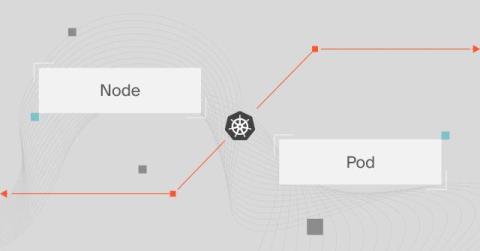
Kubernetes is increasingly the standard for deploying, running, and maintaining cloud-native applications running in containers. Kubernetes (K8s) automates most container management tasks, empowering engineers to manage high-performing, modern applications at scale. Meanwhile, surveys from VMware and Gartner reveal that insufficient Kubernetes expertise prevents many organizations from fully adopting containerization. Understanding how Kubernetes components work removes this barrier.

How to Reduce Latency in Your Multicloud Environment

Learn what causes high multicloud latency, and how you can reduce it with a few simple methods – no hardware deployment required. Latency is usually one of those problems that shows up before anyone has time to go looking for it – and troubleshooting it can feel like you’re aiming for a moving target.

AI infrastructure cost optimization for scaling teams

This post is also available in German and in French. The 2026 AI landscape has shifted from "Can we build it?" to "How much will it cost to run it?" For CTOs and engineering leaders, the challenge is no longer just model performance: it is the underlying infrastructure sprawl that silently erodes margins. When AI workloads scale, they often inherit the inefficiencies of legacy cloud models: over-provisioned instances, fragmented data pipelines, and a lack of unified context.

Monitoring and Optimizing a Hybrid Cloud Environment | WhatsUp Gold

This webinar focuses on Monitoring and Optimizing a Hybrid Cloud Environment. Downtime is an expensive inconvenience. Yet many IT teams still face monitoring blackouts due to rigid licensing models and outdated failover strategies. In this session, we’ll introduce a smarter approach: High Availability by Design. Whether you're scaling operations or modernizing infrastructure, this session will enable you with the tools and insights to build a resilient, future-ready monitoring strategy.

Database Cost Management: How To Control Rising Database Spend

According to CloudZero’s Cloud Economics Pulse, databases are often among the largest and most persistent cloud cost categories. Database costs are notoriously difficult to predict and control. Unlike stateless infrastructure that scales predictably with traffic, databases run continuously and expand behind the scenes, causing costs to rise even when usage appears stable. Because databases run continuously and expand behind the scenes, costs can rise even when usage appears stable.

Mapping Privileged Access Management (PAM) Tools To Real-World Use Cases in 2026

Not every privileged access management (PAM) tool solves every problem. The PAM market has fragmented into distinct categories, each designed for different operational realities. Choosing the wrong category wastes budget and leaves gaps. Choosing the right one simplifies security and compliance simultaneously. The challenge for security teams in 2026 is that traditional PAM categories - vault-based, agent-based, cloud-native - no longer map cleanly to how organizations actually use privileged accounts.

AWS vs Google Cloud vs Azure for Cloud-Native and Kubernetes

Cloud adoption is no longer about “moving to the cloud.” It’s about building cloud-native platforms that are scalable, observable, automated, and Kubernetes-driven. This guide provides a deep comparison of with a focus on Kubernetes, platform engineering, DevOps, and modern workloads, aligned with standards pioneered by the Cloud Native Computing Foundation.

Expert Insight: Why Local Internet Traffic Matters More Than You Think

Imagine sending a letter to your neighbour across the street, only for it to be routed through London or even Amsterdam before landing in their letterbox. This is effectively what happens to much of Scotland's internet traffic. Despite physical proximity between users, businesses and services, digital data is frequently sent on needlessly long journeys, often leaving the country before reaching its destination. This approach is inefficient, costly and poses questions about privacy, resilience and digital sovereignty.

Kubernetes Namespaces: What They Are, How They Work, And What They Don't Solve

Using Kubernetes to manage containerized applications has its fair share of challenges. One of those challenges is managing complexity. Using namespaces can help minimize that complexity. Yet, a common misconception is that using multiple namespaces in a single Kubernetes cluster can degrade performance. Another issue: Kubernetes namespaces can reduce visibility into costs. There’s more to it than that.

Anbox Cloud 1.29.0: what's new?

In this video, the Anbox team covers new features and changes in their latest 1.29.0 release: What is Anbox Cloud? Anbox Cloud lets you run virtualized Android environments securely, at any scale, to any device letting you focus on your use case. Run Android in system containers, not emulators, on AWS, OCI, Azure, GCP or your private cloud with ultra low streaming latency. Tags: Trademark notice Android is a trademark of Google LLC. Anbox Cloud uses assets available through the Android Open Source Project.

What feels different about enterprise IT operations today compared to even 3-5 years ago?

Speed isn’t the problem. Speed without shared visibility is. AI compressed release cycles, multiplied dependencies, and pushed accountability to teams who no longer own the full stack. The result? Faster change. Slower resolution. Higher risk. This is why MTTR is moving the wrong way...and why observability has to evolve. : Amit Rathi.

The AI infrastructure gap: why agents fail on fragmented stacks

The initial hype of AI agents is hitting a hard reality: a clever prompt is not a production strategy. As organizations move from experimentation to operationalizing AI in 2026, a systemic bottleneck has emerged: It is not the model's intelligence; it is the model’s context and its access to the right tools. When an AI agent lacks access to live, grounded platform data, it guesses.

CloudZero's FinOps Cost-Per-Unit Glossary

This glossary is a bookmarkable reference for cost-per-unit metrics in FinOps unit economics. It’s designed for engineering, finance, and FinOps teams that need a shared language for understanding how cloud costs behave as usage, customers, and products scale. The terms are organized by category and include real-world context.

Simultaneous multi-cloud deployment to AWS and GCP with CircleCI

AWS recently experienced a significant outage. The outage took down major services, including parts of McDonald’s mobile ordering system, some Netflix features, and many other applications that relied solely on AWS infrastructure. This event perfectly illustrates why relying on just one cloud platform can be risky.

Top 6 Cloud Monitoring Challenges in Hybrid & Multi-Cloud Environments

Hybrid and multi-cloud monitoring breaks down when teams can’t connect signals to customer impact fast enough to act. Hybrid and multi-cloud sound simple: run some workloads in public cloud, keep some on-premises, and connect it all. But in practice, you’re managing dependencies across teams and systems, tools that don’t share context, and incidents that refuse to stay in one place.

AWS EC2 Vs. Azure VMs Vs. GCE: Understanding The Real Cost Of Cloud VMs

AWS EC2, Azure Virtual Machines, and Google Compute Engine (GCE) appear similar on paper but produce different bills due to how each provider prices capacity, discounts, idle time, and commitment terms. The same VM configuration can cost 20-40% more or less depending on which cloud you choose and how your workload runs. On paper, all three offer similar virtual machines. In reality, they price capacity, discounts, and idle time very differently.

Predict, compare, and reduce costs with our S3 cost calculator

Previously I have written about how useful public cloud storage can be when starting a new project without knowing how much data you will need to store. However, as datasets grow over time, the costs of public cloud storage can become overwhelming. This is where an on premise, or co-located, self-hosted storage system becomes advantageous: it provides the greatest range of benefits, including cost, performance, security, and data sovereignty.

AWS Data Exchange Guide: Use Cases, Pros, Cons, And Pricing

Third-party data now drives forecasting, analytics, and machine learning across modern cloud teams. But acquiring it has long meant custom contracts, delayed access, and limited visibility into how data costs scale inside analytics workflows. AWS Data Exchange reduces much of that friction by integrating third-party data into the AWS ecosystem.

AWS Elastic Beanstalk 101: A Beginner's Guide To App Deployment On AWS

Imagine you want to launch an application without first building and managing the servers that run it. You write the code, pick how it should run, and then let a platform take care of the rest. That’s the core promise of AWS Elastic Beanstalk. In this snackable guide, you’ll understand AWS Elastic Beanstalk well enough to decide if it belongs in your AWS architecture.

AI SRE in Practice: Diagnosing AWS CNI IP Exhaustion Before Widespread Outage

IP address exhaustion in Kubernetes doesn’t announce itself with clear error messages. Pods fail to schedule, services degrade unpredictably, and the symptoms look like a dozen different problems before anyone realizes the cluster has run out of available IP addresses. By the time the root cause becomes clear, multiple services are affected and recovery requires coordination across infrastructure layers.

How to eliminate DevOps toil in regulated SaaS

In regulated industries like fintech, healthcare, and government, DevOps teams often find themselves acting as human compliance gateways. The pressure to maintain strict security standards while accelerating release cycles creates a compliance tax: a heavy burden of manual environment setups, security review tickets, and the inevitable scramble for evidence before an audit. This manual labor, or toil, is more than a drain on productivity. It creates a dangerous gap between policy and actual operations.

Amazon Web Services outage - February 10, 2026

On February 10, 2026, Amazon Web Services (AWS) experienced an outage that triggered widespread reports of CloudFront failures and DNS resolution issues. While AWS later acknowledged the incident, StatusGator detected the disruption earlier using Early Warning Signals, giving customers valuable lead time before the provider confirmed anything publicly.

The 10 Best AI Tools for Productivity in 2026

Since the launch of ChatGPT in November 2022, the world has seen a huge shift in our personal, business, and creative lives. Although we often use AI daily, its addition to our lives has not been without problems. It has caused writer strikes and worries about how AI handles our data and what it means for privacy, and many people are worried about AI taking over their jobs.

How To Design AI-Native SaaS Architecture That Scales Without Killing Your Margins

AI-native SaaS products aren’t failing because the models are bad. They’re failing because the architecture can’t keep up with how AI actually behaves in production. What looks affordable in staging can erode your margins once real customers, workflows, and automation come into play. Designing AI-native SaaS architecture is now as much a margin decision as it is a technical one.

Top Legacy Application Modernization Companies

Here's the uncomfortable truth: most large enterprises are powered by technology older than their digital ambitions. Banks clear payments on legacy cores. Airlines coordinate fleets on systems built before cloud computing. Healthcare providers rely on infrastructure never designed for today's cybersecurity climate. According to multiple enterprise IT studies, organizations spend the majority of their technology budgets maintaining existing systems rather than building new ones. In some sectors, maintenance absorbs close to 70% of total IT spend.

Cloudflare URL Redirects: When Simplicity Becomes Complexity

Cloudflare is widely trusted for CDN performance and edge security. It also provides redirect functionality that allows teams to implement both domain-level and page-level routing rules directly at the edge. For many teams, a Cloudflare URL redirect configuration is the quickest way to handle page-level changes. Whether it's redirecting an outdated blog post, enforcing HTTPS, or restructuring a section of a site, Cloudflare makes execution straightforward.

iCloud+ Pricing Plans (2026) and the Best Private Alternatives

You're paying Apple $0.99 to $59.99 a month for iCloud+ storage. Maybe you're about to. Either way, you're probably wondering if the pricing is fair, what you actually get at each tier, and whether there's a better option. The pricing is fine. The encryption? Not so much. Apple holds the keys to most of your files by default, which means they can access them if a government asks or if their servers get breached.

Surging AI Costs Are Eroding Business Efficiency: New CloudZero Report

What do 475 senior leaders across software, financial services, cybersecurity, and other industries all have in common? They have little to no idea whether their AI investments are paying off. CloudZero just released FinOps in the AI Era: A Critical Recalibration, a report assessing the state of cloud and AI spending. Culled from hundreds of responses from people directly accountable for cloud spending, the report shows that while FinOps maturity is accelerating, cloud efficiency is plummeting.

FinOps Maturity Has Never Been Higher. So Why Is Cloud Efficiency Plummeting?

Whoever thought we’d see the day when cloud cost management (CCM) seemed easy? CloudZero just released FinOps In The AI Era: A Critical Recalibration, an annual report on the state of cloud and AI costs. The report surfaced what looks like a paradox: FinOps maturity is accelerating, but organizational cloud efficiency is plummeting. 72% of organizations now have formal cloud cost management (CCM) programs. That’s nearly double what we saw in our last survey (39%).

The AI-nigma: FinOps Is Maturing - So Why Is Cloud Efficiency Falling?

Q: What do you call it when FinOps maturity surges but cloud efficiency plummets? A: An AI-nigma. I don’t claim to be a comedian. But I do claim to be Fred FinOps, so the paradoxical findings from CloudZero’s new report titled FinOps in the AI Era: A Critical Recalibration, created in partnership with B2B SaaS benchmarking firm Benchmarkit, had me scratching my head. The good news: These numbers tell a story of cloud cost maturity and control. But then there’s the bad news.

Sustainable AI Investment: A Systems Thinking Approach

According to our new report, FinOps in the AI Era: A Critical Recalibration, 40% of companies now spend $10M or more annually on AI. Most can’t tell you if it’s working. That’s not a budgeting problem. It’s a systems problem. And Donella Meadows wrote the playbook for understanding it.

Migration blueprint for moving your application without rewriting

The decision to migrate a production application is rarely about the destination. It is about the friction of the journey. For most engineering leaders, the word "migration" is a synonym for "refactor." The industry has conditioned us to assume that moving to a modern cloud platform requires throwing away years of stable configuration, learning a new proprietary DSL, and rewriting core application logic to fit a specific container or serverless model.

Why Upsun is the multi-cloud PaaS technical leaders are choosing in 2026

In a recent technical evaluation by Journal du Net (JDN), Upsun (formerly Platform.sh) was recognized for its ability to "pull ahead" (tire son épingle du jeu) in a fiercely competitive market dominated by cloud giants and specialized pure players. While hyperscalers offer raw power, Upsun’s strategic fusion of enterprise reliability and AI-ready agility has redefined expectations for modern PaaS.

Dashboarding Azure: SquaredUp vs Grafana

If you’re looking for a dashboarding solution today, chances are you’ve looked at Grafana or SquaredUp — or both. Grafana is a popular open source dashboarding tool with on-prem and cloud variants, while SquaredUp is the SaaS, cloud-based unified dashboarding solution. Both offer a comprehensive list of data sources that they can plug into and build dashboards. As such, they both also offer an integration with Azure - which is the focus of our discussion today.
Sponsored Post

From cloud costs to cloud value: The role of performance analytics in increasing ROI

Many cloud providers offer services that scale with usage. However, unanticipated overutilization of compute instances, serverless functions, or managed databases can quickly drive up costs. Managing these resources effectively is crucial for keeping cloud spending predictable.

Perspectives from the Edge: Data Sovereignty with KPMG

Data sovereignty isn’t a checkbox – it’s now a board-level priority. Data sovereignty is everywhere right now, but for many organisations, it still feels abstract. In this first episode of Perspectives from the Edge, Assad Noori, Head of Digital Infrastructure Advisory for the UK at KPMG, speaks with Pulsant's Wendy Shearer, about why sovereignty has become a board-level issue, how AI and hybrid infrastructure are reshaping long-held assumptions, and why decisions about where data lives, moves, and is accessed now carry far wider implications than most organisations expect.

Why my Azure bill keeps spiking (and how to fix it)

Noticed a sudden spike in your Azure bill? Unexpected Azure cost increases are often caused by hidden usage, overprovisioned resources, scaling changes, or limited cost visibility. In this video, we explain why Azure costs spike, how to identify Azure cost anomalies early, and what steps you can take to prevent budget surprises. Take control of your Azure spend with smarter, proactive cost management.

When ConfigMaps Hit Limits: Migrating to CRDs

Over the past few years, Kubex has evolved from a cloud optimization product into a Kubernetes-centric solution, shifting its focus from cost and waste visibility to fully automated resource optimization. As that evolution happened, one of the earliest design decisions we had made began to show its limits: how the product was configured.

Your Cloud Economics Pulse For February 2026

Welcome to February’s Cloud Economics Pulse, CloudZero’s monthly look at cloud spend as AI moves from experiment to expectation. Last month, we closed out 2025 with a settling: provider shares locked in, compute softened, and AI claimed more of the mix (big surprise there). January confirmed those patterns weren’t year-end hustle and bustle. They signify a new baseline. Also, the Big Three (AWS, GCP, Azure) barely moved. They’re as entrenched as can be.

Kubernetes Vs. OpenStack: How They Differ, How They Work Together, And When To Use Each

Kubernetes and OpenStack are not competitors. They operate at different layers of the stack and are often used together. OpenStack manages cloud infrastructure such as compute, storage, and networking. Kubernetes runs on top of that infrastructure to deploy, scale, and manage containerized applications. Teams often compare them as alternatives, but in practice, Kubernetes frequently runs on OpenStack.

The Best Open Source Object Storage Alternatives to AWS & more

Open source cloud storage offers greater transparency and peace of mind that your data is stored safely, as the code that builds that platform is available for everybody to view and verify its security and data handling. With compatibility for popular APIs like Amazon S3, these 7 object storage solutions can handle a wide range of workloads, from backups and archives to data lakes and AI applications, while remaining scalable and cost-effective.

Are Businesses Leaving the Cloud?

Learn the truth about cloud repatriation, the motivations behind it, and whether it’s really happening as much as you think. For years, the cloud has been the default solution for businesses wanting speed of deployment with quick and easy scalability. And while the cloud promises endless resources at your fingertips, a lot of network teams are having the conversation about whether to pull their workloads back out of the public cloud and run them on their own hardware or private cloud again.

How an AI assistant and MCP server deliver real-time cloud cost insights

Cloud costs don’t grow quietly. They spike, drift, and surprise teams at the worst possible moments, usually when someone finally opens a dashboard. While cloud cost management tools are powerful, getting quick answers often still means navigating multiple views, applying filters, exporting reports, and looping in the right people. But what if cloud cost analysis worked more like a conversation?

Secure OAuth is easy to demo and hard to operate at scale

Most teams think about OAuth the same way they think about logging. It is necessary, familiar, and supposedly solved. Then it hits production. Suddenly, it is not just one authentication flow. It is a complex web of two or more applications, multiple environments, cookies, redirects, secrets, and route boundaries. The uncomfortable truth is that OAuth security is not just an implementation detail. It is an operational system, and that system is only as strong as the platform it runs on.

10 Tips to Prevent Eavesdropping Attacks in Your Organization

Businesses today leverage technology in almost all aspects of their operations because it enhances efficiency. However, this reliance on digital tools exposes them to cyber threats like eavesdropping. Research says more than 37% of smartphones worldwide have become eavesdropping targets. That's a lot of mobile devices belonging to employees of many companies.

AI Vendor Lock-In: How AI Is Creating A New Dependency Problem

Like most SaaS companies, you’re under pressure to ship AI-powered features faster, smarter, and at scale. For many teams, that pressure leads to relying on external AI platforms, managed models, and third-party APIs instead of building everything from scratch in-house. At first, it feels like a win. Your team ships an AI-powered feature in weeks instead of months. No GPU clusters to manage. No models to train. No infrastructure to babysit.

SharePoint Preservation Hold Library: Hidden Cost Trap

Most executives assume that moving to Microsoft 365 simplifies cost control. Storage is “in the cloud”, usage is elastic, and governance is handled through policy. In reality, many organisations face a very different experience. They invest heavily in retention policies to meet legal and regulatory requirements, yet their SharePoint storage costs continue to rise year after year, even after large cleanup programs.

Cloud Provider Status Report - January 2026

This report analyzes cloud provider status data for January 2026, covering 12 major cloud platforms: AWS, Azure DevOps, DigitalOcean, Fly.io, Heroku, Linode, Microsoft Azure, Netlify, Railway, Render, and Vercel. The data includes official incident reports from each provider's status page and early detection capabilities from IsDown's monitoring system.

Kubex and Tangoe Partner to Deliver Unified Cloud, Kubernetes, and FinOps Optimization

Enterprises operating at cloud scale today face a growing reality: managing infrastructure performance and cost in silos no longer works. Kubernetes, multi cloud environments, and GPU accelerated workloads deliver immense agility and capability, but they also introduce complexity that outpaces traditional monitoring and cost governance approaches.

AI Is Forcing A Return To Hybrid And Multi-Cloud (Here's What To Do Now)

For most of the last decade, the direction of cloud strategy was clear: standardize, consolidate, and reduce sprawl. Engineering teams worked to pick a primary cloud, reduce vendor dependencies, and simplify their stacks. FinOps teams unwound years of fragmentation. Platform teams built guardrails to make sure it didn’t happen again. Then AI arrived, and it’s a fundamentally different class of workload. AI demands specialized hardware and, increasingly, diverging providers.

S3 Object Storage: How It Works, Who It's For, Advantages and Costs

S3 object storage is a popular storage for businesses and enterprise who need rapid access to data, and large amounts of storage not available with traditional file storage. If you’re interested in learning more about S3, we cover how the S3 protocol works, services offering object storage, and how they can meet your use case.

Why MCP is becoming part of your product surface

AI assistants are quickly becoming a primary interface for how people interact with software. Developers ask them how to integrate APIs. Users ask them how products work. Buyers ask them how tools compare. Increasingly, the first explanation someone receives about your product does not come from your website, your documentation, or your sales team. It comes from an AI assistant. That shift has an important consequence that many organizations are only starting to notice.

Why preview environments only work when the platform owns them

Deployments are one of the few moments where software development still feels risky. Teams may have tests, a staging environment, and careful review processes, yet the final step still carries uncertainty. Will this change behave the same way in production? Will it interact cleanly with existing data, traffic, and infrastructure? Will it introduce regressions no one anticipated? Preview environments exist to reduce that uncertainty.

Upsun's AI story: the 5% path from pilots to production value at scale

Here’s the uncomfortable truth: most companies do not have an AI problem. They have a delivery problem wearing an AI costume. MIT’s Project NANDA research has been widely cited for a brutal headline statistic: roughly 95% of corporate generative AI pilots fail to produce measurable business impact or returns, while only about 5% break through to meaningful outcomes. (Yahoo Finance) The models are impressive. The demos are dazzling. The budgets are real.

Intelligent FinOps: AI-Informed, AI-Enabled

AI is the new frontier for FinOps maturity. It introduces fresh spend patterns and new opportunities for value. As GPUs, inference, and retraining reshape costs, FinOps maturity grows through visibility, forecasting, and shared mindset about how these workloads drive business impact. In this 2025 post, I gave my guidelines for implementing AI tagging to give business context and clarity to vague AI invoices. Now, I’m sharing the next level up: how to drive FinOps in AI with AI.

From Chaos To Clarity: How Forcepoint Scaled FinOps Across The Organization

When Anthony Leung talks about FinOps, he’s speaking from operating at real scale — not theory. As VP of Engineering Platforms and Security Research at Forcepoint, he led a transformation that cut cloud spend in half while improving availability, and built a culture where engineers own their economics.

We Built an MCP Server

When I joined Kubex last year, the company was already well aware of the growing power of Large Language Models. As a company focused on intelligent resource optimization for Kubernetes, GPUs, and cloud infrastructure, generative AI didn’t feel like a threat so much as a natural extension of where the industry was heading. Kubex had already invested heavily in machine learning, but it was becoming clear that foundation models could unlock an entirely new class of capabilities for our customers.

Scalable AI governance: why your policy needs a platform, not just a PDF

Most IT teams don’t lack AI policies. They lack policies that survive a Git push. In many organizations, AI governance is a paper tiger. There are comprehensive documents outlining data usage, approved models, and risk management. On an auditor's desk, these policies look complete. But inside the workflow, the reality is different. AI tools are being embedded directly into IDEs, CI pipelines, and internal automation scripts.

What mid-market IT teams wish they knew before deploying AI agents

AI agents are quickly shifting from experimentation into day-to-day operations. That shift is showing up in the data. McKinsey’s latest State of AI research highlights both broader AI use and the growing focus on “agentic AI,” even as many organizations still struggle to scale safely. For mid-market IT teams, agents can feel like the unlock: automate repetitive workflows, reduce backlog pressure, and deliver more output without expanding headcount.

AI Tags: Why Cloud Tagging Breaks Down For AI Workloads (And What To Use Instead)

Tags have long been the backbone of cloud cost visibility and governance. They help teams understand who owns what, where spend comes from, and how infrastructure maps back to the value the business delivers. However, AI workloads have altered that model, and exposed the limitations of traditional AI tags in the process. In fact, many of the most expensive AI operations don’t run on taggable cloud resources at all.

Top object storage solutions for enterprises [2026]

While there are many benefits to traditional cloud storage solutions, sometimes enterprises need a more scalable way to manage and access large amounts of unstructured data. So while cloud storage may be the perfect solution for small businesses, larger teams or enterprises should consider object storage to meet their storage needs without worrying about high costs, data loss, or compliance issues.

AWS IoT Greengrass comes to Ubuntu Core

London, February 3, 2026 — Canonical and AWS are pleased to announce the release of the new snap for AWS IoT Greengrass, making the deployment of your IoT solutions easy and seamless all the way from silicon to the cloud. With the AWS IoT Greengrass agent now available as a snap package from the Canonical Snap Store, Ubuntu Core has become the ideal operating system for all your AWS IoT edge workloads and data ingress.

Every CIO is asking the same question: Am I Next?

Every CIO is asking the same question: Am I next? We’ve seen it across cloud providers, carriers, and global platforms—organizations with enormous scale and investment still experience public, business-impacting outages. The risk isn’t lack of effort. It’s the growing gap between AI-driven complexity and the ability to see, understand, and resolve issues fast enough to protect availability commitments.

How To Calculate Customer Retention Cost in 2026: The Hidden SaaS Metric

You may have heard that keeping an existing customer is five times cheaper than acquiring a new one. But that isn’t always true. “Hidden costs” often accompany customer retention, loyalty, and increasing “share of customer”. Could you be spending more on customer retention than on winning new customers? This quick guide will walk you through the meaning of Customer Retention Cost (CRC), why it’s important to calculate it, and how to calculate it.

The hidden cost of "just using Kubernetes"

Kubernetes has become the default foundation for a lot of modern application infrastructure. It’s powerful, flexible, and widely supported, which makes it an obvious starting point for many teams building a cloud-native application platform (a standardized way for teams to deploy, run, secure, and operate applications in production). But there’s a distinction that often gets lost early in the decision process: Kubernetes is a framework. It is not a platform.