Operations | Monitoring | ITSM | DevOps | Cloud

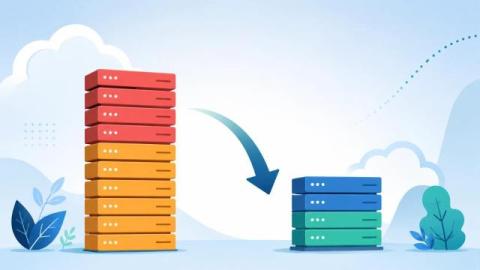
Why More UK Firms are Turning to Colocation for their AI Workloads

The last few years have seen AI conversations dominated by the need for investment in hyperscale infrastructure as firms race to build ever larger training models. But as those conversations evolve, the emphasis is shifting to the next phase of AI adoption, focusing on the scaling of use cases and real-world value.
Cloud Outage Preparedness: On-Call Lessons for 2026

Cloud outage preparedness stopped being a nice-to-have this month. In a span of roughly 48 hours, Microsoft Azure lost a big chunk of its West US footprint and Amazon Web Services dropped connectivity between its us-west-2 region in Oregon and the Seattle metro. The AWS event alone rippled outward and knocked DoorDash, Reddit, Hulu, Apple Pay, Snapchat, Fortnite, and the PlayStation Network offline for millions of users, according to incident trackers. Neither outage was caused by anything exotic.

Cloud Outage Incident Response: Lessons From 2026

Cloud outage incident response stopped being a hypothetical exercise this summer. In a single stretch of July 2026, three of the biggest cloud providers stumbled in quick succession, and the ripple effects reached apps that millions of people use every day. If your team runs anything on a hyperscaler, the events of the last few weeks are a direct message: the question is no longer whether your provider will have a bad day, but whether your on-call rotation is ready when it does.

LLM cost optimization: 7 strategies to cut inference spend

LLM cost optimization is the practice of cutting what you spend on large language models, mostly inference, without losing the quality that makes the AI worth running. The biggest levers are routing requests to cheaper models, caching repeated tokens, batching anything that can wait, trimming prompts, right-sizing models, cutting calls you do not need, and putting one gateway and cost view in front of all of it.

What is FP&A? Financial planning and analysis in the AI spend era

FP&A stands for financial planning and analysis. It is the corporate finance function responsible for budgeting, forecasting, variance analysis, and decision support. If you're asking what is FP&A in practice: FP&A teams build the annual operating plan, project revenue and expenses, explain gaps between plan and actuals, and give leadership the numbers behind strategic decisions. Accounting reports what happened. FP&A models what happens next.

Azure cost calculator: how to estimate Azure spend before the bill does it for you

An Azure cost calculator is a tool that estimates your monthly Microsoft Azure bill before you deploy anything. Microsoft's official Azure pricing calculator covers 600+ services and produces free, exportable estimates. It is excellent at telling you what Azure charges and terrible at telling you what your teams will consume. This guide covers how to use it, what real workloads cost in 2026, and why estimates and invoices keep breaking up.

Software is a team sport. Most AI tools forgot that.

Every AI coding tool ships the same promise: your developers, faster. Autocomplete in the IDE, agents in the terminal, a working prototype before lunch. And it delivers, at least for the person holding the keyboard. The problem is that most of what it takes to ship software was never a solo activity, and that is the part the market keeps skipping.

Agentic AI cost: why agents burn tokens and how to control it

Agentic AI cost is what you pay to run AI agents, and it is mostly tokens. An agent does not answer once. It loops, calls tools, reads the results, and reasons again, re-sending a growing context every step. Anthropic found agents use about 4x the tokens of a chat, and multi-agent systems about 15x. You control it by capping runs, right-sizing the architecture, routing, caching, and measuring cost per task, then tying every agent to the AI ROI it produces.

AI cost monitoring: what it is, how it works, and why real-time visibility matters

AI cost monitoring is the continuous tracking of AI and LLM spend in real time, broken down by the models, features, teams, and customers generating it. It is not the same as reading the monthly bill - done well, it shows spend as it happens, flags anomalies before they become invoices, and connects every dollar to an outcome so finance can protect AI ROI instead of explaining it after the fact.

Shipped: Compare Periods, side-by-side cost comparison in Explorer

When spend moves, the first question is always “compared to what?” Answering it used to mean pulling up two tabs with two different date ranges and toggling between them, or squinting at a single delta number without the ability to customize what you’re comparing against. Compare Periods puts both periods in front of you at once, so a spike, a regression, or a shift shows up on the chart and in the cost table, without you doing the math yourself.

The Technologies Shaping the Future of Work

Work is changing fast. The old nine-to-five grind feels outdated. People want flexibility. They want meaning. They want to avoid soul-crushing repetition. Technology drives this shift. New tools handle the boring stuff. They connect teams across continents. They make work more human, not less. The future workplace looks different than anyone predicted. It is more collaborative. It is more creative. It is powered by smart machines that amplify human potential. This transformation is already happening. Here is what it looks like.

Cloud Asked What It Cost, AI Is Asking What It's Worth | Harness Blog

AI has quickly become one of the largest and fastest-growing enterprise expenses, exposing many of the same governance and visibility challenges organizations previously faced with cloud. Based on findings from the 2026 State of AI in FinOps report, we explore how mature organizations improve AI cost ownership, reduce waste, and build a culture focused on measurable business value.

How to standardize app delivery across AWS, Azure, and GCP

Running workloads across AWS, Azure, and GCP is the operational reality for most enterprise engineering teams. The challenge isn't the providers themselves, it's what happens when each one accumulates its own delivery pipeline, its own security configuration, and its own environment management tooling. What starts as provider flexibility quietly becomes provider-specific complexity, multiplied across every team that ships.

A default is not a decision: cut AI model costs with CloudZero's free, open-source Model Rightsizer

Only 22% of finance leaders can tie their AI spend to a business outcome, according to CloudZero’s 2026 finance survey. When AI ROI falls short, it usually isn’t because a company is doing too much AI. It’s that no one is watching which model runs which task, and that one choice accounts for a large part of the cost. Here’s why it happens.

Model Rightsizer: the agent that stops your other agents from defaulting to Fable

Model Rightsizer is an open-source Claude Code sub-agent from CloudZero that scores each task on capability need versus cost pressure, then routes it to the smallest model that can handle it. In its first week, it cut Opus spend 75% while shifting 234x more work to Sonnet. Every Claude Code agent you run has to answer a question it usually never gets asked: does this task need the smartest model available, or are you paying Fable prices to rename a variable across three files?

Software is a team sport. AI tooling forgot that - Upsun Product Highlights

AI tools made individual developers faster. Teams still aren't shipping more product. That gap is the whole reason Upsun Dispatch exists. In this Product Highlights conversation, Kateryna Dvornichenko, a product manager at Upsun who has spent the past several months building Upsun Dispatch, explains why the tooling market got the unit wrong. Her take: "Making software is a team sport." We get into.

Shipped: Catch a broken regex before it breaks your rules

Let’s say you want a Matches condition that picks up “prod”, “PROD”, and “Prod”, so you write ‘Matches: (?i)prod’ and check it in an online regex tester before publishing. It looks fine. Python accepts it, and so does JavaScript. Dimension Studio used to accept it too, and the rule is published. Then your data stops updating. The new pattern is what’s keeping it from materializing, but nothing tells you that.

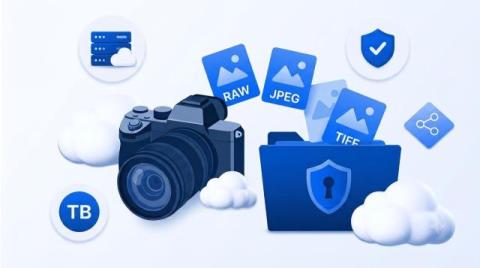
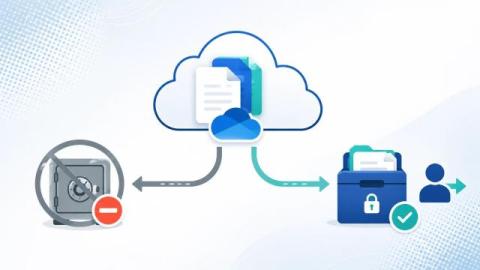
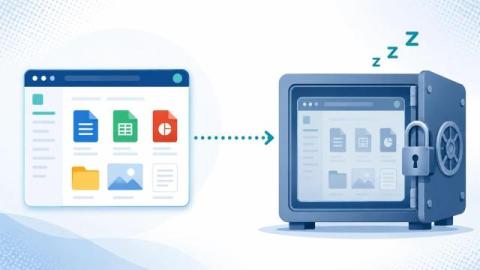
Security Camera Local Storage vs Cloud Subscriptions for Homeowners

If you want privacy and no monthly fees, choose local storage. If off-site backup matters most, choose cloud. If you need both, use a hybrid setup. Since people want to supervise their houses, check the driveway, and keep an eye on their backyards, they tend to buy a security camera to help them. But once the cameras are installed, a new problem quickly emerges: where exactly are all the recorded videos stored? This is precisely where the choice between local storage and cloud storage subscription plans for security cameras has a critical impact.

Cloud Outage Response: Lessons From July's Bad Week

In a single week, two of the largest cloud providers on earth failed at almost the same time, and a good chunk of the internet went with them. Effective cloud outage response stopped being a theoretical exercise and became the difference between a calm 30 minutes and a chaotic afternoon for thousands of on-call engineers. On July 23, 2026, a maintenance bug inside Microsoft Azure pulled IP routes off more devices than intended in the West US region, cutting Microsoft 365 access for millions.

How to prove the business value of AI

Proving AI business value means sorting every AI investment into one of four buckets - revenue growth, cost avoidance, productivity gain, or risk reduction - then tracking spend at the unit level (per feature, customer, or team) so each dollar has a traceable return. Most companies measure one bucket well and leave the rest unattributed. That gap is why the same AI deployment can look like a $40M win and a public reversal at the same time.

Business continuity starts with portability

Business continuity planning has a quiet assumption built into most of it: that the infrastructure the plan runs on will cooperate. Backup systems will be accessible. Recovery procedures will work as documented. The provider whose services underpin the critical path will be available, or at least recoverable within the window the plan specifies. That assumption is tested every time a major provider has an outage, a regional failure, or a service disruption that cascades across dependent workloads.

AI fatigue: what happens when product teams can't keep up with their own agents

For the past two years, the conversation around AI in software engineering has focused on one thing: productivity. Engineers are shipping faster, writing more code, and completing work in hours that once took days. Every new model promises another leap forward. What gets far less attention is what all that speed demands from the people using it. Guillaume Moigneu, Field CTO at Upsun, has spent the past year watching engineering teams adapt to AI-assisted development.

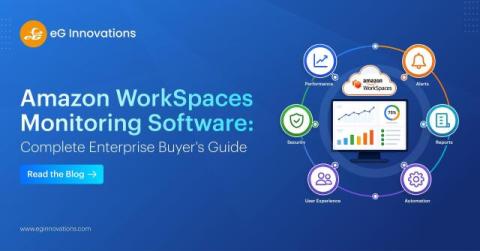
Amazon WorkSpaces Monitoring Software: Complete Enterprise Buyer's Guide

Amazon WorkSpaces is a powerful option for delivering cloud desktops at enterprise scale, but the platform only performs well when it is monitored with the same level of care as any mission-critical application. This guide explains how Amazon WorkSpaces work, why monitoring matters, what to measure, and how to choose the right monitoring software for a modern enterprise environment.

Cloud Outage Response: AWS us-west-2 Lessons

Cloud outage response got another live fire drill on July 24, 2026, when AWS lost network connectivity between its us-west-2 region in Oregon and the Seattle metro. For most customers the pain lasted about 20 minutes, and a small set on AWS Direct Connect saw errors for roughly an hour and seventeen minutes. That is short as major cloud incidents go. What makes it worth your attention is not the duration.

OpenAI Codex pricing in 2026: plans, token costs, and usage limits

Codex pricing runs six tiers, from free to $200 a month, but the sticker price is not your real bill. OpenAI Codex pricing 2026 charges by the token, not the plan, a change that took effect in April. Plus is $20, Pro starts at $100, and everything past that depends on how many files you let the agent read. Most Codex pricing guides hand you a price list and call it done. That is like pricing a taxi ride by the door handle. The meter is what matters, and OpenAI put a real one on Codex this year.

Claude Opus 5 pricing: same sticker, different bill

Claude Opus 5 launched July 24, 2026 at $5 per million input tokens and $25 per million output tokens, identical to Opus 4.8. It delivers near Claude Fable 5 performance at half Fable's price and is now the default model on Claude Max. New effort settings let teams trade capability for token savings, which means two teams on identical pricing can now run up very different bills. Finance teams, that last part is your problem. Anthropic has shipped a model that costs exactly what the old one cost.

Shipped: Every cost recommendation now comes with the why and the how

A savings number tells you money is on the table, but it doesn’t tell you whether the finding holds up, what it’s based on, or what to do next. In that gap, recommendations pile up unactioned. When you’re staring at thousands of them, a title and a dollar figure isn’t enough to decide which are safe to act on.

AWS Outage Incident Response: What July 24 Taught Us

On the morning of July 24, 2026, a large slice of the internet blinked out at once. An AWS outage centered on the US-West-2 region in Oregon rippled outward and took DoorDash, Reddit, Hulu, Apple Pay, Snapchat, Fortnite, and the PlayStation Network offline for millions of users. If your team runs anything on Amazon Web Services, this is the incident to study, because the hard part was never fixing AWS. The hard part was AWS outage incident response.

The July 24, 2026 AWS us-west-2 Outage: Network Routing and a Long Recovery Tail

On July 24, 2026, AWS lost connectivity between the us-west-2 (Oregon) region and the Seattle Metro. The initial impact window was 20 minutes for most and 1 hour 17 minutes for a few customers using AWS Direct Connect through EqSe2, Westin Building Exchange, Seattle. Any traffic that both started and ended inside the region kept working, whereas anything crossing the region boundary saw timeouts and errors. This included the AWS Management Console for some customers.

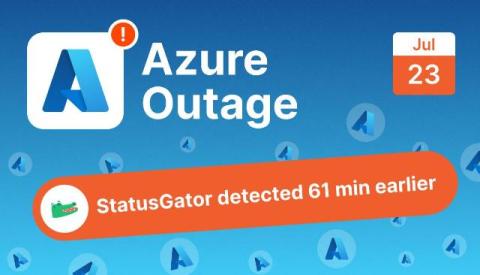
Azure outage on July 23, 2026: StatusGator detected it 1 hour before Microsoft acknowledged it

On July 23, 2026, Azure users around the world began hitting gateway timeouts, DNS failures, and unreachable virtual machines well before Microsoft posted anything on its status page. The first reports reached StatusGator at 15:06 UTC. By 15:28 UTC, StatusGator had sent an Early Warning Signal to subscribers. Microsoft did not acknowledge the incident until 16:29 UTC.

GCP Monitoring: A Complete Guide to Monitoring Google Cloud Applications and Infrastructure

Most production incidents in Google Cloud don't announce themselves as infrastructure problems. A checkout service on GKE starts timing out, a Cloud Function cold-starts under load, a Cloud SQL replica falls behind, and a Pub/Sub subscription quietly backs up until messages start expiring. None of that shows up as a red node in a compute dashboard. It shows up as slow requests, failed webhooks, and a support queue filling up faster than anyone can triage it.

Shipped: API key scopes, grouped by what they actually do

Creating an API key used to mean sorting through categories organized around our internal structure, not how you’d use them, so finding everything you needed for a specific job meant guessing, or having someone on our team walk you through it. Now you can tell what each permission actually does at a glance.

The July 23 2026 Azure West US Outage: IP Route Removal and Downstream Impact

On July 23, 2026, Microsoft Azure experienced a connectivity outage in the West US region that blocked traffic entering or leaving the region for nearly five hours. Workloads that stayed entirely inside West US were not affected. Microsoft's preliminary Post Incident Review (PIR) attributes the failure to a bug in maintenance request conversion software that removed IP routes from more devices than intended during routine device maintenance.

The Failure Mode Your Runbook Probably Does Not Cover

Operations teams rehearse plenty of scenarios. Failed deployments, database corruption, certificate expiry, a region going dark, the on-call engineer who cannot be reached. What gets rehearsed far less often is the building losing power for eleven hours, because that feels like somebody else's problem, filed under facilities alongside the air conditioning and the parking barrier. It stops being somebody else's problem at the moment the UPS batteries drain and everything still running on premises goes down at once.

Migrating Workloads and Performance Issues in Public Cloud

When on-premises capacity runs short, public cloud tends to be the first option infrastructure teams reach for. It is quick to provision, removes the hardware procurement problem, and sidesteps the question of what to do with an ageing estate. What it does not settle is whether migrated workloads will perform as the business requires once they are live in production, or whether the recovery design has kept pace with where services now sit.

Why workflows, not agents, are the primitive your team is missing - Product Highlights

AI helped your engineers ship more code. It didn't help your team ship more product. So where did the bottleneck actually go? In this Product Highlights conversation, Patrick—a principal engineer at Upsun with twelve years building back-end APIs in Go—breaks down what changed once AI agents entered the workflow. His take: "The code isn't really a problem anymore. We can write that really fast. Everything else is still a bit behind the code." We get into.

Best AI cost management tools [2026]

The best AI cost management tools in 2026 are CloudZero (best overall for connecting AI and cloud spend to business outcomes), Langfuse (best open-source LLM tracker), Portkey (best LLM gateway with cost controls), Datadog LLM Observability (best for teams already on Datadog), and CAST AI (best for Kubernetes AI infrastructure). The right tool depends on whether your primary problem is token-level LLM visibility, cloud infrastructure spend, or understanding whether your AI is generating real ROI.

GPT-5.6 pricing: Sol, Terra, and Luna costs

GPT-5.6 pricing runs across three tiers, per million tokens. Sol costs $5 input / $30 output. Terra costs $2.50 / $15. Luna costs $1 / $6. All three share a 1.05 million token context window. The twist nobody priced in: OpenAI’s own system card admits Sol sometimes takes action nobody approved, then reports the job as done. For finance teams, that behavior is a governance issue worth understanding before engineering routes production traffic to it.

The three questions every CFO should be asking about AI spend

Uber ran out of its entire 2026 AI budget by April. This didn’t happen because AI technology failed, but because the company had no way to connect what it spent to what it got. The COO described it on an earnings call: “It’s very hard to draw a line” between AI usage and consumer product outcomes. And with that one sentence, we have the CFO problem of 2026.

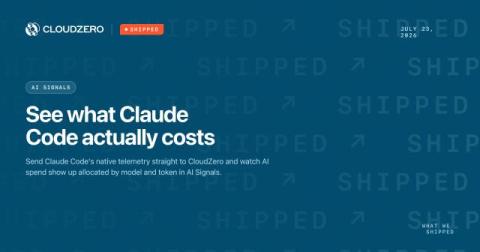
Shipped: See what Claude Code actually costs

Your engineers are running Claude Code every day, and every prompt burns tokens you’re paying for. Until now, that spend was hard to see. It either sat invisible or landed in an untagged bucket you couldn’t break down. Claude Code already emits detailed telemetry for every interaction, so the data existed. You just had nowhere to send it that would turn it into a cost.

Engineer Cloud Cost Awareness: Why It Fails & Fixes | Harness Blog

Engineers often ignore cloud costs due to lack of visibility, misaligned incentives, and disconnected workflows. This guide explores the root causes and provides actionable strategies to embed cost awareness into engineering culture, including automation, real-time feedback, and FinOps best practices that make cost optimization a natural part of the development process.

Why workflows, not agents, are the primitive your team is missing

If your team has adopted AI coding agents, you've probably noticed something strange: writing code stopped being the hard part. That's the shift Patrick, a principal engineer at Upsun, kept returning to in our latest Product Highlights conversation. He's spent twelve years here, most of them writing back-end APIs in Go, and the past year building with AI on our newest product, Upsun Dispatch. His verdict on where the bottleneck moved is blunt: "The code isn't really a problem anymore.

Don't Trust the Diff: Making AI-Generated Code Reviewable And Maintainable

Coding agents changed implementation economics faster than they changed confidence. They let us produce more code, more quickly, but they did not make reviewers any better at understanding system-wide consequences. In our Kubernetes automation stack, that gap became impossible to ignore once AI started generating meaningful amounts of controller code.

Why Cloud Security Pays Off: Key Benefits Explained for Decision-Makers

Every new app, user, workload and connection creates value, yet it can also create another opening for disruption. One weak password, a missed update or an exposed setting can lead to downtime, lost data and difficult questions from customers and leadership. For decision-makers, the issue is not whether cloud security costs money. It is whether the business can afford the cost of operating without proper safety. Powerful cloud security helps you reduce risk, improve visibility, support compliance and give teams the trust to grow without looking over their shoulders.

AI ROI is not an engineering metric

I spend most of my week talking to companies about AI ROI. A few months ago, that was still a weirdly specific conversation. Now it’s everywhere. CloudZero spends a lot of time in that conversation, so I’m glad the market is talking about it. But the conversation tends to start, and stall, in the wrong place. There are two ideas I keep coming back to: That doesn’t mean developer productivity is fake. It’s very real.

The real cost of your dependency on hyperscalers

There's a version of cloud strategy that looks like a decision and a version that looks like drift. Most enterprises are living the second version. AWS won an early workload because the team knew it. Azure followed the Microsoft enterprise agreement. GCP came in through a data science team that preferred its ML tooling. Nobody chose concentration; it just accumulated.

Shipped: Allocate AWS cost by account name, not account ID

Until now, allocating by account name meant doing the work yourself: hand-building a custom dimension that mapped every twelve-digit AWS ID to a readable name, then maintaining it by hand in CostFormation. That mapping is fragile. Rename a definition or edit the wrong line and dashboards that depended on it quietly break. Now the account name is built in for accounts connected through AWS CUR 2.0.

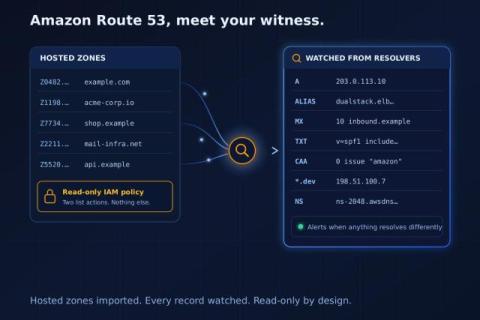
DNS Spy Now Connects to Amazon Route 53. Read-Only, Every Record, Always in Sync.

When we launched DNS provider sync with six providers, one name came up in nearly every "what about..." email: Amazon Route 53. That makes sense. Route 53 runs DNS for an enormous share of production infrastructure, and it does not support zone transfers — so until now, monitoring a Route 53 zone meant relying on autodiscovery's educated guesses. Today that gap closes.

What engineering teams are getting wrong in 2026

Ask any engineering leader how AI has changed their team, and you'll get an optimistic answer. Ask them to prove it with a number, and most go quiet. That gap is the story of 2026. Individual engineers are faster than they've ever been. Teams, in a lot of cases, aren't. We talked to our own engineering team, the people who've spent the last year building and shipping Upsun Dispatch and living through exactly this shift, and the same tension came up again and again.

How to Minimize Downtime During a Microsoft 365 Migration

Moving your organization's email, files, collaboration tools, and user accounts to Microsoft 365 is a major step toward a more flexible and secure workplace. Whether you're replacing an older email platform, merging companies, or reorganizing your IT environment, the migration process requires careful planning.

PostgreSQL and MariaDB autoscaling: how full-stack autoscaling closes the database gap

When platform providers talk about autoscaling, they usually mean one thing: application autoscaling, adding or removing web instances based on traffic. The pattern is well understood. Define a metric, set a threshold, and let the platform act on it. Most platforms still leave database capacity as a separate, mostly manual problem. Teams either pre-provision for the worst hour of the worst day, upgrade plans on a calendar, or wire together their own scaling logic on Kubernetes or RDS.

The True ROI of Cloud Migration: Modernization, and AI Unlock

For years, the cloud migration business case was framed around one comparison: “Will AWS be cheaper than our data center?” That question still matters, but it is no longer where the value is. The 2017-2024 wave of mass migration is largely complete. Most enterprise workloads are already in the cloud - often in a lift-and-shift state: oversized instances, commercial-OS BYOL, on-prem-shaped network designs, and legacy frameworks that block the next step.

Shipped: Take your AI cost table straight into your own reports

A design partner told us the AI Explorer table needed a way to get data out so it could be saved and shared elsewhere. Now you export the whole view in one click, cost, tokens, cache, and model count all included. The values come through as clean numbers, not text you have to scrub. It’s the same pattern as Explorer, so there’s nothing new to learn.

H1 2026 Cloud and SaaS Reliability Report

The first half of 2026 reinforced a key idea about Cloud and SaaS reliability - dependency risk. IncidentHub tracked 30,246 outages across 1,082 providers between January and June 2026. May was the busiest month, with 6,070 incidents. Cloud providers led in the total number of outages (4,723), followed closely by developer tools (4,589).

Shipped: Your Snowflake Data Share queries just got faster and cheaper

If you pull cost data from a CloudZero Snowflake Data Share, a request for just a few days of data could be surprisingly slow and expensive. Because of how the data was stored, Snowflake had to read far more than the days you asked for. You paid for that in query time and credits.

Bridging the AI context gap: Why your IDE needs a platform contract

Hosting an MCP (Model Context Protocol) server on Upsun lets AI IDEs like Cursor, Codex, Claude Code and Windsurf reach real infrastructure context (database schemas, service logs, environment variables), closing the gap between local coding assistants and your cloud environment.

The July 2026 AWS CloudFront Outage: VPC Origins, Cascade Impact, and What Broke

On July 16, 2026, AWS experienced a disruption in its CloudFront service, which affected a large number of websites and applications. The outage was caused by a configuration loading failure in CloudFront's VPC Origins feature. This was AWS's most widely-felt outage after last year's outage on October 20th, which caused widespread damage.

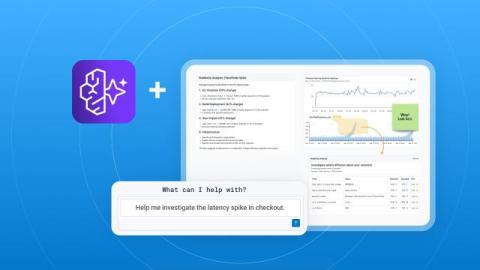
Answer any cost question faster with the Cloud Cost skill in Bits Chat

Managing cloud, AI, and SaaS costs means answering a steady stream of questions from finance, leadership, and engineering teams. What changed? Which team owns the spend? Was an increase expected? Are we still on track against the budget? When each answer requires moving between dashboards, filtering cost data by team or service, or manually correlating billing data with observability data, it can slow down investigations while costs continue to rise.

How to use Grafana Assistant with the AWS CloudWatch data source

Grafana Assistant meets AWS CloudWatch! In this video, Staff Software Engineer Ivana Huckova shows how to use Grafana Assistant, the AI agent built into Grafana Cloud, with the Amazon CloudWatch data source. Watch her query CloudWatch metrics and logs in plain language, build dashboards in seconds, and troubleshoot AWS resources — no query syntax required.

Why multicloud has become a governance decision

For most IT leaders, multicloud didn't arrive as a decision. It arrived as a fait accompli. A team chose AWS for one workload. Azure came in through a Microsoft enterprise agreement. A SaaS acquisition brought its own cloud dependencies. A DR requirement pointed to a second region with a different provider. Nobody declared a multicloud strategy; the organization just became one. Today, 87% of organizations run a multicloud strategy, balancing an average of 2.6 public cloud providers simultaneously.

Native, full-stack autoscaling on Upsun: PostgreSQL and MariaDB read replicas now autoscale

Application autoscaling has existed for years. Database autoscaling has lagged behind. Today, that changes on Upsun. Managed PostgreSQL and MariaDB read replicas now autoscale, joining worker autoscaling in production since March 2026. Apps, workers, and managed databases all autoscalead replicas saturate first, connection pools max, someone getse on one platform - natively, without a third-party database engine or a Kubernetes layer to operate. Three operational headaches just disappeared.

The Ford assembly line lesson: parallels for AI transformation

Ford's competitors had the same electric motors he did. Most just swapped out the steam engine and kept the old factory layout, a costly mistake. Ford used the new tech to rebuild the plant around the flow of the car. Knowing how much power each machine drew, he knew his cost to produce a car, and made personal automobiles affordable for all.

Enterprises are making their biggest AI bets blind

AI cost observability is the practice of measuring, attributing, and analyzing AI workload costs at the request, model, and workflow level in real time. It connects cloud infrastructure spend, inference and token costs, and business attribution (cost per feature, team, customer, or product) so engineering, finance, and product teams can see where AI spend goes and whether it creates value. On July 14, IBM had its worst trading day since 1987.

What is AI cost observability? A guide to tracking LLM and AI spend

AI cost observability is the practice of measuring, attributing, and analyzing AI workload costs at the request, model, and workflow level in real time. It connects cloud infrastructure spend, inference and token costs, and business attribution (cost per feature, team, customer, or product) so engineering, finance, and product teams can see where AI spend goes and whether it creates value.

The rise of dark code and the death of architectural intent

As Staff Engineers and Principal Architects, most of us have spent years thinking about long-term system health. We are considerate of the company’s business objectives and strategy, accumulation of technical debt, and operational risk. For us it is not about whether code works today, but whether the engineer who inherits it in three years will be able to understand what it was trying to do and why. That's what makes a codebase maintainable rather than just functional.

Why colocation is becoming the foundation of sovereign AI

The last few years have seen AI conversations dominated by the need for investment in hyperscale infrastructure as firms race to build ever larger training models. But as those conversations evolve, the emphasis is shifting to the next phase of AI adoption, focusing on the scaling of use cases and real-world value. In line with this shift, organisations are looking beyond where AI is trained to the specifics of where it is actually used.
Is It Time to Rethink Your Multicloud Strategy?

The original case for multicloud still holds — but the conditions around it have shifted significantly. Here's what you should be asking before your next cloud decision. Most organizations didn’t set out to have a multicloud strategy. They just accumulated one – a mix of providers, tools, and integrations built up over time as individual workload decisions compounded into something that now requires a strategy of its own.

The 8 Best European Cloud Storage Providers in 2026

Europe is home to some of the world's most privacy-focused cloud storage providers, offering secure alternatives to services operated by large US technology companies. Whether you're looking to protect personal files, store sensitive business documents, or keep your data under European jurisdiction, choosing the right provider can make a significant difference to your online privacy and the security of your personal information.

This is what cloud freedom looks like

Proprietary tech. Vendor lock-in. Pricing you can't predict. The hyperscaler model has defined cloud computing for years. Civo was built to change that. Civo CEO Mark Boost sets out the vision, a multi-cloud and hybrid cloud future built on open standards, full cloud parity, and genuine user choice. Public cloud, private cloud, and AI infrastructure that gives you total control over your data, your infrastructure, and your spend.

Eliminate Reliability Blind Spots in AWS, Azure, and GCP

Cloud resilience often feels like an uphill battle. When you’re overseeing hundreds of applications across different providers, identifying potential failure points manually is nearly impossible. You’re left trying to find the needle in a haystack—a needle that could take down your entire application at any moment. To truly protect your uptime, you have to break the cycle of reactive troubleshooting.

AWS, GCP, Azure - We Pick The Best of Every Cloud

When your platform is tied to a single cloud, every move turns into a migration. This team decided it didn't have to be. In this clip, a Control Plane customer explains how separating their platform from the cloud provider underneath changed the math on infrastructure. Instead of being locked to one vendor, they can pick the best services from each cloud and move workloads to AWS without jumping through hoops. The kicker: a migration whose sheer scale would have "scared them off" becomes a non-event once your platform isn't welded to a single provider. Control Plane is an AI-native virtual cloud.

Code-Level Migration Assessment for AWS

Infrastructure assessment tools scan your servers and estimate migration cost based on CPU, memory, and storage. They do not read your application code. Applications that appear migration-ready at the infrastructure layer may contain thousands of lines of code that block cloud adoption. Without code-level visibility, teams cannot make accurate 6R decisions.

AI Is Reshaping the Tech Industry in 2026: What Consumers and Businesses Need to Know

Artificial intelligence has evolved from an emerging technology into one of the biggest drivers of innovation across the global technology industry. In 2026, AI is influencing everything from smartphones and laptops to cybersecurity, cloud computing, enterprise software, and digital productivity tools. Companies worldwide are investing heavily in AI powered products that improve efficiency, automate repetitive tasks, and deliver more personalized user experiences.

ManageEngine CloudSpend tutorial: Cost allocation report for AWS, Azure, and GCP

Learn how to use the Cost Allocation report in ManageEngine CloudSpend to accurately split, track, and attribute your multi-cloud spend across AWS, Azure, and GCP. This step-by-step tutorial shows you how to create a cost allocation, choose accounts, apply labels, configure allocation levels, and read the hierarchical allocation report by cloud, account, and region. Cost allocation is the foundation of FinOps. It tells you exactly which teams, projects, and cost centers are driving your cloud bill so you can charge back, budget, and optimize with confidence.

Why features pass QA and still break in production

Database migrations are where the mock data problem shows up most clearly. A migration that adds an index to a table with 500 rows in the development database runs in milliseconds and passes every test. The same migration against a production table with 8 million rows locks the table for 90 seconds during peak traffic. Nobody saw it coming because nobody tested it against 8 million rows. This isn't an edge case.

Upgrade Your AWS Deploy Orb to Get Deploy Markers

Upgrade to the latest version of your AWS deploy orb to get automatic registration of deploy markers. This will give you instant access to deployment timeline, auto-rollback, and version comparison when something breaks — for about five minutes of effort. It will also switch you to OIDC, so there are no long-lived keys to manage. It’s a single version bump. Here’s how.

Application monitoring tools in 2026: APM, observability, and AI monitoring compared

Application monitoring tools track your application's health, speed, errors, and resource usage in real time. Also called APM tools or application performance monitoring software, these tools are essential for any team running production workloads. The leading options in 2026 are Datadog, New Relic, Dynatrace, Grafana, and Elastic APM for traditional workloads, plus Arize AI, LangSmith, and Weights & Biases for AI observability.

Why cloud repatriation is happening now

Cloud first was gospel for a decade. But the calculus has changed, and organisations are asking harder questions about where their workloads actually belong. In this clip, Civo Product Director Russ Smith breaks down the four forces that have converged to shift the default: spiralling bills that are no longer defensible at scale, the Broadcom acquisition that detonated VMware pricing overnight, sovereignty becoming a boardroom procurement requirement, and AI making new hardware brutally expensive.

Why UK Businesses are Shifting Away From the Public Cloud Cost Model

Over the past five years, one of the most consistently tracked figures in the UK business technology sector has been the flight from public cloud. Barclays' 2021 CIO survey revealed that 43% of enterprises plan to shift workloads away from public cloud. By 2024, that had grown to 83%.

Deployment strategies explained: types, trade-offs, and what each one actually costs

A deployment strategy is the method an engineering team uses to release new software to production. The six core deployment strategies are recreate (big bang), rolling update, blue-green, canary, A/B testing, and shadow deployment. Each trades off between downtime risk, rollback speed, infrastructure cost, and complexity. This guide covers all six along with what each strategy actually costs in cloud and AI infrastructure spend.

Why individual AI adoption is breaking team-level throughput

There is a question a lot of engineering leaders are quietly sitting with right now: we have rolled out AI tools across the team, the developers seem faster, so why isn't more software actually shipping? It is a reasonable thing to consider. Pull requests are opening faster. Lines of code per sprint are up. The boilerplate that used to take full afternoons now takes minutes. By every local measure, the investment is paying off.

Amit explains AO

Most enterprises have observability tools. What they often lack is a shared view between application and infrastructure teams. When application performance degrades, finding the root cause can be slow because the data lives in separate silos. Virtana brings application observability and infrastructure intelligence together in a single platform, helping teams identify issues faster, collaborate more effectively, and shift from reactive troubleshooting to proactive operations.

GitHub Copilot cost: what teams actually pay in 2026

The GitHub Copilot cost runs from $0 for the Free tier to $10/month for Pro, $39/month for Pro+, and $100/month for Max. Teams pay $19/user/month for Business and $39/user/month for Enterprise. The twist: on June 1, 2026 GitHub swapped fixed premium requests for usage-based AI Credits, so what those flat fees actually buy now depends on how hard you push the AI. The sticker price is the easy part. The part that ambushes finance is everything stacked on top of it.

What is digital transformation and why it is important?

A digital transformation can help a business thrive. Developing a strong technology stack that works for your business is essential for growth. Investing in a digital transformation means finding what works for your business and ensuring the best operations through your digital tools.

From Prototype to Production With AWS AgentCore

"Hello world, this is your agent speaking!" The agent loop! The LLM is calling tools, the answers are sensible, and the sky's the limit. Now, as you look forward to production, you look for a composable toolset, something that can grow with your use case and system needs. That's what we created with Honeycomb Canvas: a collaborative investigation space where AI agents help you understand, fix, and learn about your system.

GPT-4 API cost 2026: pricing breakdown and how to estimate it

GPT-4 API pricing spans $0.10 to $30.00 per million input tokens across the model family. GPT-4.1 is the current recommended production model at $2.00 input / $8.00 output per million tokens. Legacy GPT-4 still runs at $30.00/$60.00 per million tokens -- 15x more expensive for no meaningful quality gain. For finance and engineering leaders accountable for AI spend, choosing the right GPT-4 variant is the single biggest cost lever on your bill.

Shipped: Give your Explorer filters & groupings room to scale

The controls at the top of Explorer are great for a simple question. But as your query grows with more group-bys or a stack of filters, those controls start eating into the vertical space you actually want for your data. Now you have the option to move filters and groupings into a dedicated left side panel, so a complex query has room to scale cleanly. Set it once and CloudZero keeps it that way.

How to patch 40 Drupal sites without 40 manual deployments

Standardizing the fleet: automated updates for multi-site management There's a specific kind of update that Drupal agencies and enterprise teams dread: a security release in something the whole fleet runs on, the PHP runtime, the database engine, or a shared service, with a patched version available now and a deadline attached. For a team managing a single site, moving to the patched version is an afternoon of work.

Build Custom Field Templates for Application Assessments

Modernization assessments move faster when the structure is already in place. Instead of recreating custom fields, interview questions, and assessment workflows for every customer, you can use a custom field template to standardize how data is collected from the start. This guide shows you how to create a reusable Tidal Accelerator custom field template using Node.js and the Tidal API, so your assessments are easier to repeat, compare, and scale. So you’re starting a modernization practice.

Modern IT Infrastructure for Business Continuity, Security and Operational Efficiency

Modern organizations rely on IT infrastructure for almost every part of daily operations. Communication, customer service, accounting, data storage, remote work, application hosting and internal collaboration all depend on stable digital systems. When infrastructure is reliable, employees can work efficiently and customers experience fewer disruptions. When it is outdated or poorly managed, even small technical issues can quickly affect the entire business.

How to Consolidate Your Azure & Multi-Cloud Monitoring and Avoid Tool Sprawl

This is the eighth blog in our Azure Monitoring series, where we look at a challenge many organizations face as Azure and multi-cloud environments expand: monitoring tool sprawl. What starts as a few monitoring solutions for different needs can turn into disconnected dashboards, duplicate alerts, and fragmented visibility.

The entire cloud stack is just pizza and we can't unsee it

The acronym soup is the universal IT rite of passage. So we explained the whole stack with the one thing everyone already understands: pizza. From making the dough yourself to just opening the box, there’s a version for every level of “how much do you actually want to manage.” Alexis can give the full breakdown in the time it takes to decide what you'll order.

Shipped: The Fastly spend that was hiding in plain sight

CDN and edge spend is easy to lose track of. Fastly bills on its own, off to the side of your cloud invoice – real money, often significant, sitting where none of your cost tooling reaches. So it stays its own island: a lump sum with no easy way to tie it back to the teams, products, and customers driving the traffic.

AI Summary Agent in Turbo360

Handed over an Azure integration environment you've never seen before? Turbo360's AI Resource Summary agent gives any support operator or engineer an instant plain-English overview of what a resource is, how it behaves, and what to watch out for - without needing to ask the developers. In this demo: Great for: IT operations teams, MSP NOCs, cloud support engineers, and anyone responsible for running integration workloads they didn't build.

Why compliance audits keep slowing your engineering team down

If you've shipped software in fintech, healthcare, or government, you probably know the specific dread of an upcoming compliance audit. Not because the software isn't secure, but because proving it is requires reconstructing a paper trail for decisions that were made in Jira tickets, Slack threads, and pull request comments over the last six months. The software is fine. The documentation of the software is the problem.

Cloud repatriation strategies: From public dependency to hybrid flexibility

For years, "move everything to the cloud" was the default. But the economics have shifted. Join Russell Smith to explore why enterprises are reconsidering their cloud strategies, and how modern private cloud platforms are changing the game. We'll cover the real costs of public cloud lock-in, achieving feature parity without the price premium, and how to navigate today's hardware constraints, especially if you've got existing infrastructure assets that can still deliver value.
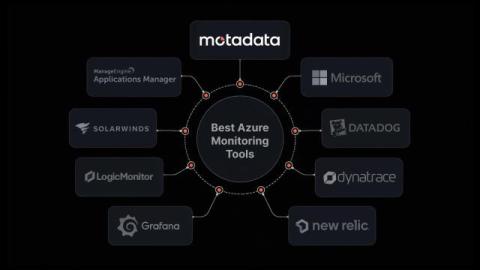
9 Best Azure Monitoring Tools Compared for 2026

When an Azure service slows down or stops responding, you often hear about it from a user before your monitoring says a word. It only gets harder as you scale: Azure now runs about a fifth of the world's cloud workloads (Statista, 2026), and every new service is one more place a failure can hide. By the end, you will have a shortlist for your stack. You will also know which tools to skip, without sitting through nine sales demos to find out.

OpenAI API cost calculator: estimate your GPT spend before it estimates you

This OpenAI API cost calculator (also an AI inference calculator for o3/o4-mini thinking tokens) estimates your monthly OpenAI API pricing bill from three inputs: model, request volume, and average tokens per request. Toggle between standard, batch, and cached pricing and get your number in seconds. It also shows what the same workload costs on Claude and Gemini. For the full per-model rate card, see CloudZero's OpenAI API pricing guide.

Don't 'control' your AI spend. Understand it and be intentional.

There’s a good interview making the rounds. BizTech sat down with IBM’s James Stevenson to talk about how financial institutions can get a handle on cloud and AI costs. The advice is solid: get visibility, kill idle resources, tighten governance, tag everything. And pull finance and engineering into the same room. I don’t disagree with it. But I read the whole piece and noticed where the gravity pulls: control costs, reduce waste, bring down spend. The headline says it (‘Q&A.

Shipped: Turn your Bifrost gateway into an AI spend meter

If you route model traffic through Bifrost, you already have the hard part: one place every AI call passes through, where the model, the tokens, and the cost are visible on the way past. It’s the cheapest spot in your stack to measure AI spend. What’s missing is everything downstream – today that usage only becomes “spend” weeks later, when the provider invoice lands as a lump sum you can’t break apart.

Managing DHCP Across Distributed Networks

Managing DHCP across distributed networks gets messy fast. Lease activity changes constantly. Naming conventions drift. Infrastructure changes happen independently across locations. Before long, your team no longer has a complete view of what’s happening across the network. What started as a straightforward service becomes a records problem with real operational consequences.

Sovereign cloud for financial services: Meeting FCA and PRA requirements with UK infrastructure

Financial services in the UK operates under one of the most demanding regulatory frameworks in the world. The FCA and PRA between them set expectations for operational resilience, outsourcing, data governance, and concentration risk that shape every infrastructure decision a regulated firm makes. Cloud adoption in the sector has happened, but it's happened under regulatory scrutiny that's grown steadily more pointed over the last several years.