Operations | Monitoring | ITSM | DevOps | Cloud

The latest News and Information on DevOps, CI/CD, Automation and related technologies.

Security vs speed in databases | The Simple Talk Podcast

Are engineering teams quietly accepting more risk? Redgate's 2026 State of the Database Landscape report reveals that people are increasingly willing to accept more risk to be more productive and take full advantage of AI’s capabilities. Steve Jones, Kellyn Gorman, Grant Fritchey and Pat Wright share their thoughts on that in today's episode. They share stories from their own careers, debate on whether the decline of the DBA 'gatekeeper' role has weakened security practices, how AI is amplifying the problem - and much more.

How are hyperscalers misleading the cloud industry?

In 2024, Mark Boost, CEO at Civo, introduced the concept of ‘cloud parity’, a cloud computing approach that ensures a consistent, identical experience, feature set, and operational model across public, private, hybrid, and edge environments. “Cloud parity gives teams the freedom the cloud was supposed to deliver in the first place. It gives enterprises the sovereignty they need. It gives public sector bodies the clarity they require.

The AI Productivity Paradox: We're Measuring the Gains and Missing the Costs | Harness Blog

For the past year, I've been hearing a version of the same thing from engineering leaders: AI tools are working, productivity is up, the business case is there. And yet, something about the picture still feels incomplete. So we decided to go find out how widespread that feeling actually is. We surveyed 700 engineers and managers across five countries, and published the results in the State of Engineering Excellence 2026.

Disaster Recovery Testing: A Practical Step-by-Step Guide for 2026 | Harness Blog

Effective disaster recovery testing follows a clear three-phase lifecycle: plan, execute, and review. Most DR programs fail not because of missing tools, but because of untested runbooks and unclear ownership. Platforms like Harness Resilience Testing bring chaos, load, and DR testing into one pipeline so teams can catch risks before they become incidents. Most organizations don't fail at disaster recovery because they lack technology.

Lovable, Bolt, and Replit Are Wonderful - Until Your CISO Finds Out

Non-technical teams are building apps on Lovable, Bolt.new, and Replit with company data and zero governance. Here's why that's a compliance nightmare - and what enterprise platform teams should deploy instead. Romaric founded Qovery to make Kubernetes accessible to every engineering team. He writes about platform strategy, developer experience, and the future of cloud infrastructure.

AI DevOps in 2026: How AI Coding Tools Are Breaking Your CI/CD Pipeline (and How to Fix It)

AI coding tools turned every engineer into a 10x developer. Now your CI/CD pipeline is the bottleneck. Learn how to handle 10x more deploys per engineer with Qovery's dual deployment model. Romaric founded Qovery to make Kubernetes accessible to every engineering team. He writes about platform strategy, developer experience, and the future of cloud infrastructure.

From Copy Fail to Dirty Frag: Why Speed-to-Exploit Is Forcing a New Approach to Linux Security

In early 2026, two back-to-back Linux kernel exploits, Copy Fail (CVE-2026-31431) and Dirty Frag (CVE-2026-43284 & CVE-2026-43500), shattered assumptions about how quickly attackers can weaponize disclosed CVEs. Dirty Frag, a zero-day Linux vulnerability that affected most major distributions, had PoC exploits published within hours of its disclosure. It’s a stark reminder: the timeline between vulnerability disclosure and active exploitation has shrunk from weeks to hours.

How HAProxy built its modern application delivery architecture

Let’s be real: building reliable tech products is hard. Modernizing that same tech without compromising the user experience is even harder. The "rip and replace" approach to modernization can severely disrupt your customers’ integration efforts and workflows. When it doesn’t work, reversing course might be the least-worst option. By contrast, the evolution of the HAProxy One application delivery platform architecture at HAProxy Technologies over 25 years has been gradual and consistent.

Rethinking BYOD security: protecting data without trusting devices

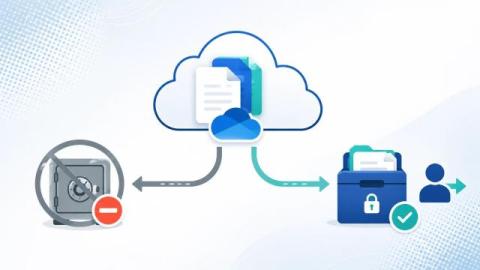
BYOD (bring your own device) has always looked better on paper than it does in real life. The promise is clear: let people use the gadgets they already own. Less friction, lower costs, and more freedom. But when security and privacy are non-negotiable, the conversation around BYOD usually ends quickly. Not because BYOD is a bad idea, but because the model behind it doesn’t quite work. With BYOD, you’d be trying to secure something that isn’t meant to be trusted.