Mailchimp
Not subscribed to OpsMatters Newsletter


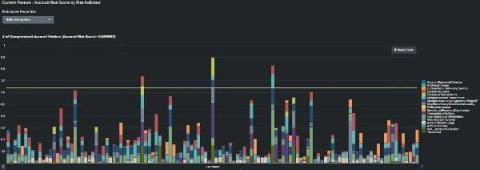
Financial crime has become a red-hot topic over the last 12 months, as fraudsters have sought to exploit the monitoring gaps between people, process and technology across an ever-widening attack surface – driven by the growth in usage of remote (digital) channels. Even before its recent growth, the cost of fraud and financial crime was significant.
The REST API in Enterprise Alert 9 has now been extended with a 2-way functionality. This allows to call webhooks or REST endpoints from third party systems on alarm status changes (acknowledge, close). Thus, in Enterprise Alert 9, it becomes child’s play to establish a 2-way integration with almost any REST enabled third party system.
The future of enterprise IT stacks is the cloud. In fact, according to a 2019 Gartner post, when we say “cloud infrastructure,” 81% of people really mean multi-cloud. Considering the analyst took this survey prior to the pandemic, we can safely assume that the number of companies with multi-cloud stacks is probably higher than this. Companies choose a multi-cloud strategy for a lot of reasons, including making disaster recovery and migration easier.
The success of a modern business starts with recognizing the value of the customer and committing to provide a great experience. The best companies do this by putting respect and empathy at the core of every interaction. In today’s new era of work, delivering an enhanced customer experience has become increasingly connected with the employee experience. This creates new opportunities for organizations to drive stronger satisfaction for both parties simultaneously.
This early AM on the East Coast, Teams experienced an access outage. The Exoprise sensors detected this outage an hour before Microsoft published a report on the issue. Here’s an example of what you get when you attempt to sign in, fresh, to Microsoft Teams.
We’re pleased to introduce ManageEngine RMM Central, a unified remote monitoring and management solution. Maintaining the IT infrastructure and systems of client networks is a herculean task for IT service providers. Multiple tools perform various capabilities in network management, be it maintaining or managing workstations, laptops, servers, and other networks.
Your modern cloud-hosted applications rely on a number of key components—such as databases and load balancers—that are managed by the cloud provider. While these cloud resources can reduce the overhead of maintaining your own infrastructure, capturing and contextualizing monitoring data from services you don’t own can be difficult.