Mailchimp
Not subscribed to OpsMatters Newsletter


Some great new research coming out of the survey data published by 451 Research on Enterprise spending for Information Security. There have been more advanced ways of trying to implement security controls and avoid security issues by integrating security into the development or continuous integration and release pipelines. Despite that, there is still strong interest in using log and event data to manage the security posture of an organization in a SIEM solution.
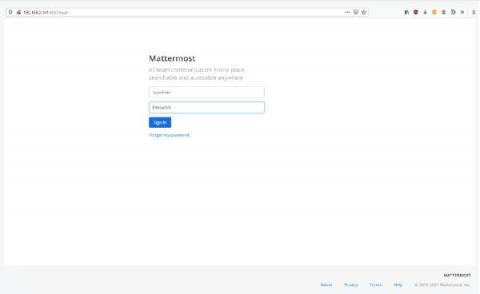
The goal of this four-part series is to help you learn how to write your own Mattermost plugins for the first time. To kick things off, this article teaches you how to set up your developer environment. My test computer is a five-year-old laptop with an Intel i5 processor and 4GB of RAM. You need at least 30GB of hard disk for this project. Of course, you’ll also need an internet connection. We start with a freshly installed Ubuntu 20.04. You don’t need to install the desktop environment.
Some of the many ways that malware, including ransomware, is commonly spread is through malicious attachments to business email, unsanctioned apps downloaded from third-party app stores, drive-by downloads via phishing and pharming attacks, employing brute-force tactics using Remote Desktop Protocol (RDP), and network propagation via SMB and CIFS sharing.
We all like to enjoy untethered freedom, as is shown by the incredible growth of mobile devices we use every day for business and personal activities. We use mobile devices for buying products and services, and banking and investing. We download apps that allow us to connect with our favorite businesses and socially interact with friends and relatives.
Log exploration and analysis is a key step in troubleshooting performance issues in IT environments — from understanding application slow downs to investigating misbehaving containers. Did you get an alert that heap usage is spiking on a specific server? A quick search of the logs filtered from that host shows that cache misses started around the same time as the initial spike.
This is a basic introduction to Lambda triggers that uses DynamoDB as an event source example. We talk a lot about the more advanced level of Lambda triggers in our popular two-part series: Complete Guide to Lambda Triggers. If you want to learn more, read part one and part two. We’re going back to the basics this time because skipping some steps when learning something new might get you confused. It tends to get annoying, or it can even make you frustrated. Why?