Mailchimp
Not subscribed to OpsMatters Newsletter


Open-source software is driving some of the most exciting innovations today. According to The Linux Foundation, open-source constitutes about 70 to 90% of all modern software solutions. But it isn’t all fun and games: open-source software is free, which brings about operational inefficiencies due to a lack of financial support for their developers. Platforms like Switch and SubStack started incentivizing paid subscription models to solve this problem.
Struggling to keep track of key metrics and potential issues in your Hanami application? AppSignal integrates seamlessly with Hanami 2.0 actions to provide action-level insights, making it easier for you to ensure a smooth-running application. In this blog post, you'll learn about the integration between AppSignal and Hanami and how it solves your performance monitoring challenges.
Stack overflows have notoriously plagued the development processes. They often can go undetected and can present themselves in obscure ways. We have implemented software mechanisms to protect against them, but these have limitations and still don’t protect against all conditions. With the maturity of the ARM architecture, wouldn’t it be better to have a fool-proof mechanism for detecting overflows?
Real-time Ubuntu brings end-to-end security and reliability to the time-bound workloads of modern enterprises. With support for real-time compute, Canonical furthers its commitment to providing a best-in-class experience for open-source software consumption.
“The Internet (or Internet) is the global system of interconnected computer networks that uses the Internet protocol suite (TCP/IP) to communicate between networks and devices. It is a network of networks that consists of private, public, academic, business, and government networks of local to global scope, linked by a broad array of electronic, wireless, and optical networking technologies.
We’re all looking to maximize every dollar spent, every hire made, every hour logged. But there’s one cost center you might not be thinking about — incident management. This post explores the explicit and implicit costs associated with incidents.
Today’s web consists of lots of 3rd party resources. Let it be your fonts, transformed and optimized media assets, or analytics and ad scripts, many sites out there include resources that they don’t own. Your website probably has a lot of those dependencies, too! And while implementing third-party resources has downsides for performance and you should self-host your assets when possible, sometimes relying on external files is unavoidable.
The demand for search functionality is growing, and many developers are trying to incorporate it into their applications. However, building one from scratch is challenging and time-consuming. Fortunately, many open-source libraries are available to relieve developers of this burden. This guide will provide the reader with a list of some of the best search packages for JavaScript.
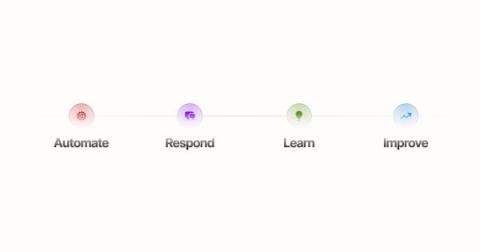
Operations management—whether IT, business, sales, marketing, etc.—has four essential main objectives: And in any industry, those objectives are driven by the most important goal, which is to generate revenue for the organization. While every single task or implementation may not directly impact revenue, the outcome of small improvements over time can be substantial. After a Google search for motivational quotes, I stumbled on James Clear’s “power of tiny gains” concept.