Mailchimp
Not subscribed to OpsMatters Newsletter


In a perfect world, data would move over the Internet in real time. There would be no delays whatsoever between when one computer sends data out over the network and when it reaches the recipient. In the real world, however, there is always some level of delay when exchanging data over the network. That delay is measured in terms of network latency. Ideally, network latency is so low that no one notices it.
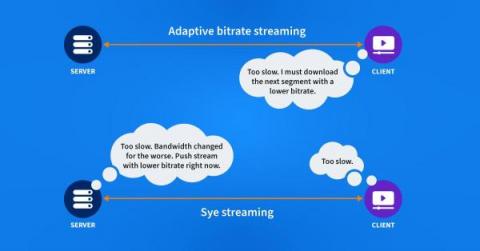
Live sports have moved to the internet and are now streaming instead of being broadcast. Traditional streaming protocols have a built-in delay that challenges the experience of a live game. Amazon Prime has found a solution by combining a new protocol with a very distributed CDN.
Since its inception in 1988, the traceroute has undergone several variations. You might be wondering, ‘Why so many?’ The answer is simple: achieving traceroute functionality has been a balance between security and utility. Whenever malicious actors exploited firewall and router vulnerabilities, their vendors responded with fixes and solutions which impacted the traceroute algorithms.
Legacy systems and point solutions are part of any business. And while they have their history and benefits, it’s critical to find a balance for your organization. IT teams have been acclimated to disparate event management and monitoring tools. Now, with massive and rapidly increasing data flow, this disconnect is slowing and paralyzing IT teams.
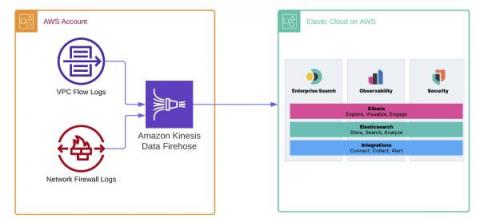
As more organizations leverage the Amazon Web Services (AWS) cloud platform and services to drive operational efficiency and bring products to market, managing logs becomes a critical component of maintaining visibility and safeguarding multi-account AWS environments. Traditionally, logs are stored in Amazon Simple Storage Service (Amazon S3) and then shipped to an external monitoring and analysis solution for further processing.
Elastic Enterprise Search 8.8 seamlessly bundles new Elastic developed semantic search capabilities with an expanding catalog of open code database and storage connectors. Additionally this release adds rich capabilities to measure and simplify adding features to your search application. These new capabilities allow customers to: Elastic Enterprise Search 8.8 is available now on Elastic Cloud — the only hosted Elasticsearch offering to include all of the new features in this latest release.
When Azure AD is configured to record Sign-In activity, Kusto KQL can be used to gain valuable insights. This blog walks through common needs and shows how to visualize them in SquaredUp. Ruben Zimmermann is an Infrastructure Architect at a large manufacturing company who likes Azure, KQL, PowerShell and, still, SCOM.
For many data center professionals, the daily operations of a data center require a lot of repetitive manual data entry tasks. Manually entering data about data center assets over and over again is not only time-consuming, but it risks inaccurate information due to human error. However, there is a new way forward.