Mailchimp
Not subscribed to OpsMatters Newsletter


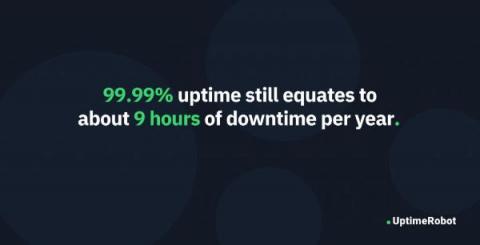
Let’s face it, in today’s always-on digital world, a minute without access to a website or service can feel like a lifetime. You’ve probably heard the term “99.99% uptime” before. It’s an important factor for providers (such as hosting or app providers) and key to improving a website’s reliability and a company’s customer satisfaction. But when your service provider promises an amazing 99.99% uptime, have you ever paused to ask what it really means?
When setting up new monitoring software or migrating, it’s important to have a strong backbone in place for the systems, so you can cover as many services with as little manual burden as possible. Of course, defining the resources – like HTTP, SSH, etc. services or entire host systems – is one of the first things that comes to mind.
According to the recent Datadog report on real world container usage, Redis is among the top 5 technologies used in containerized workloads running on Kubernetes. Redis database is deployed across multi-region clusters to be Highly Available(HA) to a microservices application.
The PagerDuty REST API provides 200+ endpoints for users to programmatically access objects and workflows in the PagerDuty platform. Teams leverage these APIs to streamline creating and managing users, teams, services and other components for their environment. Up until now, access to the REST API has been authorized and authenticated via API Keys.
Meta, the parent company of Facebook, has been fined a record €1.2 billion ($1.3 billion) by the European Union for violating its data privacy laws. The fine was issued by Ireland’s Data Protection Commission, which is Meta’s lead regulator in the EU, and is the largest ever levied under the EU’s General Data Protection Regulation (GDPR), which went into effect in 2018.
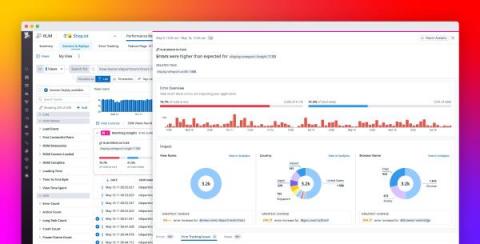
When your applications are experiencing degraded frontend performance, every minute of investigation counts towards minimizing the impact of regressions on your users. That’s why we built Watchdog Insights, an AI-powered recommendations engine that augments monitoring investigations by intelligently surfacing data that sheds light on outliers in the errors and latency affecting your applications.
Custom metrics is a key component for many companies. Stock available in warehouses, shopping cart status, number of products sold, and operational status for industrial machines are some of the many KPIs that companies need for their own business tracking purposes. When it comes to custom metrics and observability platforms costs, many companies are struggling to find a good balance between availability, performance, reliability, and costs.