Launched at KubeCon North America last December, Loki is a Prometheus-inspired service that optimizes storage, search, and aggregation while making logs easy to explore natively in Grafana. Loki is designed to work easily both as microservices and as monoliths, and correlates logs and metrics to save users money. Less than a year later, Loki has almost 6,500 stars on GitHub and is now quickly approaching GA.
Resolve Systems®, the leading IT automation and orchestration platform, today announced the acquisition of FixStream, a pioneer in AIOps. The acquisition, expected to close by the end of September, will enable Resolve to offer the most robust IT automation platform available on the market by combining artificial intelligence insights into dynamic, hybrid IT environments with powerful automation capabilities that are purpose-built for the complexity of modern enterprises.
Hi all, Microsoft has just recently released their latest iteration to SCCM, version 1906. With this update of SCCM comes quite a few welcome features and to find out more go to this link on the Microsoft site. But you are here to see how easy it is to upgrade your SCCM to the current branche 1906. So let’s get started on the upgrade process for SCCM 1906.
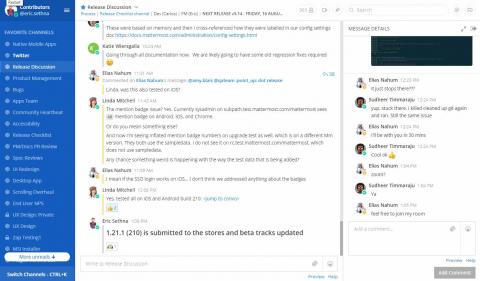
Mattermost 5.14 includes several new features that will help your team work more effectively.
“Change is the only constant in life.” This is a quote often attributed to the Greek philosopher, Heraclitus. In the world of application performance monitoring, you know this to be true. Things are always changing. New technologies force you to come up with new ways and processes for doing things. And new challenges force you to develop new methods of solving old problems. Performance monitoring is an old problem.
The following first appeared in Cloud Tech News. The threat of digital disruption has forced senior executives and technology leaders to rethink business models, data assets, and distribution channels, in order to create innovative products and services that will delight customers and overcome nimbler competitors. Over the last decade, enterprises have completely transformed the way they build, deploy, manage, and maintain mission-critical services as a response to increasing digitization.
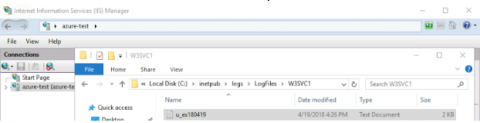
Today’s web server ecosystem has three big players: IIS, Apache and NGINX. Although only two of them (Apache and, to a lesser extent, NGINX) are cross-platform, it’s increasingly important to be able to work with all three of these servers, because you never know which type of operating system and web server platform you’ll be asked to support. That’s why understanding the nuances of IIS, Apache and NGINX logs is important.