Feature Spotlight: Dynamic Dashboard
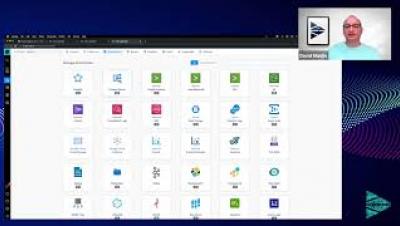
We recently released the Lumigo Dynamic Dashboard to help our customers visualize metrics to monitor their environment the way they want.
The latest News and Information on Monitoring for Websites, Applications, APIs, Infrastructure, and other technologies.
We recently released the Lumigo Dynamic Dashboard to help our customers visualize metrics to monitor their environment the way they want.
COVID-19 certainly accelerated some trends. For example, in my view, COVID-19 accelerated the pace and progress of digital transformation by five to 10 years, as companies faced the need to adapt to a post-COVID-19 world, involving permanently the higher adoption of remote work, remote education, and digital touch-points. Technologies requiring less human touch and more digital touch-points will be adopted faster in the aftermath of COVID-19.
When you're a single person running a system with thousands of users or more, it can be pretty daunting to think about going on holiday, or even relaxing for a weekend. "What if it goes down, and I'm not there to fix it?!" you ask yourself. While you can never really guarantee that nothing will go wrong, you can take some steps to minimise your risk of things going wrong.
You are at your desk, when all of a sudden there seems to be a hum that is growing louder, your heart starts to pound and you quickly realize that you might be in the midst of another Microsoft outage. You know that right now, Microsoft is your organization‘s core workforce engine and the backbone to ensure productivity - any outage or decrease in service quality can cause widespread productivity declines.
Over the last year, most organizations have deployed or expanded digital workspaces to support employees working from home. One of the most popular technologies for digital workspaces is VMware Horizon. In this blog, we discuss the top performance challenges that administrators of VMware Horizon deployments have to tackle.
The principles of network security didn’t change overnight, but our abrupt transition to a remote workforce dismantled traditional concepts of how we secure our network. Offices were designed for people to access their resources on-site or through a few well-defined locations; security took the form of inline firewalls, web gateways, and VPNs that were routed through a datacenter or other resource hub.
Hybrid IT is here to stay. As companies are moving to the cloud faster than ever, fueled by necessity during the pandemic, enterprise IT organizations must determine how to shift operations accordingly. Managing highly-distributed, multi-cloud IT environments is the new norm.