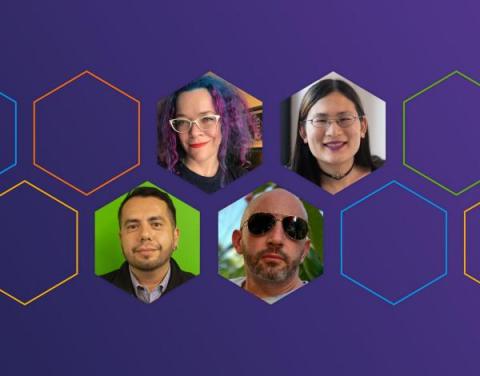
Recapping Datadog Summit Denver 2022
After a two-year hiatus, Datadog customer summits are back. And what better place to begin in-person again than in sunny Denver, Colorado!
The latest News and Information on Monitoring for Websites, Applications, APIs, Infrastructure, and other technologies.
After a two-year hiatus, Datadog customer summits are back. And what better place to begin in-person again than in sunny Denver, Colorado!
I spent over a decade as a consultant working for dozens of companies in many fields and pursuits. The diversity of each code base is tremendous. This article will try to define general rules for modernizing legacy code that would hopefully apply to all. But it comes from the angle of a Java developer. When writing this, my primary focus is on updating an old Java 6 era style J2EE code to the more modern Spring Boot/Jakarta EE code.
For more information on our API check, view our support documentation: https://support.uptime.com/hc/en-us/articles/360019552700-API-Check-Use-Cases-and-Examples
Forethought is a leading AI company providing solutions that transform the customer experience. As a high-growth startup with 2x annual growth in their engineering team, they faced increasingly complex processes and found that what had worked in the past wasn’t going to cut it anymore.
Grafana Tempo 1.4 has been released and features a new optional component: metrics generator, which automatically generates RED metrics and service graphs from your traces. We’re actively rolling out the metrics-generator service to our own Grafana Cloud offering and are looking for Grafana Cloud Traces customers wanting early access. If interested, you can email our support team for more details.
Dell Technologies World is upon us, and in addition to being a welcomed return to the in-person format, it’s also an opportunity for me to reflect on Virtana’s long history with Dell, our integration points, and the synergies with the Dell portfolio.
As systems get ever more complicated with more layers in the application stack, it can become more difficult to keep track of what is happening at all of the different, discrete levels and this is where distributed tracing comes into play.
Active Directory (AD) objects are rarely managed as standalone entities. In Part 3 of this series, we covered practical exercises for creating and managing two of the most critical AD objects, namely users and computers, after setting up a laboratory AD environment on virtual machines. To manage AD effectively, knowledge and practical experience with AD groups and organization units (OUs) is imperative. In this fourth part of our series, we’ll elaborate on this.