The latest News and Information on Monitoring for Websites, Applications, APIs, Infrastructure, and other technologies.
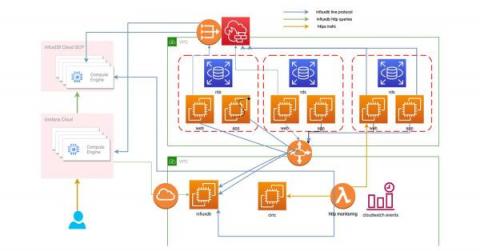
Running infrastructure at scale almost always guarantees dizzying complexity and anxiety-inducing pressure to maintain systems in a production environment. This is further exacerbated when multiple delivery teams require slight variations of the same infrastructure components, across several cloud providers, each with a different set of observability requirements. Gradually, production environments become large, unmanageable, difficult to change, and perhaps resembling the figure below.
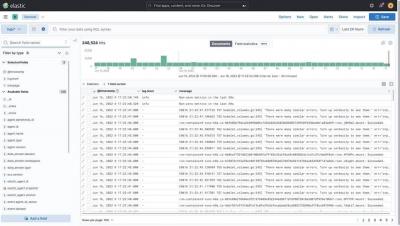
Kibana is a popular user interface used for data visualisation and for creating detailed reporting dashboards. This piece of software notably makes up a key part of the Elastic Stack alongside Elasticsearch and the extract, transform and load (ETL) tool, Logstash. In this comprehensive introduction to Kibana, we are covering all of the basics that you will need to know as a user considering using Kibana for your log data visualisation and reporting needs.
Flutter is a popular open source framework that allows you to build, test, and deploy high-performance, multi-platform applications with a single codebase. Developed by Google, Flutter is backed by a robust developer community and is compatible with the latest native functionalities, including iOS Metal.
This is Part 2 of a two-part series on Blameless Postmortems. The previous article went into why blameless postmortems are so effective; this second part goes into detail on how to build your own postmortem process and kick it into overdrive. Read Part 1 here. So you've read our first installment and recognized the value of the blameless postmortem for efficiency, culture, and output. Now you're ready to get off the blame train and kickstart a blameless postmortem process of your own. Where to begin?
In order to answer this question, it is best to first explain what is IBM MQ and the benefits that it can bring to a business. IBM MQ (Messaging and Queuing) is a messaging system that enables applications running on different computers to communicate quickly with each other in real-time. This is achieved by exchanging messages using queues, and processed as and when computing resources and internet bandwidth allow. IBM MQ has been designed to provide high availability and reliability and can be used in a variety of different environments, including cloud computing.
Azure App Service is a cloud-based platform-as-a-service (PaaS) for deploying functions, web apps, mobile apps, and other resources. It allows developers to deploy code—using common languages and frameworks—in minutes without worrying about provisioning or managing infrastructure. Developers can then use Azure App Service to scale their services dynamically to meet demand.
Let’s check out together the features and improvements related to the new Pandora FMS release: Pandora FMS 761.
March saw many of the big tech companies have technical issues with their products and services. But the biggest one was by far the colossal Google; Google Maps experienced the much dreaded website downtime impacting thousands of users across the globe. It was reported online that Google Maps had suffered a partial outage meaning that many couldn’t access the location tool, but why and more importantly, how?