SD-WAN Best Practices
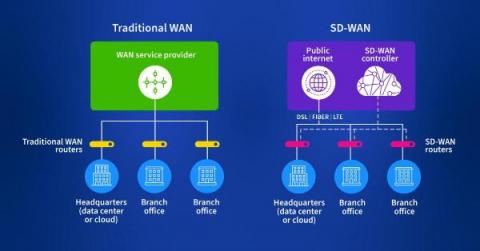
SD-WAN is a reliable, fast, and secure WAN network. In this guide, you’ll learn some best practices for planning, monitoring, analyzing, and managing modern SD-WANs.


The latest News and Information on Monitoring for Websites, Applications, APIs, Infrastructure, and other technologies.
SD-WAN is a reliable, fast, and secure WAN network. In this guide, you’ll learn some best practices for planning, monitoring, analyzing, and managing modern SD-WANs.
Honeycomb's Refinery is a tool that customers can use to help manage the volume of their telemetry. It's rare to have too much telemetry—it's not often that someone says "I wish I didn't have all this information!" However, telemetry is data, and data is not necessarily information—particularly when you’re drowning in it. Honeycomb's query engine is so fast and powerful that many customers can send us all their telemetry.
Oh, I beg you, can I follow? 🎶 Now you can, but don’t have to. Let’s see what’s new. Hi folks! Even the sizzling summer can’t stop our groove. We’ve been busy mixing up some cool updates just for you!
Fastify is a cutting-edge web framework for Node.js that offers exceptional speed and efficiency. With its extensible plugin system, support for asynchronous programming, and focus on minimalism, it is an ideal choice for backend developers developing Node.js applications. But even the most performant web applications can encounter issues that are difficult to debug without the proper tools in place. We will explore how to use AppSignal for a Fastify application.
As a leader in IT, the question of whether or not it makes sense to adopt a dedicated software troubleshooting solution probably comes up from time to time. If it's happened in your organization — no worries — you're not alone. Many teams wonder if their current tools, such as an Application Performance Monitoring (APM) solution or a suite of open-source solutions are sufficient.
Community Client libraries are back with InfluxDB 3.0. If you would like an overview of each client library then I highly recommend checking out Anais’s blog on their status. In this two-part blog series, we do a deep dive into the new Python Client Library and CLI. By the end, you should have a good understanding of the current features, how the internals work, and my future ideas for both projects.