The latest News and Information on Monitoring for Websites, Applications, APIs, Infrastructure, and other technologies.
As developers, we understand the immense value of having real-time access to live traces. It significantly enhances our ability to identify, debug, and troubleshoot potential issues within applications, streamlining the development and deployment process. Today, we are excited to introduce the new and improved Live Tail feature at Lumigo, which enhances your observability experience to a whole other level.
Every single day RapidSpike detects thousands of problems with website third-party plugins that are causing revenue and customer experience issues, and 90% of them are not just affecting our users; they are affecting every user of that third party. The difference is with RapidSpike, we tell them about it. In 2018, a major e-commerce website experienced a significant performance failure due to a third-party plugin.
In our previous blog, we shared our firsthand experience of implementing a tracing collector API using serverless components. Drawing parallels with Amazon Prime Video’s architectural redesign, we discussed the challenges we encountered, such as cold-start delays and increased costs, which prompted us to transition to a non-serverless architecture for more efficient solutions.
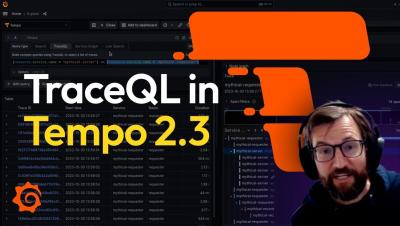
At Grafana Labs, we are constantly improving our feature set, and tracing is no different. Traces are often overshadowed by logs and metrics, but they’re a pillar of observability for a reason. Used correctly, organizations that can quickly and successfully follow a chain of events through a system gain a more holistic view of their systems and are better equipped to find and fix issues faster.
The security camera is one of the most prevalent IoT devices being used today. Ironically, one of these cameras' primary vulnerabilities is that they may be stolen or damaged - you need protection for the security cameras. Having gadgets that operate independently saves time since you may leave them to do the job they intended. However, remotely placed, unsupervised equipment must be monitored, and the most effective method is through the use of an automated monitoring system.
Network topology mapping is the process of mapping topological relationships between network components and establishing those relationships in the form of network diagrams. Network mapping helps visualize physical and logical connections between all elements and nodes, thus simplifying network management. A network topology mapper is a tool that helps perform network mapping effectively.