Operations | Monitoring | ITSM | DevOps | Cloud

How to monitor Istio with Sysdig

In this previous article, we talked about how to monitor the Istio service mesh in Kubernetes with the out-of-the-box observability stack. This time, we will walk you through monitoring the Istio service mesh with Sysdig Monitor and how to troubleshoot issues. Istio service mesh provides special characteristics and functionalities for microservices running on Kubernetes.

Flows vs. packet captures for network visibility

Recently, I saw some discussion online about how flow data, like NetFlow and sFlow, doesn’t provide enough network visibility compared to doing full packet captures. The idea was that unless you’re doing full packet captures, you’re not doing visibility right. Because I’ve used packet captures so many times in my career, I admit there’s a part of me that wants to agree with this.

Open source documentation will improve collaboration

There’s always a thrill to see something that you’ve dreamed of coming to life. And for us, open source docs is the realization of that dream. In simple terms, open source docs mean that the documentation is freely available for anyone to modify. This is a part of the modern documentation movement, being able to make changes to keep pace with modern development cycles.

How to Find Stranded Capacity in Your Data Center

Data center capacity planning is one of the biggest challenges for today’s data center professionals. According to a recent survey by Sunbird Software, 72% of respondents said that capacity planning was one of their top objectives. Proper capacity planning results in the right-sized data centers, efficient utilization of resources, and reduced costs, but it is easier said than done.

SaC - How to build status pages as code with Terraform

Status pages are a clever solution to bundle all your services, and see the status of them at one sight. We at iLert took this one step further: why not build your status page as code using Terraform? We want to show you how we make it possible, and how you can set it up for your own infrastructure - a real SaC solution.

What To Know About Microsoft Azure PostgreSQL Hyperscale

As organizations adopt cloud technologies and modernize their applications, the data they generate and ingest often grows exponentially, leaving them with difficult choices for storing and using this data. Customers are beginning to explore moving away from traditional relational database management systems (RDBMS) because of the data volume to be ingested, as these RDBMS often cannot handle workloads.

5 key benefits of Kubernetes monitoring

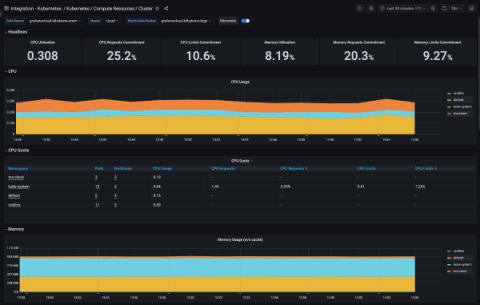
Kubernetes made it much easier to deploy and scale containerized applications, but it also introduced new challenges for IT teams trying to keep tabs on these newly distributed systems. Ops teams need proper visibility into their Kubernetes clusters so they can track performance metrics, audit changes to deployed environments, and retrieve logs that help debug application crashes.

Unleash the Full Power of Playwright With @playwright/test

Welcome to day three of our very first Launch Week! The last two days we shared how alerting became so much better and how we moved one level up by completing our SOC 2 Type 1 audit. Are you curious what’s next? I’ll tell you, but first let’s set the stage and look at Microsoft’s Playwright.

Why Use a Purpose-Built Time Series Database?

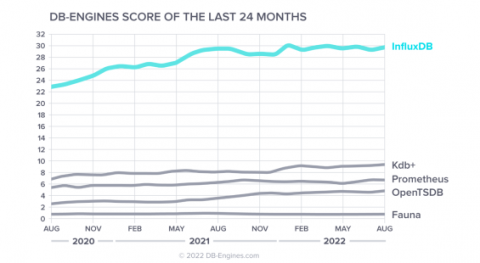
For many workloads, using a time series database is a smart choice that saves time and storage space. Developers and companies have more database choices than ever. Choosing the right database for a project saves time when writing and querying data. As companies work with larger datasets to make increasingly intelligent and automated systems, efficiency is key. For many workloads, using a time series database is a smart choice that saves time and storage space.

What Metrics and KPIs Really Matter in Availability?

In our inaugural State of Availability Report, we discovered that not only do metrics matter but the way we use them also does. Our research found that teams with fewer KPIs were more likely to meet their Service Level Agreements (SLAs) and provide their customers with higher levels of availability. The problem with having too many KPIs is that they cause information overload and noise.