Operations | Monitoring | ITSM | DevOps | Cloud

Introducing Catchpoint Session Replay: See Digital Experience Through Your Users' Eyes

When was the last time you really saw what your customers experience on your site? We're excited to introduce Session Replay, a new capability in our Internet Performance Monitoring (IPM) platform that lets you step directly into the user's journey. Session Replay is so much more than a platform upgrade. It’s an opportunity to understand, fix, and even prevent the issues that lead to churn, missed conversions, and frustrated users, all from their point of view.

LLM Observability in the Wild - Why OpenTelemetry should be the Standard

A few days ago I hosted a live conversation with Pranav, co-founder of Chatwoot, about issues his team was running into with LLM observability. The short version: building, debugging, and improving AI agents in production gets messy fast. There's multiple competing standards for default libraries for LLM observability. And many such libraries like OpenInference which claim to be based on OpenTelemetry don't strictly adhere to it's conventions.

Introducing the UptimeRobot v3 API

As you may have noticed, we released the latest version of the UptimeRobot API a few weeks ago. Don’t worry, the v2 will remain available; however, it will no longer receive support or updates. New features will be added only to v3. Built on a RESTful architecture, v3 unlocks more flexibility, cleaner workflows, and expanded capabilities for developers who want tighter control over their monitoring. Below, we’ll highlight what’s new and how it compares to the legacy v2 API.

Session Replay: Becoming your own digital secret shopper

Retail stores have long relied on a secret weapon to measure and improve the shopping experience: the secret shopper. Posing as ordinary customers, they evaluate the customer experience, spotting friction points like hard-to-find items, gauging the quality of customer service, and testing how seamless the checkout process feels.

Grafana 12.2 release: LLM-powered SQL expressions, updates to canvas and table visualizations, simplified reporting, and more

Grafana 12.2 has arrived, delivering new features to help you and your team move from data to decisions faster than ever. Grafana 12.2: Download now! Below are just some of the highlights from the latest Grafana release.

Soft navigations: The future of seamless browsing

In the ever-evolving world of web standards, a new experimental feature is quietly reshaping how browsers perceive navigation: Soft Navigations. While still in the early stages, this concept has the potential to redefine user experience metrics, improve performance monitoring, and better align browsers with the behavior of modern web applications. Let’s dive into what soft navigations are, why they’re important, and how you can start exploring them today.

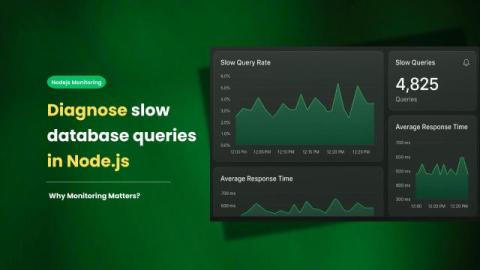
Diagnose slow database queries in Node.js: Why Monitoring is Essential?

Node.js is popular for building scalable applications because its non-blocking architecture can handle many requests at once. But when your app depends on a database, performance hinges on how efficiently queries run behind the scenes. Even a single slow database query can block the Node.js event loop, causing delayed responses, frustrated users, and cascading performance issues. Too often, teams only notice these problems after customers experience lag or timeouts.

Complete Guide to HAProxy Visibility Using Promtail and Loki

HAProxy is the workhorse in front of countless APIs and apps because it’s fast, lean, and flexible. Because it sits on the traffic hot path, it’s also your earliest warning system when something slows down or breaks entirely. This means that monitoring it isn’t optional. You need to see connection queues and retries, per-stage timings, health-check failures, and spikes in error statuses to catch incidents before users do.

How Nexus BMS Uses Time Series and AI to Power Smarter Buildings

Monitoring equipment isn’t enough for today’s smart buildings; true value comes from being able to predict issues, optimize performance, and take action automatically. Traditional building management systems often fall short, limited to dashboards and alarms that only notify you of an issue after the fact. With the rise of open source hardware, modern databases, and AI-driven diagnostics, facilities can now move from reactive to proactive management.

Monitor your data pipelines with Airflow lineage

In complex data pipelines with dozens of jobs and intermediary datasets, it can be difficult to effectively monitor how data travels and changes through various steps. When tracking issues in these pipelines, you need visibility into upstream components where the root cause may originate from, as well as downstream datasets and consumers of data that may be experiencing further impacts.